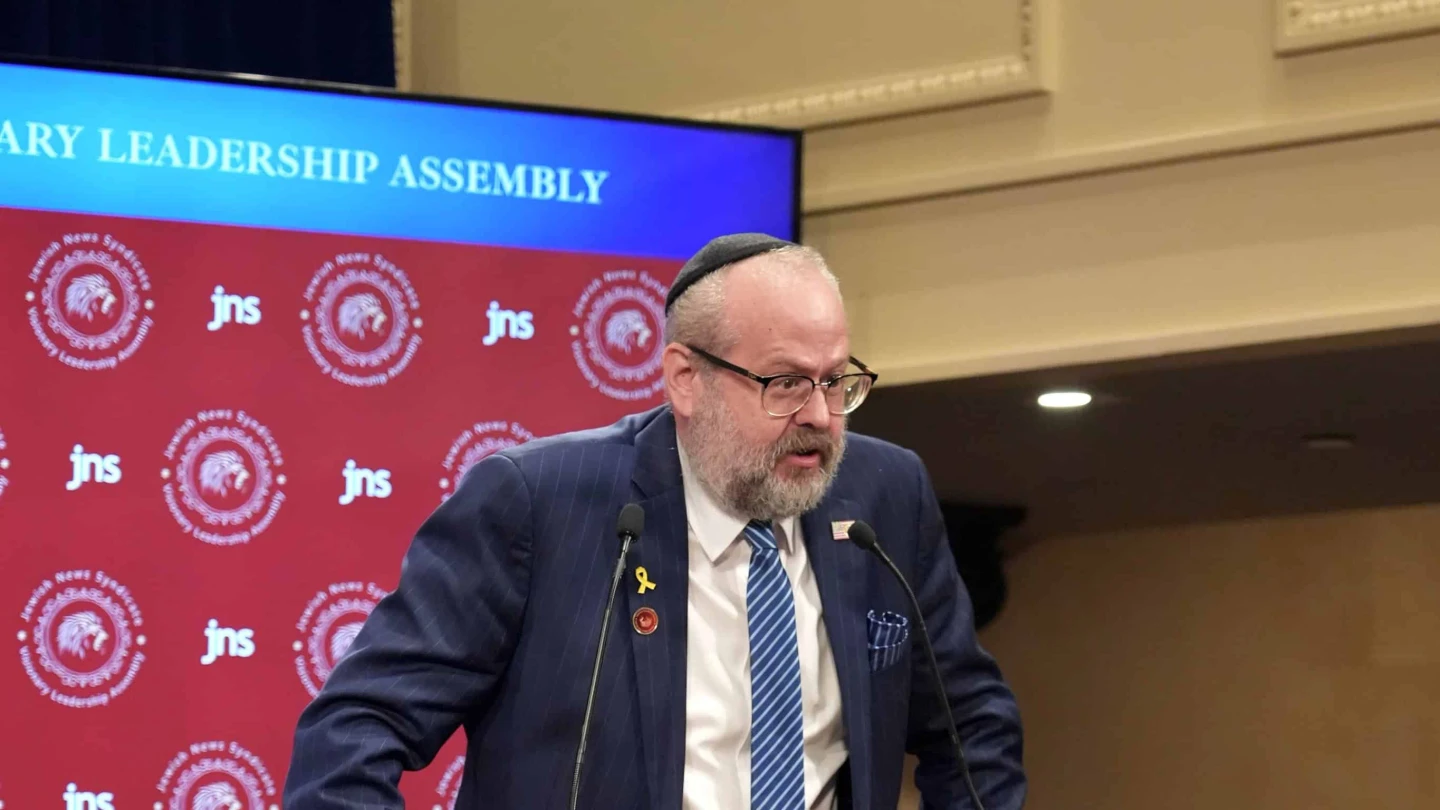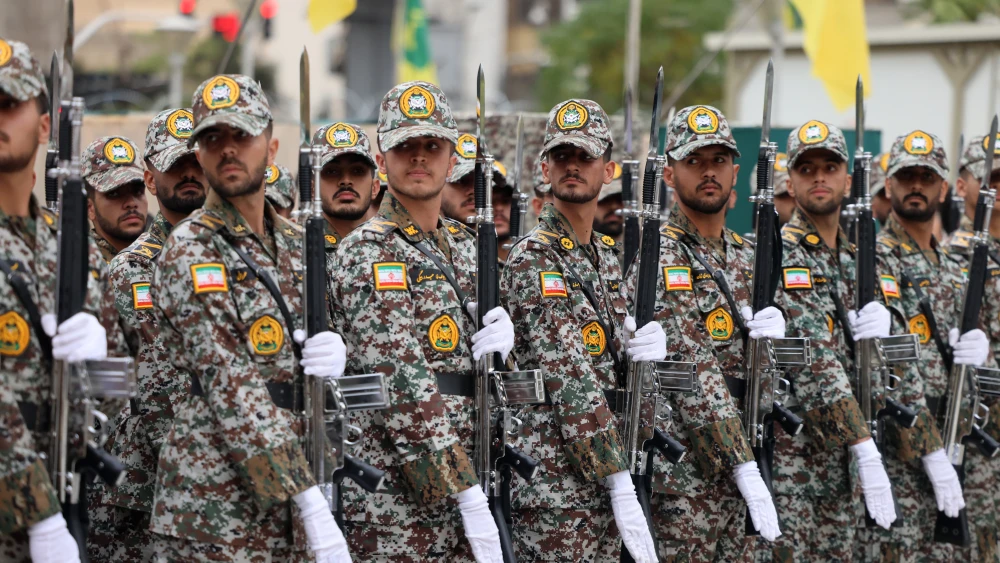
Israeli President Isaac Herzog told Fox News on Monday that the entire region believes Iran and its “jihadist regime” cannot be allowed to develop nuclear weapons.
“One thing that President Trump repeats all the time correctly is that we are dealing with an empire of evil,” Herzog told Dana Perino, host of “America’s Newsroom.”
The Israeli head of state said Tehran seeks to “radicalize the world” and “get all the way to Europe and the United States,” adding that “they must not have any access to nuclear capabilities at all.”
Herzog said the entire region shares that view, though not always openly. “Under the surface there is an effort to cooperate and prevent this empire of proxies from tilting the balance,” he said.
The president pointed to Yemen, where “a small tribe,” meaning Iranian-backed Houthi terrorists, are “blocking a main artery of world trade.”
“Are we going to cave in to terror, harassment, blackmail or not? That’s why the war with Iran is so essential,” Herzog said.
Israeli President Isaac Herzog says President Trump is "correct" about the threat posed by Tehran, then lays out exactly why he believes Iran cannot be allowed access to nuclear capabilities.
— Fox News (@FoxNews) October 5, 2026
"We are dealing with an empire of evil which wants to really radicalize the world,… pic.twitter.com/O3uZYNGt7d
10 Western Hemisphere nations condemn Iran, terror proxies
The United States and nine other Western Hemisphere countries on Monday condemned Iran and its terrorist proxies for plotting attacks and “other malign influence operations” in the region, according to a joint statement published by the U.S. State Department.
“The Islamic Republic of Iran and its proxies must halt these actions now,” the statement said.
The signatories also accused Tehran of “illicit fundraising, political interference and foreign influence activities, and operations meant to bolster terrorist networks, coerce perceived enemies, compromise legal or administrative processes, and harm regional security.”
Joint Statement on Countering Iranian Terrorist Activity in the Western Hemisphere https://t.co/rEcXziY2Ao
— U.S. State Dept - Near Eastern Affairs (@StateDept_NEA) October 5, 2026
The 10 nations pledged further measures and closer cooperation to address the threat.
The statement was signed by the United States, Argentina, Canada, Colombia, Costa Rica, the Dominican Republic, Guyana, Trinidad and Tobago, Peru and Paraguay.
It followed a counterterrorism forum co-hosted last month by the U.S. and Paraguay. According to the State Department, the forum aimed to “enhance law-enforcement cooperation among partners in our hemisphere on disrupting Iranian terrorist activity in our region.”
Bessent: Pressure campaign halted Iran crude tanker loading
U.S. Treasury Secretary Scott Bessent said on Monday that the Trump administration’s sweeping sanctions campaign against Tehran has cut off all crude oil tanker loading and driven the Iranian rial to record lows.
Writing on X, Bessent credited the pressure effort, dubbed “Operation Economic Outcast,” with pushing Iran into “one of the most difficult periods in its history,” citing acknowledgment by Iranian officials.
“Operation Economic Outcast is delivering results: the rial has plunged to record lows, Iran loaded zero crude oil onto tankers last month, and even Iran’s top security official has admitted the country is facing one of the most difficult periods in its history,” Bessent wrote.
“The Iranian regime allows its own people to suffer while it pours resources into terrorism,” he continued. “Operation Economic Outcast will not stop until the Iranian regime understands that the Trump Administration will never allow the regime to fund terrorism and develop a nuclear weapon.”
Operation Economic Outcast is delivering results: the rial has plunged to record lows, Iran loaded zero crude oil onto tankers last month, and even Iran’s top security official has admitted the country is facing one of the most difficult periods in its history.
— Treasury Secretary Scott Bessent (@SecScottBessent) October 5, 2026
The Iranian…
US energy secretary says Strait of Hormuz energy supplies continuing to rise
Energy supplies moving through the Strait of Hormuz have continued to increase in recent weeks, U.S. Energy Secretary Chris Wright said on Sunday, as the Trump administration seeks to ease pressure on fuel prices.
“We’ve got increasing supplies coming out of the Strait of Hormuz, and they’ve continued to rise,” Wright told CBS’s “Face the Nation.” He also said he expected gasoline and diesel prices to decline, citing rising supply, record U.S. gasoline production and lower seasonal demand.
Wright said U.S. President Donald Trump understands that military action against Iran could raise energy prices in the short term, but considers a nuclear-armed Iran the greater risk.
.@SecretaryWright: "We've got increasing supplies coming out of the Strait of Hormuz, and they've continued to rise." pic.twitter.com/aLBDRQO2vS
— Rapid Response 47 (@RapidResponse47) October 4, 2026
Iran reviewing US response to Hormuz reopening proposal
Tehran is reviewing the U.S. response to its proposal for reopening the Strait of Hormuz and has not yet finalized its reply, Iranian Deputy Foreign Minister Kazem Gharibabadi said on Sunday.
Gharibabadi said Washington conveyed its views through intermediaries. Iran’s proposal calls for reopening the strait within seven days if the United States meets a package of conditions that includes sanctions relief and the release of frozen Iranian funds.