Exactly one year after withdrawing from the 2015 Iran nuclear deal, the United States announced on Wednesday new sanctions on Tehran, and that it will not issue further waivers to countries over importing Iranian oil.
The Trump administration said sanctions will target Iran’s aluminum, iron, copper and steel sectors.
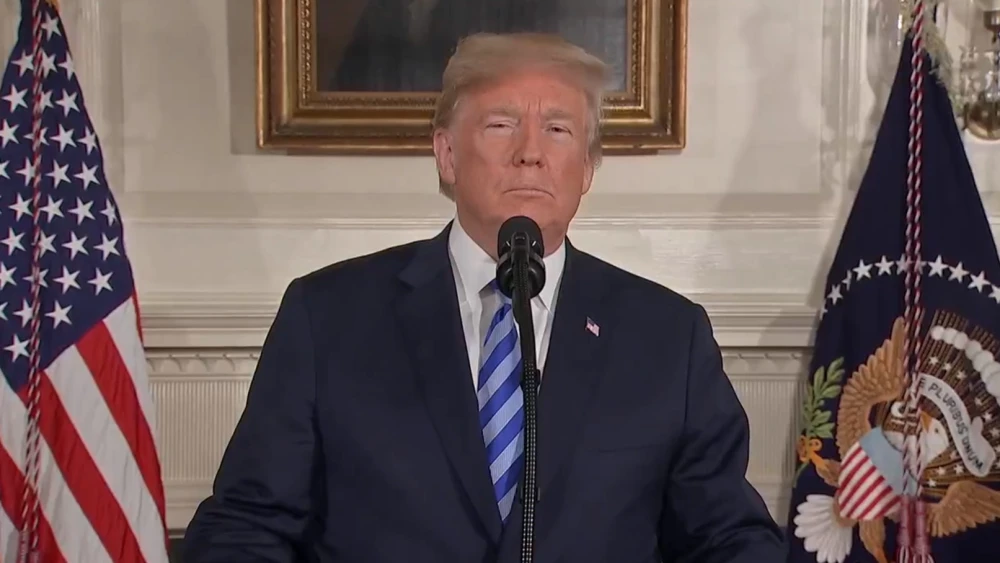
“It remains the policy of the United States to deny Iran all paths to both a nuclear weapon and intercontinental ballistic missiles, and to counter the totality of Iran’s malign influence in the Middle East,” Trump said in the order released on Wednesday.
“It is also the policy of the United States to deny the Iranian government revenue, including revenue derived from the export of products from Iran’s iron, steel, aluminum and copper sectors, that may be used to provide funding and support for the proliferation of weapons of mass destruction, terrorist groups and networks, campaigns of regional aggression and military expansion,” read the statement.
Moreover, the administration also announced that it will issue no more waivers for countries to import Iranian oil, reported Reuters.
The developments come as the United States deployed an aircraft strike group and four B-52 bombers to the Middle East amid the Iranian threat.
Finally, Sens. Tom Cotton (R-Ark.), Marco Rubio (R-Fla.), Ted Cruz (R-Texas), Mike Braun (R-Ind.), Josh Hawley (R-Mo.), Marsha Blackburn (R-Tenn.), Todd Young (R-Ind.), Mike Rounds (R-S.D.), Pat Toomey (R-Penn.), Roger Wicker (R-Miss.), Kevin Cramer (R-N.D.), Jim Inhofe (R-Okla.) and Ben Sasse (R-Neb.) introduced a resolution marking the one-year anniversary of the U.S. withdrawal from the nuclear accord, in addition to reiterating congressional opposition to Iran ever acquiring nuclear weapons and rejecting the United States ever giving sanctions relief to Tehran.
“Iran’s ongoing nuclear misbehavior underscores why the United States was absolutely right to withdraw from the flawed deal,” said Rubio. “The people of Iran deserve better as they continue to suffer under the Iranian regime’s criminal corruption, massive economic mismanagement and systemic human-rights abuses, in addition to its support for terrorists and the murderous Assad regime, ballistic missile aggression and nuclear misbehavior.”