



Unlike Iran and Turkey, where the coronavirus is known to have killed thousands and infected many more, the official numbers being reported by most Arab countries are negligible in proportion to their population sizes, while morbidity rates remain suspiciously low. But the devil, as we know, is in the details—or lack thereof.
In the Arab world, apparently, there are those who believe that revealing information is a sign of weakness, while concealing it is a sign of strength. Moreover, without modernized healthcare services and with only minimal testing, it is not surprising that patients can’t be found and deaths cannot be traced to the disease.
It is also worth bearing in mind that Arab countries tend to have young populations due to high natural growth rates and low life expectancy. In Israel, for example, 16 percent of the population is above 60 years old, while in Italy the number is closer to 30 percent. In Jordan, Syria and Iraq, on the other hand, this number is less than 5 percent, while most of the population is under 30 years old. Since COVID-19’s mortality rate is much higher among the elderly, this could also be a factor.
But a closer look at the spread of the disease around the world tells us the virus will reach the Arab world, even if later than other places. More significantly, the virus isn’t solely a health problem. The main challenge it poses is coping with the economic and even social and political consequences of the pandemic, which will likely hit the world’s more impoverished areas harder, as they lack the advanced economic infrastructure and a professional and skilled workforce that could help expedite a quick recovery from the crisis.
The credibility problem pertaining to the virus’ spread in the Arab world stems not only from the lack of modernized healthcare systems but from the efforts on the part of some Arab regimes to prevent the dissemination of such information, due to fears that the true numbers could spark broad public criticism and undermine their stability.
The world, however, has long since become a global village, which means that information spreads across the planet along with the virus; these regimes have little ability to control or prevent it, as evidenced by the case of China and of course Iran. Hence, the truth these Arab regimes are trying to hide is being unraveled and deciphered online through social networks, which are the beating heart of the Arab world as it really is.
And online we see a rising tide of criticism about the impotence of these governments and severe inadequacies of the healthcare systems, alongside mistrust in the official numbers released by the authorities in reports on their fight to stop the spread of the virus.
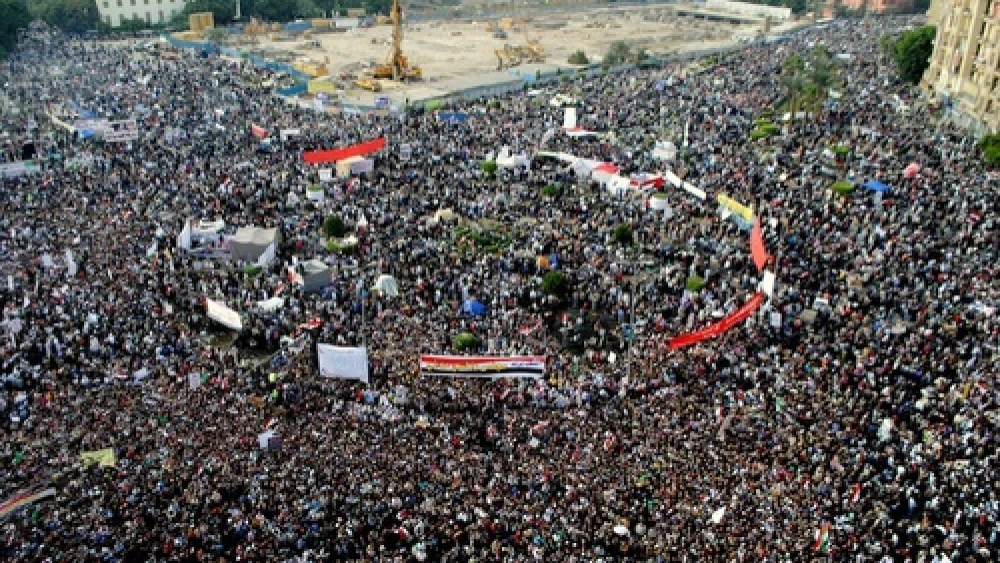
It’s no surprise that people in the Arab world and beyond are already predicting, based on the simmering online discourse, that once the pandemic is over and the true economic fallout becomes clearer, another “Arab Spring” could erupt, no less tumultuous than the first. A tidal wave of unrest aimed at the Arab regimes for their weak, insufficient responses to the problems of the common man. Such could be the case in the Arab world; in Iran, where criticism is steadily growing against a regime attempting to conceal information about the true scope of the devastation the pandemic is causing; and even in Turkey, where people are accusing President Recep Tayyip Erdoğan of smugly downplaying the threat.
Unsurprisingly, for the time being, some Arab regimes would rather their subjects remain quarantined at home.
Eyal Zisser is a lecturer in the Middle East History Department at Tel Aviv University.
This article first appeared in Israel Hayom.



