
You cannot understand the Israeli-Palestinian conflict from a classroom, a newsfeed or a slogan. You understand it by standing in the places that are actually in dispute, listening to the people who live there and seeing the land with your own eyes. That is not a talking point. It is the most basic requirement for serious judgment.
It is absurd that political leaders issue sweeping verdicts about “occupation,” “apartheid” and “settlements” without ever walking the ground they talk about. It is more absurd still that Jewish educators expect students to master the same argument from a distance. We do not teach history by hiding the sites. We do not teach civics by shielding young people from the facts that will later be used against them.
The Jewish world repeats a simple claim: Jews need to see Israel to connect with it. So we put teenagers on buses and send them from Eilat to the Galilee. We show them the coast, the desert, the north, the museums and the memorials. Then we skip the heartland of the homeland. Judea and Samaria are not a footnote. They are the spine of Jewish memory in this land.
The same Jewish institutions insist that young Jews should come on high school summer programs, gap-year trips and Birthright so they can encounter the real Israel rather than the cartoon version circulating on social media. Then those programs carefully avoid the very places most often used to demonize Israel. Students return home having been told they saw “the real country.” A few months later, a classmate asks why they never saw apartheid or occupation. The answer is already prepared for them: Of course they didn’t see it; their trip never went there. The journey that was supposed to inoculate them has instead left them unprepared.
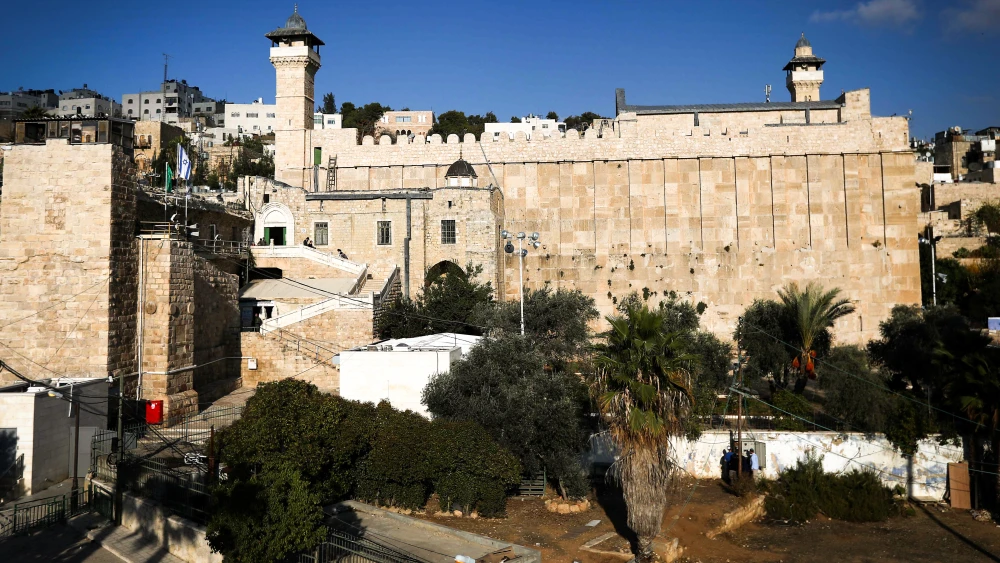
Educators tell Zionist students that Jewish history in this land stretches back 3,000 years and that it matters to stand in the places where that history happened. Then they omit the region where most of that history took place. Abraham walked here. The patriarchs were buried here. The Tabernacle stood at Shiloh for centuries. Kings ruled and prophets spoke from here. To speak of Jewish roots while treating Judea and Samaria as optional scenery is not education; it’s evasion.
Visiting the region requires educators to stop outsourcing their understanding to people who have never been there.
Avoiding the area also sends a quieter message, and students hear it. Some 750,000 Jews are living in Judea and Samaria. They are not abstractions. They raise children, go to work, shop, pray and bury their dead in communities that look, from the inside, like ordinary towns. When Jewish leaders refuse to take students there, they look as if they are ashamed of those communities. Shame is a poor substitute for argument. If the case for Jewish life in the historic heartland is strong, it can withstand a visit. If it is weak, hiding the places will not make it stronger.
There are concrete stops that change the conversation because they replace theory with texture. Go to Shiloh and stand where the Tabernacle stood for roughly 360 years, long before Jerusalem became the political center. The hill country stops being a slogan and becomes a setting. Visit Mishor Adumim, an industrial zone where Israelis and Palestinians work side by side every day in the thousands. The picture is not a postcard picture of harmony. It is more useful than a postcard: It is a functioning economy in a disputed landscape, with people who have every reason to see one another and still show up for work.
See the checkpoints and the security fence. Call them walls if you like, but look at why they were built and what they do. They are not metaphysical statements about race. They are responses to a specific campaign of attacks. You can oppose them, support them, or want them moved. You cannot honestly describe them if you have never stood beside them.
Go to Qasr al-Yahud, near the Jordan River, where Jewish tradition says the people first entered the land. Look across the water and see that Jordan is close enough to make the security question concrete. A Palestinian state with an open eastern border would not be an abstraction either. Weapons do not need ideology to move. They need a route. Israel’s presence along that line is not a theological claim; it is a geographic one.
Then visit a settlement. Not as a political exhibit, but as a town where you walk the streets. Look at the schools, the playgrounds, the grocery store and the ordinary suburban layout.
Visiting the region requires educators to stop outsourcing their understanding to people who have never been there. The conflict is not only a narrative contest. It is a contest over hills, roads, rivers, industry, memory and fear. Those things do not reveal themselves in a social media feed.
Jewish education has spent a generation telling young people that Israel must be seen to be known. That sentence, however, becomes false the moment the itinerary treats the biblical heartland as radioactive.
A student who has stood at Shiloh, watched a mixed workforce in Mishor Adumim, looked at the fence without a caption, faced the Jordan from Qasr al-Yahud and walked through an ordinary Jewish town in Judea or Samaria will still have to form an opinion. That is the point: politics after contact is different from politics before it. The Jewish world keeps saying it wants the former, but its bus routes still deliver the latter.
Take Jewish students to Judea and Samaria and let them listen and see. Then let them argue. Anything less is not education; it’s a curated innocence, and curated innocence does not last long on campus or in young people’s hearts and minds.