
There is a false notion taught to many Jews, especially younger Jews, around the world. They are challenged to develop an identity distinct from the State and the land of Israel. They are asked if they identify more as Jewish or connected to Israel. The question itself is false.
Israel is not a policy position or a distant relative. It is the beating heart of past, present and future Jewish identity. Teaching this truth is not optional for Jewish educators.
The Torah states that God gave the Jewish people the land of Israel. From the covenant with Abraham through the commandments given at Sinai, the relationship between the Jewish nation and its land is foundational. Even when Jews live in the Diaspora, Israel remains their home. The language we pray in, the festivals we celebrate and the stories we tell all point back to one place. To treat Israel as optional is to edit the Jewish story until it no longer makes sense.
This is not merely religious sentiment. Conquering, settling and living in Israel has never been just one of the 613 mitzvot; it is the enabling condition for observing many of them. The mitzvot were given to be fulfilled in the land. The agricultural laws, the pilgrimage festivals—the very rhythm of Jewish time and space—all assume a Jewish presence in Eretz Yisrael.
More than that, the land is where the Jewish people experience Divine providence most directly. History bears this out. Every time the Jewish people returned and rebuilt, they flourished spiritually and physically. Every time they were exiled, the light dimmed.
Zionist thinkers understood this in their bones.
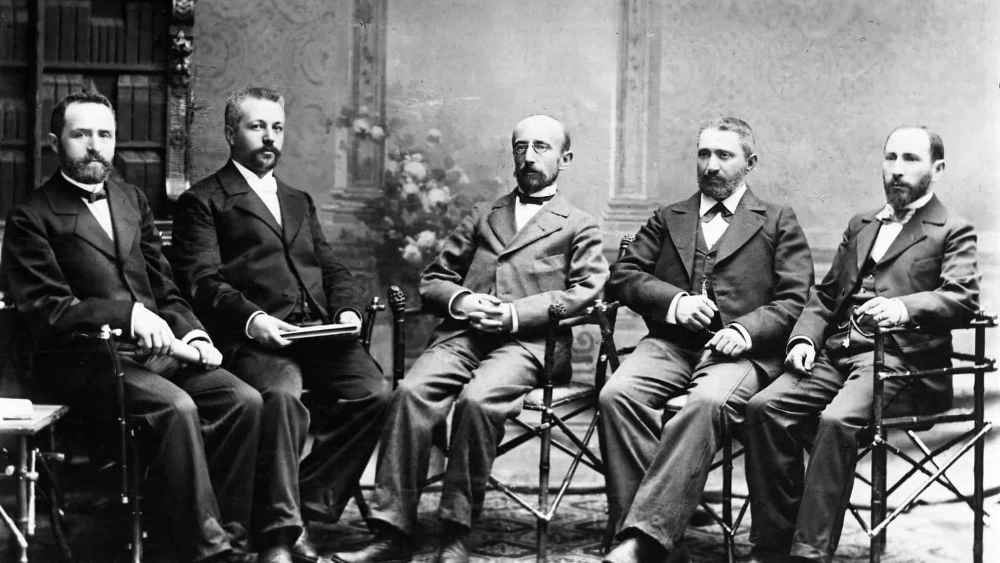
Theodor Herzl saw the necessity of a Jewish state as the only answer to 2,000 years of vulnerability. Hebrew journalist and essayist Ahad Ha’am insisted that a cultural and spiritual renaissance required a physical center in the ancestral homeland. Rabbi Reuven Ziegler wrote that Rabbi Joseph Soloveitchik maintained that the State of Israel is an opportunity for the Jewish people to protect their existence and pursue their destiny. The state is an instrument that serves (or should serve) the larger values of the Jewish people and the Jewish faith.
These men disagreed on many things, secular versus religious, gradual versus immediate, but they agreed on one point: Without Israel, the Jewish people remain incomplete.
The facts reinforce what the tradition teaches. Israel is the national homeland and the historic homeland of the Jewish people. Archaeological evidence—from the Merneptah Stele of 1208 BCE mentioning “Israel” to the Dead Sea Scrolls, the Bar Kochba letters and continuous Jewish communities in Jerusalem, Safed and Hebron—leaves no serious doubt.
Jews are the only people who have maintained an unbroken connection to this land for more than 3,000 years. The legal right of Jews to rule it was recognized internationally long before 1948. The League of Nations Mandate for Palestine explicitly cited “the historical connection of the Jewish people with Palestine” and called for “the establishment of a national home for the Jewish people.” That right was never revoked.
Critics offer familiar objections. Some claim that Zionism is colonialism. The charge collapses under scrutiny. Colonialism involves a mother country sending settlers to exploit a distant territory. Jews were returning to their indigenous homeland after expulsion and exile. There was no Jewish empire extracting resources; there was a persecuted people rebuilding on its own soil.
Others argue that Jewish sovereignty violates Palestinian rights. Yet every war Israel has fought was defensive. From 1948, when five Arab armies invaded the day after the U.N. partition, through 1967, when Israel faced an existential threat and captured territory in self-defense, to the repeated rocket barrages from Gaza and Lebanon, the pattern is consistent: Israel has accepted partition and peace offers. Its neighbors have chosen war.
Still others insist that Judaism can thrive without a state. History says otherwise. For two millennia in exile, Jews survived but never fully flourished. Antisemitism did not disappear; it adapted. The Holocaust proved that even the most assimilated Jews remained targets when the state that should have protected them turned against them.
Israel changed the equation. A strong, sovereign Jewish state ended the cycle of helplessness. It gave Jews the ability to defend themselves and, crucially, to welcome their brothers and sisters home. Today, more than half the world’s Jews live in Israel. The future of the Jewish people, as well as their past and present, is in the land of Israel.
All Jewish students need to hear this without apology. Too many campuses frame Israel as a problem to be solved rather than a miracle to be cherished. Anti-Zionist activists peddle the lie that supporting Israel means choosing nationalism over ethics. The opposite is true.
A Jewish state that absorbs refugees from Arab lands, Ethiopia and the former Soviet Union; that offers medical aid to its enemies even in wartime; that maintains a free press and independent judiciary while fighting for its life is a profound moral achievement. Teaching students to see Israel clearly is not indoctrination. It is intellectual honesty.
This does not mean ignoring Israel’s flaws or the genuine pain of the conflict. Serious education demands complexity. But complexity is not the same as equivalence. One side seeks to destroy the other; the other seeks to live in peace. Students deserve to know that distinction.
The classroom is where Jewish identity is being formed. If we want the next generation to remain proudly Jewish, then we must keep treating Israel as more than an elective part of Jewish identity. Israel is the place where the Jewish story continues to unfold. It is the home that calls even when we are far away. It is the land where mitzvot breathe and where the Jewish people, against every odd, have come home.
Teaching that Israel is essential to Jewish identity hands students the key to their own story. Without it, they inherit a thinned-out Judaism—warm, communal, but rootless. With it, they inherit the full inheritance: a people, a land, a covenant and a future worth building.