Newsletter
Newsletter Support JNS

Report: US moves to tighten enforcement of existing sanctions against Iran

The American delegation in Vienna is planning to hold meetings with petrochemical companies and banks in the United Arab Emirates, which conduct “billions of dollars of trade with Iran,” to deliver a warning.

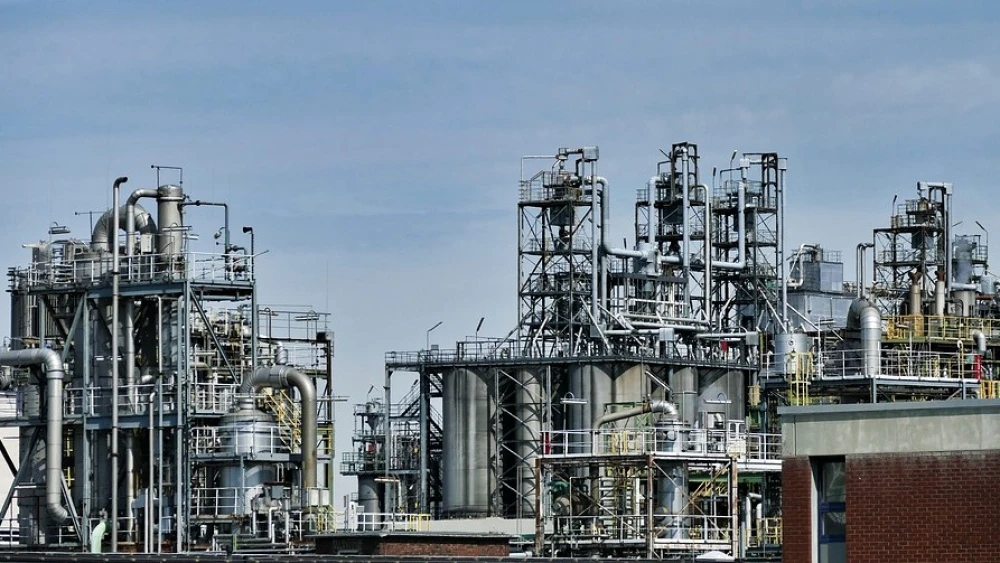
Image of an oil refinery. Credit: Pixabay.

The Biden administration is taking steps to increase its enforcement of sanctions against Iran, wrote The Wall Street Journal on Thursday, adding that senior U.S. officials have said that this is Washington’s first sign of increased economic pressure amid floundering nuclear talks in Vienna.

Citing senior U.S. State Department and Treasury Department officials, the report said the United States is sending a high-level delegation this week to the United Arab Emirates, a top U.S. ally but also Iran’s second-largest trade partner, and “a conduit for Iran’s trade and financial transactions with other countries.”

According to the report, the American delegation is planning to hold meetings with petrochemical companies, and other private firms and banks, in the UAE, which conduct “billions of dollars of trade with Iran,” in order to deliver a warning.

The content of that warning is that America has “visibility on transactions that are not compliant with sanctions,“ said the report, adding that ”those banks and firms face extreme risk if this continues.”

Should the warnings go unheeded, sanctions against Emirati and other firms could follow, it added.

The Wall Street Journal described an increasingly gloomy outlook on the prospects of restoring the 2015 nuclear deal, which the Trump administration exited unilaterally in 2018, forming the backdrop to stepped-up enforcement of existing sanctions—namely, on fuel.

The talks were restarted last week but failed to reach any progress. Iran was accused by European and U.S. negotiators of adopting significantly more hardline positions compared to those espoused by Iran’s representatives in the last round of talks five months ago.
“Anti-Zionism can be a framework for justifying anti-Jewish hostility,” Rafaela Dancygier, of Princeton University, told the N.J. Advisory Committee to the U.S. Commission on Civil Rights.
A board member at the Orthodox synagogue told the FBI that members began attending services less frequently after Kevin Charles Pyles allegedly targeted the synagogue in separate July and August 2025 incidents.
The Senate rejected a resolution calling for the removal of U.S. forces from the war against Iran after U.S. President Donald Trump hammered Senate Republicans for approving a similar measure the day before.
“When someone uses the N-word on campus, no one thinks about free speech. No one talks about, ‘Let’s understand what they’re thinking. Let’s have a discussion,’” Rep. Randy Fine said. “But somehow when it came to Jews, everyone wanted to rediscover the idea of free speech.”
“Leadership should be responding with moral clarity, not suggesting that the act of teaching about the Holocaust has somehow ‘missed the mark,’” said Kurt Schwartz, CEO of CAMERA.
The judges said the sanctions, which the United States imposed in response to the Hague-based court’s targeting of Israel, are unlawful.
Benny Gantz, JNS editor-in-chief Jonathan S. Tobin, Gilad Erdan, Mosab Hassan Yousef, Nissim Black and leading voices in security, diplomacy, media, law and Jewish communal affairs headline the summit’s third day in Jerusalem.

