The war between Israel and Hamas has moved far beyond combat on the ground. A dangerous ideological front is blazing, affecting global perception, political alliances and public trust. Horrifying images of two young, emaciated Israeli hostages languishing in Hamas-built tunnels in Gaza drew reactions of shock and revulsion while the humanitarian toll on civilians in the Strip has drawn global cries of anguish and demands for action.
“What I am doing now is digging my own grave,” said Israeli hostage Evyatar David, 24, in a trembling voice. He was emaciated and hunched over in a narrow tunnel with a shovel in hand in a perverse propaganda video Hamas recorded and recently released. Video clips of another hostage, Rom Braslavski, show the 21-year-old starving and warning that he is “on the verge of death.” One clip showed him rolling on the floor, clutching his shrunken stomach while painfully begging Israel to send food and water to Gaza.
The appearance of the hostages—emaciated bodies, sunken cheeks—has drawn jarring parallels to Jewish suffering in the Holocaust. This painful comparison spread rapidly across media platforms. It drew public outrage, leading many to condemn Hamas for the deliberate exploitation of human suffering and eliciting urgent calls for action to secure their release.
For more than 660 days, the 20 hostages still believed to be alive in Gaza have remained in Hamas captivity—starved, weakened and deprived of sunlight, with little to no contact beyond their captors. Testimonies from former hostages describe conditions marked by psychological abuse and starvation. All the while, Hamas refuses to allow the Red Cross to evaluate or treat them, administer vital medications or provide even the most basic health care. The torture of hostages is intentional.
As calls to release hostages grow louder, international pressure to end the war is intensifying. In a major diplomatic shift, the Arab League, European Union and 17 other nations have endorsed a proposal calling for Hamas to disarm, relinquish power and release hostages in pursuit of a two-state solution.
The human toll and the propaganda war
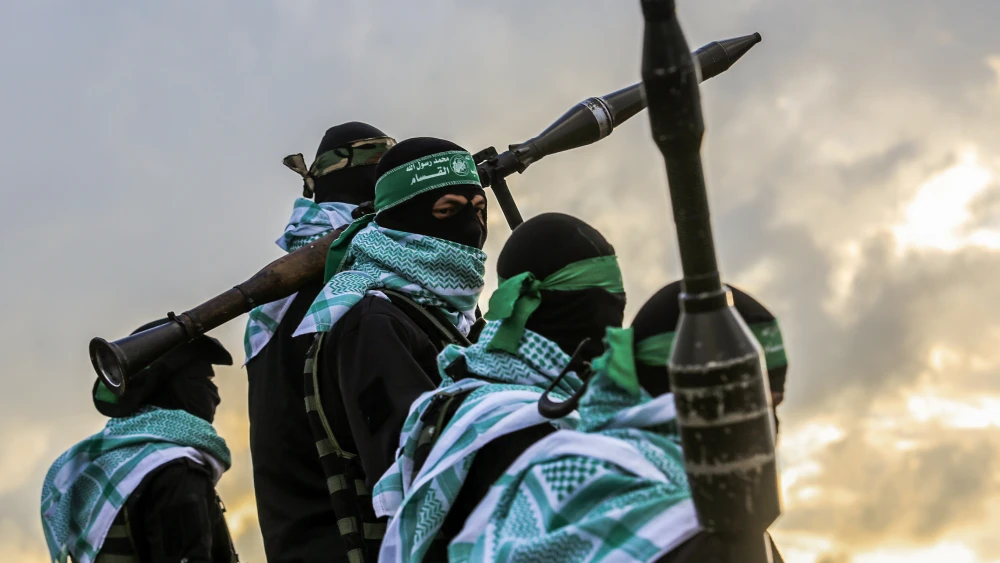
The broader international response since the Hamas-led terrorist attacks on Oct. 7, 2023, has been shaped by an information and propaganda war where verified reporting is scarce and manipulated imagery abounds. Hamas and the Palestinian Islamic Jihad have historically used civilian suffering as a tool to shift the global narrative, showcasing destruction in Gaza while deflecting any responsibility for embedding fighters and weapons in hospitals, schools and residential areas. The release of hostage videos was intended to fit into the Hamas strategy, though it may have largely backfired as revulsion over their conditions made front-page news.

The Iranian-backed terrorist organization has proven remarkably effective at controlling the narrative beyond Gaza’s borders. By tightly managing information on the ground, intimidating local journalists and leveraging international organizations that often rely on Hamas-linked sources, such as the unverified statistics from Hamas’s Gaza Health Ministry, the terrorist regime has created a media ecosystem in which its narrative dominates the global dialogue.
Civilian suffering, both real and manufactured, is broadcast widely. At the same time, Hamas’s role in prolonging the war by refusing every ceasefire agreement, stealing and hoarding aid, and continuing to hold hostages is covered up or ignored. In much of the global dialogue, the Jewish state is cast as the sole aggressor while Hamas, despite its use of human shields and the rejection of ceasefires, evades public scrutiny. The result is a lopsided narrative where a murderous terror group has successfully positioned itself as both victim and moral authority.
Regarding information being released about Gaza and Hamas’s actions, Matti Friedman told The Free Press in a recent article:
“The consensus was that there were nearly no trustworthy sources regarding reality in Gaza—certainly not the ‘Gaza Health Ministry,’ which answers to Hamas; or Palestinian reporters intimidated by Hamas; or the international organizations, like the U.N. refugee agency UNRWA, embroiled in various forms of collaboration with Hamas. All of the above are engaged in a successful information campaign that uses Palestinian suffering, real and imagined, to catalyze international anger and tie Israel’s hands.
“The international press isn’t the answer. During my years as a reporter and editor for the Associated Press, I saw coverage altered by Hamas’s threats to our staff, while this fact was concealed from readers. I know firsthand that nearly no information coming from Gaza can be taken at face value.”
Regarding reports by the Israeli government on the war progress and its success in pressuring Hamas to release the hostages, he cautioned: “But neither can we Israelis trust our own government, which has regularly misled the public about the war’s progress (Netanyahu assured Israelis over a year ago that we were “a step away” from victory); about the shifting goals of the campaign; about the success of various operations, which have seen soldiers repeatedly return to areas that have already been cleared at great cost; and about the priority assigned to the release of hostages, many of whom were released in prisoner swaps only because of American pressure and 50 of whom remain, alive and dead, in Hamas hands … .”
The original 1988 Hamas Charter, which calls for the destruction of Israel, continues to reflect the group’s actions and rhetoric. The use of propaganda portraying Israel as an inhumane and aggressive colonizer and oppressor is a key part of its strategy to infiltrate minds and serves to shift public views about Israel, seeking to achieve psychologically what it could not achieve militarily.
Feet on the ground: U.S. officials inspect Gaza aid sites
U.S. Ambassador to Israel Mike Huckabee and Middle East special envoy Steve Witkoff recently made a rare, high-profile visit to Gaza to assess the situation amid mounting international criticism of the Gaza Humanitarian Foundation (GHF) and concerns about growing hunger.
In March, Israeli Prime Minister Benjamin Netanyahu announced that he had decided to “stop letting goods and supplies into Gaza. We’ve done that because Hamas steals the supplies and prevents the people of Gaza from getting them. It uses these supplies to finance its terror machine, which is aimed directly at Israel and our civilians, and this we cannot accept.”

The two officials said that the core driver of Gaza’s suffering is not Israeli policy but Hamas’s objective: to use starvation to achieve its goals. They cited evidence that GHF, established to replace the chaotic U.N.-led aid delivery channel, successfully distributed as many as 100 million meals in two months.
Push for Palestinian statehood divides key allies
France, the United Kingdom, Canada and Malta have announced intentions to recognize a Palestinian state—a move framed to preserve the two-state solution, but one that diverges sharply from current U.S. and Israeli policy. While these countries emphasize the need to bolster the Palestinian Authority and exclude Hamas from future governance, Washington maintains that unilateral recognition of a Palestinian state undermines U.S. and Israeli goals, as well as ceasefire efforts. Ultimately, they say, it rewards terrorism.
Bipartisan support for Israel shows signs of strain
Support for Israel—once a rare point of bipartisan consensus in Washington—is fraying. Even strong Democratic supporters of Israel like Rep. Ritchie Torres (D-N.Y.) have warned that Netanyahu’s actions risk lasting damage to the U.S.-Israel relationship, calling it “possibly irreparable.”
On the Republican side of the aisle, some have voiced concern over U.S. aid and civilian suffering in the coastal enclave. Rep. Marjorie Taylor Greene (R-Ga.) went as far as to label Israel’s conduct in Gaza as genocide. These shifts mirror broader changes in public opinion, particularly among younger voters and independents, where approval of Israel’s conduct has declined since the war began. What was once a cornerstone of U.S. foreign policy is now under debate, with real implications for future aid, diplomacy and the durability of the U.S.-Israel alliance.
Points to consider:
- Hostage videos are psychological warfare.
From an emaciated hostage forced to dig his “own grave” to another, skeletal and clutching his stomach, pleading for food and saying he’s “on the verge of death,” these carefully timed videos are not just records of abuse; they are psychological weapons. Crafted to provoke outrage and manipulate opinion, the footage evokes Holocaust imagery and advances Hamas’s strategy to destabilize Israel, emotionally and politically. Rather than exposing the suffering of the hostages, the videos use starved, isolated captives as tools in a broader propaganda campaign.
- Hamas uses civilian suffering as a strategy, not a side effect.
Hamas terrorists have long embedded themselves in densely populated civilian areas, using homes, hospitals, schools and shelters as shields for their fighters and weapons. This is not incidental; it’s a calculated strategy to provoke civilian casualties that can be broadcast globally to demonize Israel and rally sympathy for Hamas’s cause. By ensuring that any military response risks civilian harm, Hamas turns its people into human puppets on the world stage. The tactic goes beyond battlefield positioning: Hamas loots aid, obstructs deliveries and controls media access, manipulating humanitarian conditions to amplify suffering and deflect blame. In this framework, public opinion becomes its own battlefield, and Palestinian civilians aren’t just caught in the crossfire. They are placed there by design.
- Unequal demands: Israel gets pushed, Hamas gets excused.
The terrorist group still holds 50 hostages—20 presumed alive and 30 likely dead. It obstructs humanitarian relief and refuses ceasefires, yet continues to garner public sympathy and support. The rules of this war are imbalanced. Israel is asked to uphold humanitarian standards, while pressure is rarely matched by equivalent demands on Hamas, creating a distorted moral playing field. It took nearly two years of warfare for the Arab League to call on Hamas to disarm and release the Israeli hostages.
- Israel is fighting a war on two fronts: one military, one moral.
While Israel confronts a ruthless terrorist organization on the ground, it is simultaneously waging a second, more complex battle in the court of public opinion. It represents a global fight for the world to recognize the military goal to end the rule of Hamas and bring its hostages home. Militarily, Israel faces an enemy that deliberately targets civilians, hides behind them and rejects ceasefire proposals. Yet on the global stage, Israel is scrutinized under vastly different terms; its adversary operates without rules or accountability. Every strike, image and misstep is judged by emotional reaction and media framing, forcing Israel into a constant balancing act of defending its citizens while maintaining international support in a climate with little tolerance for nuance. In this war, images often outpace facts, and global patience is shaped less by truth and more by narrative fatigue.