There are calls that are routine, and then there are calls that really get your pulse running 100 beats a minute. When you personally know someone who is involved in an emergency, it’s almost always the latter.
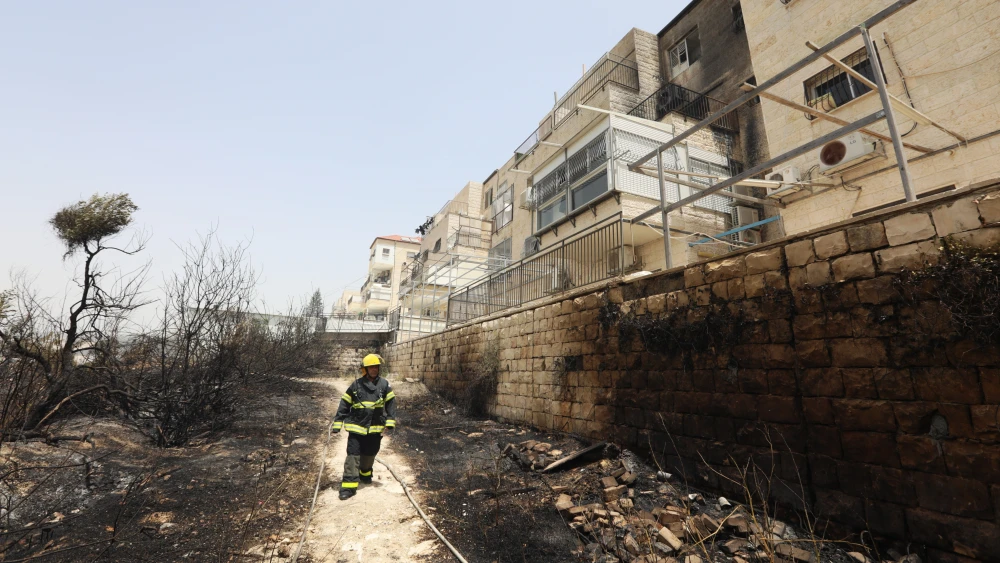
Recently, my radio went off for a fire at a Talmud Torah school in Ramat Beit Shemesh in central Israel, west of Jerusalem. As a volunteer emergency medical technician (EMT) with United Hatzalah, you learn to move before you even have time to think.

I happened to already be in my car, just about to pull into my parking spot at home, when the call came in. Within moments, I was speeding to the scene of the emergency.
Already en route, something hit me. My nephews go to that school.
I was no longer just a first responder. Now, I was also a concerned uncle.
As I rounded the corner of the main street, I saw a massive plume of smoke rising into the sky. All other thoughts left me; I knew I needed to “get to work.” I was determined! People needed my help. My family needed help. And I knew I had to get there.
When I arrived, I found the typical chaos that accompanies such a situation. Parents gathered around the smoking building. The teachers were already trying to manage the situation. They were getting the kids out of danger.
Soon, the firefighters were preparing their hoses outside the entrance.
Before moving to Israel, I volunteered as a firefighter in Baltimore. Fires are chaotic no matter where they happen—the smell of smoke, the uncertainty, the fear that spreads faster than the flames themselves.
But this felt different. This was not some anonymous building or unfamiliar street. This was our neighborhood. Our school. Our children.
Thank God, the staff acted quickly. Everyone got out safely, and there were no injuries, including my nephews.
You train your entire life to stay calm during emergencies. To focus. To think clearly under pressure. But emergencies have a way of reminding you that behind every dispatch alert are real families and real lives.
At United Hatzalah, the line between first responder and community member almost never exists. The people responding to emergencies are often neighbors, cousins, parents from the school pickup line or the guy you sit next to in synagogue.
Sometimes, the person you are rushing to save is someone you know or love, and sometimes, it’s a complete stranger. But the mission remains the same.
Run toward the emergency. Protect the people around. And pray that everyone makes it home safely.