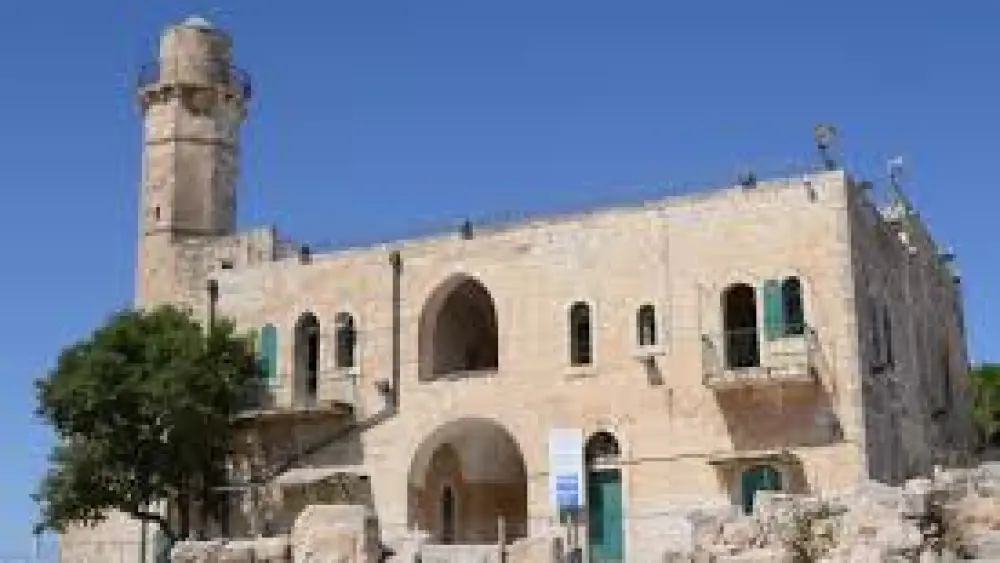
Arab residents of the village Nabi Samuel, north of Jerusalem, recently razed the archaeological garden at the Tomb of the Prophet Samuel, utilizing heavy machinery apparently to construct a parking lot as a way of collecting parking fees from visitors.
Regavim, a nonprofit organization that seeks to guard Israel’s land resources against illegal takeover and construction, reported the development occurring without permits and against the law. It filed a request with the Civil Administration, the law-enforcement body in Area C, calling for the work to cease immediately.
“The Civil Administration and the Israeli government must do everything in their power to block the construction of the parking lot,” wrote Attorney Avi Segal in his letter to the Civil Administration. “The authorities’ negligence has caused a major blow to the archaeological finds as well as to the rule of law.”
“It is difficult to assess the extent of the damage to the archeological site or the potential damage to the still-unexplored, ancient sub-strata,” added Yishai Hemo, Regavim’s field director for Judea and Samaria. “We have seen damage to important sites throughout Judea and Samaria, caused by construction in areas of tremendous historic significance and destruction of antiquities, in complete disregard of the law.
“We have said it before: People who care about the Land of Israel don’t cause it harm. The government must stop the destruction.”