Newsletter
Newsletter Support JNS

Jonathan S. Tobin is editor-in-chief of the Jewish News Syndicate, a senior contributor for The Federalist, a columnist for Newsweek and a contributor to many other publications. He covers the American political scene, foreign policy, the U.S.-Israel relationship, Middle East diplomacy, the Jewish world and the arts. He hosts the JNS “Think Twice” podcast, both the weekly video program and the “Jonathan Tobin Daily” program, which are available on all major audio platforms and YouTube. Previously, he was executive editor, then senior online editor and chief political blogger, for Commentary magazine. Before that, he was editor-in-chief of The Jewish Exponent in Philadelphia and editor of the Connecticut Jewish Ledger. He has won more than 60 awards for commentary, art criticism and other writing. He appears regularly on television, commenting on politics and foreign policy. Born in New York City, he studied history at Columbia University.

In comparing Arab doctors to Joint List Knesset members, Israel’s critics are exploiting the coronavirus pandemic to promote the lie that Zionism is racism.
Social distancing could further weaken institutions already shaken by a changing demography. But could going online and the imperative to social action help revive them?
The coronavirus panic has hurt the president, but the prime minister’s handling of it reminds Israelis of his best qualities and has changed the dynamic of the government coalition standoff.
Like every other calamity in history, the coronavirus provides an excuse and a platform for anti-Semites. But blame on it those who legitimize hate, not the disease.
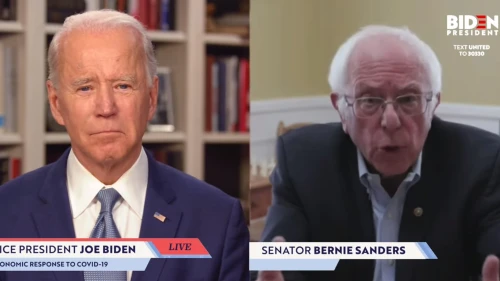
A Trump-Biden matchup will give voters a choice between two different visions of relations with Israel, the Palestinians and Iran.
Bernie Sanders is proving that it’s possible to be both a victim of Jew-hatred and someone who has also enabled anti-Jewish hate.
The Jewish communal response to the coronavirus must be guided by the principle of “pikuach nefesh”—the obligation to save lives—while not feeding paranoia or panic.
Making common cause with those who wish to destroy the Jewish state is indefensible. Still, Netanyahu’s defenders must be careful not to bolster slander that Israel isn’t a democracy.
The bankruptcy of Philadelphia’s National Museum of American Jewish History was the inevitable result of a decision to build an overpriced monument to the vanity of its builders.
Spending on political speech is a cherished right, even if you’re trying to buy the presidency. But doing so doesn’t give you immunity from criticism—no matter that you’re Jewish.
The effort to break the logjam established that there is a broad consensus on national security, and that only judges, and not political rivals, can topple Netanyahu.
Traffic jams, crumbling and inadequate infrastructure, and a clunky political system are lamentable; however, historical perspective is needed on all of the Jewish state’s challenges.