Russia and China vetoed on Tuesday a Bahrain‑sponsored U.N. Security Council resolution that sought to rally international support for reopening the strategically vital Strait of Hormuz, where Iran has effectively restricted maritime traffic amid ongoing conflict in the region.
The move drew sharp criticism from the United States and its allies, with Mike Waltz, U.S. ambassador to the United Nations, calling it a “new low.”
The resolution underwent several revisions, including the removal of authorization to use force under Chapter VII of the U.N. Charter. The vote was also delayed multiple times. Still, Moscow and Beijing, which are both allies of the Iranian regime, used their powers as permanent council members to dismiss it, rather than abstain and allow its passage.
Ultimately, 11 council members voted in favor, with Colombia and Pakistan abstaining.
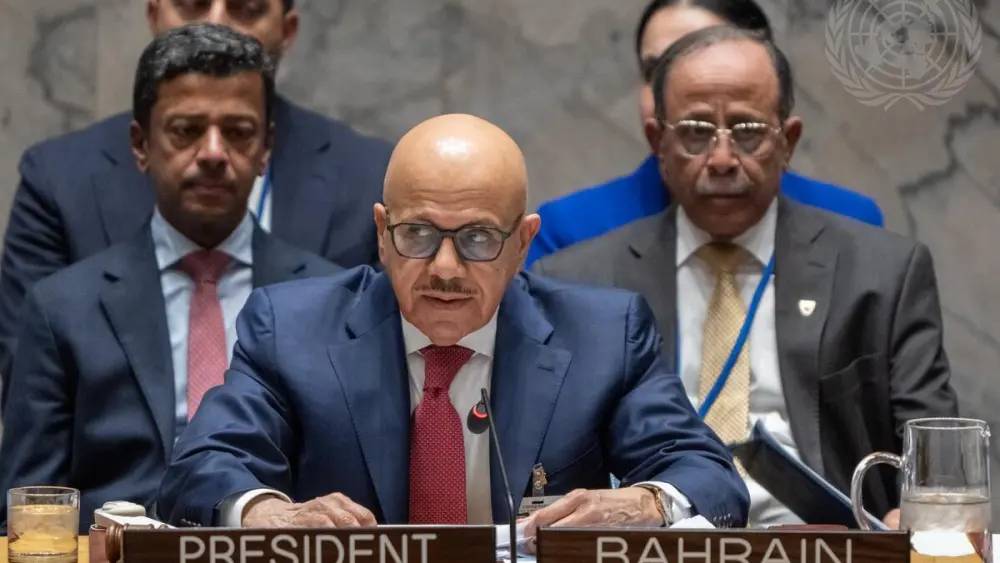
Abdullatif bin Rashid Al Zayani, Bahrain’s foreign minister, told the council before the vote that the proposal, which was backed by other Arab states, was a “responsible response” to the situation in the strait, which has severely disrupted the global oil sector and other trade, sending prices skyrocketing. He said Iran had “no right” to cut off access and to “weaponize” usage of the strait as an economic and security “bargaining chip.”
The resolution text urged states to contribute to safe passage, including escorting commercial vessels, and to deter interference with international navigation.
In response to U.S. and Israeli strikes on Iran beginning Feb. 28, Tehran has limited passage through the strait and targeted vessels it deems linked to hostile states, triggering a near blockage that pushed global oil prices higher and heightened energy insecurity.
Waltz said after the vote that Iran’s actions could constitute “its last act.”
He condemned the vetoes as siding with a regime that “seeks to intimidate the Gulf, even as it brutalizes its own people during a national internet blackout for daring to imagine dignity or freedom. Now it seeks to punish the world as cynical leverage in its ‘death to America’ approach to foreign policy.”
An international coalition requested by U.S. President Donald Trump to force the opening of the strait has not materialized, with Trump criticizing NATO members and other allies for failing to back Washington on the effort.
“The whole world has been impacted, unfortunately, because Iran is violating every law known by striking commercial vessels in the Strait of Hormuz,” U.S. Secretary of State Marco Rubio stated. “This is a regime that doesn’t believe in laws, rules, or anything like that. It’s a state sponsor of terrorism, so it’s no surprise they’re now conducting terrorist attacks against commercial vessels.”
The United Arab Emirates, which has publicly volunteered to join the United States in an effort to open up the strait, said after the vote that “no state should possess the ability to obstruct the arteries of global trade or push the world to the brink of an economic crisis,” expressing its “profound regret” that the resolution did not pass.
“The Security Council’s failure to respond does not diminish the gravity of this crisis or the resolve of the United Arab Emirates,” the permanent mission of the UAE to the United Nations stated. “The United Arab Emirates will continue to rally international efforts to reopen the Strait of Hormuz, and to work with its partners to ensure the security of navigation and restore the flow of global trade.”
Danny Danon, Israel’s U.N. ambassador, stated that broad support for the resolution “reflects the commitment of most countries in the world to ensure freedom of navigation and to stand up to attempts to threaten international trade routes.”
“Those who threaten the Strait of Hormuz threaten the entire global economy,” he stated.