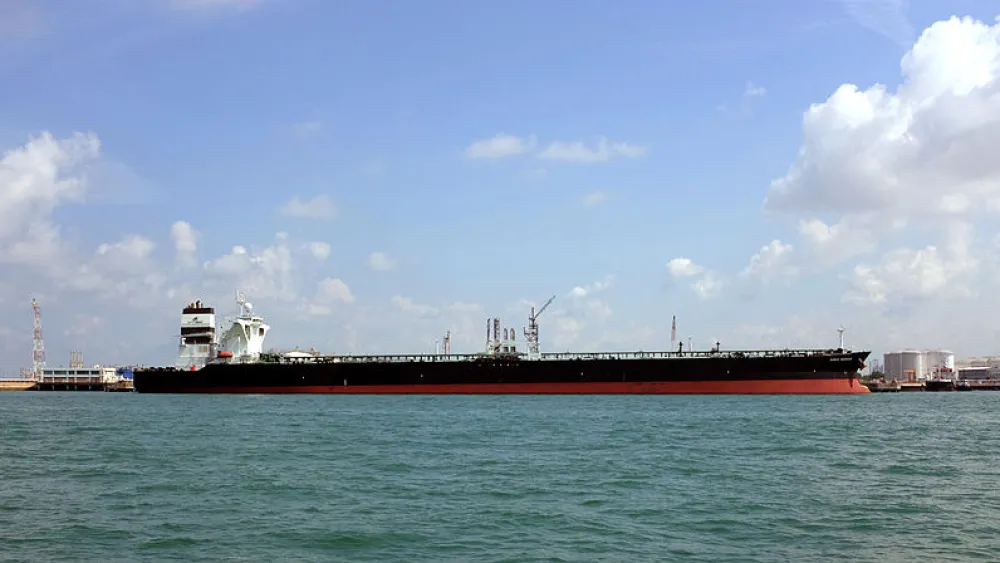
An oil tanker owned by British Petroleum is sheltering in the Persian Gulf amid fears it could be seized by Iran, Bloomberg reported on Monday.
The theocratic regime in Tehran threatened to retaliate after an Iranian oil tanker was seized last week by British Royal Marines off the coast of Gibraltar. The tanker, the Grace 1, was believed to have been carrying oil to Syria in violation of European Union sanctions.
The British Heritage, a mid-size oil tanker capable of carrying 1 million barrels of oil, was sailing towards the Iraqi port of Basra in the south of the country when it made an “abrupt” u-turn and retreated to the safety of the Saudi Arabian coastline on July 6, according to a source briefed on the situation.
The tanker, registered in the Isle of Man and flying under the British flag, had been chartered by Royal Dutch Shell to transport crude from Basra to northwest Europe. BP declined to comment.
“It’s a psychological game that’s being played,” Olivier Jakob, managing director of energy consultant Petromatrix GmbH, told Bloomberg. “Nobody wants to be that one whose vessel is seized in a ‘tit-for-tat.’ ”
Meanwhile, Iranian state TV reported that the British ambassador to Iran had been summoned on Monday for a third time over the seizure of the Grace 1. Fears of a reprisal intensified over the weekend when senior regime officials openly called for “retaliatory action” against British interests.
Mohammad Ali Mousavi Jazayeri, a member of Iran’s powerful Assembly of Experts, warned Saturday that Britain “should be scared” of reciprocal measures, while Iran’s Defense Minister, Amir Hatami, described the seizure of the tanker as a “threatening act” that will not be tolerated.
The vessel, owned by a Dubai-based company with ties to Tehran, was carrying crude oil to the Banyas Refinery, a facility subject to E.U. sanctions against the regime of Syrian dictator Bashar Assad.