Newsletter
Newsletter Support JNS

Earthquake hits Red Sea, shakes seaside city of Eilat

No injuries or property damage were reported in the wake of the 5.4 magnitude tremor, which struck southern Israel on Tuesday afternoon.

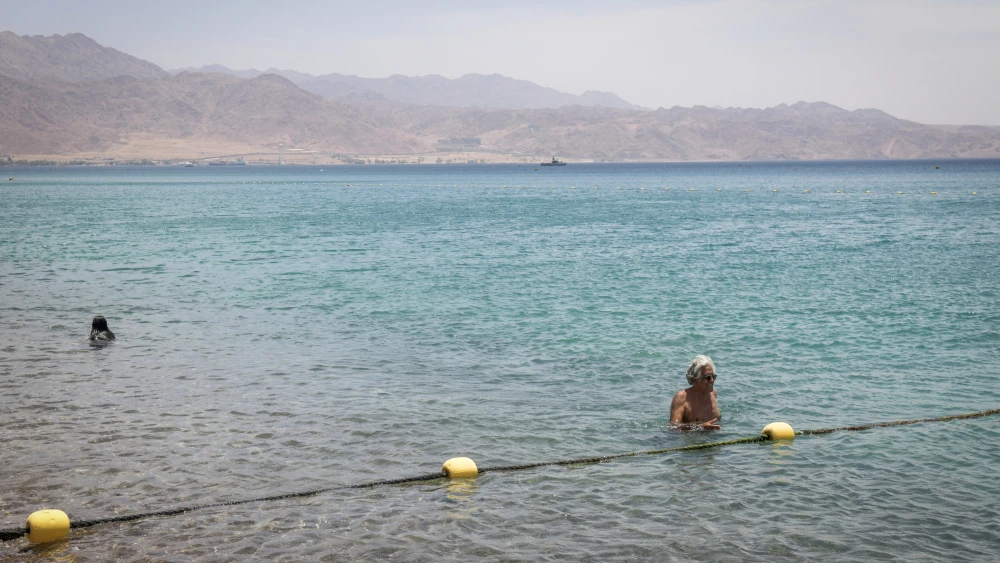
The Red Sea in the southern Israeli city of Eilat, on May 13, 2020. Photo by Yossi Zeliger/Flash90.

A 5.4 magnitude earthquake that struck in the middle of the Red Sea on Tuesday afternoon was felt in southern Israel.

According to the Geological Survey of Israel—a public-sector organization that advises the government in Jerusalem on geoscience—the tremor struck 152 miles southwest of Eilat at 5:30 p.m., and was felt as far north as the Sinai Peninsula. No damage or injuries were reported.

Last month, a 3.2 magnitude earthquake was felt in the Lower Galilee; a second one, just 75 minutes later, hit southern Lebanon, according to the Geological Survey.

Israel’s eastern border sits on the Syria-Africa fault line of the Great Rift Valley, a crack in the earth’s crust that runs from Lebanon to Mozambique.

The last major earthquake to hit the region was the 1927 Jericho earthquake, a 6.2-magnitude tremor that lasted about five seconds but killed 500 people and injured 700 more, causing widespread damage.

Lior Chorev, a veteran strategist recently added to the former prime minister’s campaign team, once wrote on X that “Trump’s Truth is like Iran’s democracy.”
The IDF degrades Iranian missile stockpiles and targets nuclear research facilities while the Israeli home front faces persistent yet reduced attacks.
“Public funds aren’t props,” said Mark Goldfeder, of the National Jewish Advocacy Center.
“We’re not going to solve the world’s problems with this hearing,” the judge said, after interrupting the plaintiff, who praised the Hamas terror organization.
The man posted an expletive-laden Instagram video saying that the U.S. president “should be executed.”
Shira Goodman, of the Anti-Defamation League, told JNS that the votes are non-binding to the public universities but “risk fueling division on campus.”