


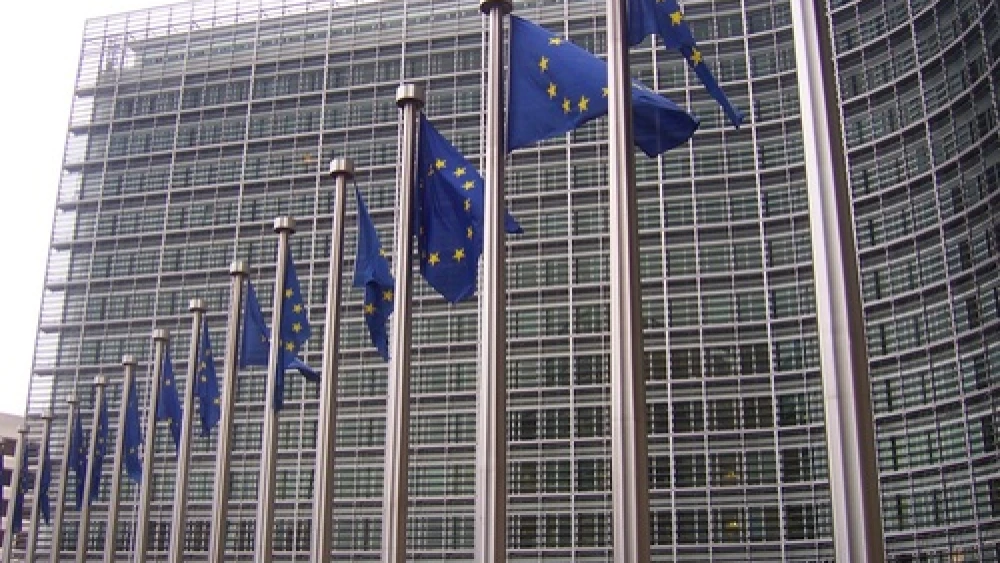
A key body of the European Union adopted a declaration on Wednesday to combat anti-Semitism.
The Council of the European Union is comprised of government ministers from the 27 E.U. member-states, who meet to make laws and coordinate policies. The ministers have the authority to commit their governments to the actions agreed upon by the council, its main decision-making body. The declaration makes the fight against anti-Semitism a priority of Europe’s executive branch.
The declaration calls anti-Semitism “an attack on European values,” reading: “Any form of anti-Semitism, intolerance or racist hatred is incompatible with the values and aims of the European Union and its Member States and must be addressed through decisive action at European and national level.”
It affirms that member states’ “permanent, shared responsibility to actively protect and support Jewish life.” It also acknowledges the increasing prevalence of anti-Semitism in Europe, particularly in the context of the coronavirus pandemic, and that “an increase in anti-Semitic incidents and hate crimes is a cause of great concern.”
The declaration calls on member states to engage in “continuous dialogue with the Jewish community with a view to ensuring appropriate levels of security awareness, specific training for security staff and law-enforcement officers, exchange of best practices and thorough implementation of appropriate measures to ensure the security of Jewish institutions.”
Regarding the growth of anti-Semitic hate speech, particularly its dissemination online, “crimes committed online should be punished just as crimes offline are and must be adequately addressed by means of effective prosecution and other measures,” the declaration reads. “Illegal hate speech and terrorist content online must be removed promptly and consistently by Internet service providers, in according with the relevant legal and non-legal framework.”
The declaration also calls for the systematic collection of data on anti-Semitic incidents so as to “develop, implement and monitor progress on tailored comprehensive strategies and education instruments,” and for increased Holocaust education as “one of the most important tools to prevent anti-Semitic prejudices.”
The European Council is expected to formally adopt the declaration at its two-day meeting beginning on Dec. 10.
The World Jewish Congress, which for years has worked with E.U. leadership on codifying measures to fight anti-Semitism at member state and local levels, applauded the move.
“This declaration is a significant step forward in making Europe a better place for Jews,” said WJC president Ronald S. Lauder in a statement. “The responsibility now falls on member states to apply the policies and understanding laid out by the European Union in each of their countries, to ensure that the scourge of anti-Semitism is dealt with, that perpetrators are prosecuted to the greatest extent of the law, and that our next generation learns that hatred is unacceptable.”



