The Israeli Air Force carried out an overnight strike on the Isfahan Nuclear Technology Center in Iran, the military said on Saturday.
According to the Israel Defense Forces, the site is being used by the Islamic regime to reconvert enriched uranium—a key step in the process of developing a nuclear weapon.
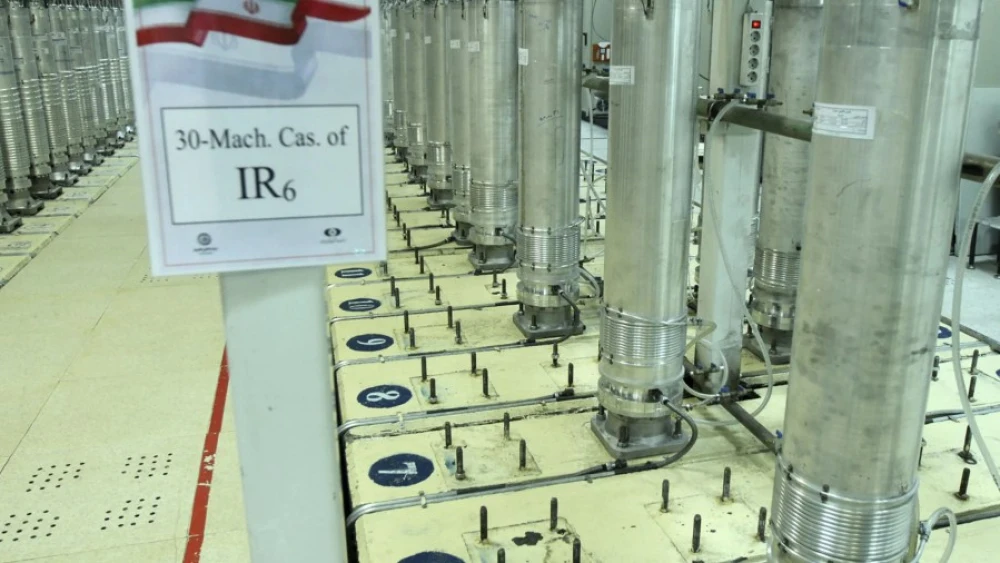
On Saturday evening, the U.N. nuclear watchdog confirmed that a centrifuge manufacturing workshop at Isfahan had been hit.
The workshop—which made the machines used to enrich uranium—was previously under International Atomic Energy Agency monitoring and verification.
“We know this facility well. There was no nuclear material at this site, and therefore the attack on it will have no radiological consequences,” IAEA Director General Rafael Grossi said.
On June 18, the IAEA reported that the Tehran Research Center, where advanced centrifuge rotors were manufactured and tested, had been hit, as had a workshop in the city of Karaj where different centrifuge components were manufactured. There was no radiological impact, internally or externally, according to the agency.
The IAEA has been trying to monitor the situation at Iranian nuclear sites since Israel began attacking them early on June 13, including in Arak, Isfahan, Karaj, Natanz and Tehran.
The military previously targeted the Isfahan facility at the onset of “Operation Rising Lion.” At the time, the IDF reported that fighter jets struck and destroyed sections of the complex involved in advanced processing and enrichment of uranium toward weapons-grade levels.
תיעוד של אתר הגרעין באיצפהאן לאחר תקיפת צה״ל pic.twitter.com/nDWic7k2PS
— צבא ההגנה לישראל (@idfonline) June 21, 2025
Overnight Friday, the IAF also struck an additional centrifuge production facility, adding to two similar sites targeted in Tehran last week.
“These cumulative strikes deal a serious blow to the Iranian regime’s nuclear production capabilities,” said IDF Spokesman Brig. Gen. Effie Defrin on Saturday.
As part of its campaign to disrupt Iran’s nuclear weapons program, the IDF overnight Thursday targeted the Tehran headquarters of the SPND (Organization of Defensive Innovation and Research). The facility is used to develop advanced technologies and weapons that enhance the Iranian regime’s military capabilities.
Founded in 2011 by Mohsen Fakhrizadeh—the key architect of Iran’s nuclear program—the SPND has been a central player in the country’s defense innovation, said the IDF.
אילוסטרציה של אתר הגרעין באיצפהאן והמבנים לייצור הצנטריפוגות שהותקפו pic.twitter.com/jJzRmOJUgd
— צבא ההגנה לישראל (@idfonline) June 21, 2025
Meanwhile, the IAEA reported on Friday that Israeli strikes damaged key infrastructure at Iran’s Khondab heavy water research facility, including the site’s distillation unit.
“It was not operational and contained no nuclear material, so no radiological effects,” the IAEA said.
A day earlier, 40 IAF fighter jets attacked dozens of nuclear and military targets across Iran, including the reactor near Arak.
The reactor strike targeted the core seal structure—a key element in plutonium production. The IAF raid aimed to prevent the reactor’s use for nuclear weapons development, the military said.
In a separate strike, the IAF targeted a nuclear weapons development site near Natanz. The facility housed specialized equipment and hosted projects intended to accelerate Iran’s nuclear program, according to the IDF.
On Saturday, Defrin said that the IAF had also destroyed UAVs and surface-to-surface missile launchers in western Iran.
“Denying the enemy its launch capabilities reduces the number of threats fired toward our territory and degrades the layers of the enemy’s defense infrastructure,” said Defrin.
He added that the military hit the Iranian regime’s broadcast systems.