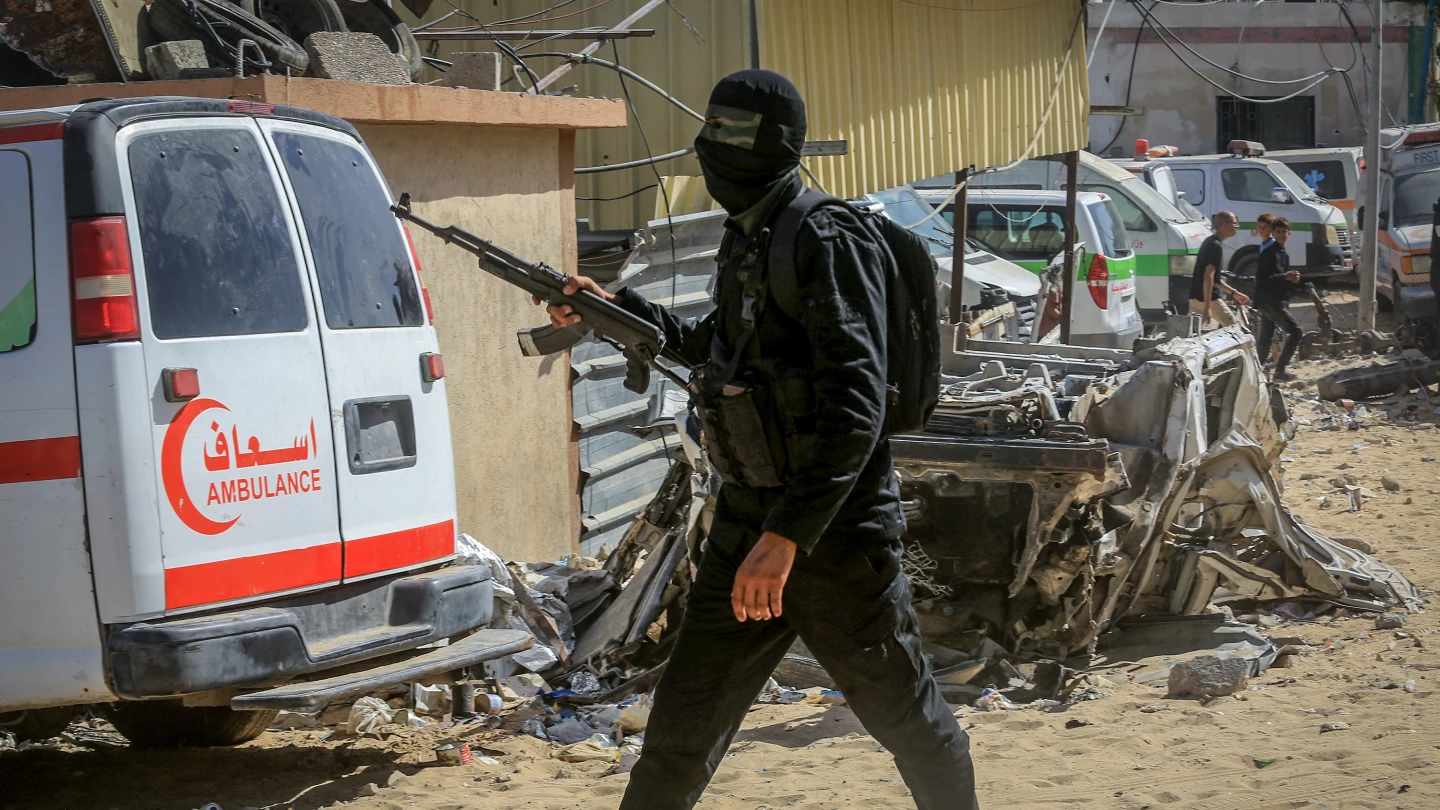
The Lebanese Shi’ite terrorist organization Hezbollah has already begun rebuilding its military capabilities and financial operations, just over a week since a ceasefire with Israel went into effect after 13 and a half months of war.
While the IDF’s aerial and ground offensives severely degraded the Iranian proxy’s terrorist infrastructure and forces, according to U.S. intelligence estimates, Hezbollah has started recruiting new fighters, boosting domestic weapons production and looking for ways to continue smuggling arms in via Syria.
Reuters cited a senior American official, an Israeli official, and two U.S. lawmakers briefed on the intelligence in its reporting published on Wednesday.
According to the terms of the Nov. 27 ceasefire agreement, Hezbollah is prohibited from rearming.
Hezbollah lost more than half of its weapons stockpiles and thousands of fighters during the war with Israel, according to American assessments. However, it has not been destroyed, with the sources saying that it still has thousands of short-range rockets and will try to rebuild using weapons factories in neighboring countries with transportation routes into Lebanon.
One of the lawmakers told Reuters that Hezbollah has been “temporarily weakened” and its command-and-control capabilities diminished. However, the lawmaker notes, “This organization is built to withstand disruption.”
Washington is particularly concerned about Syria, where Turkish-backed jihadist terrorist groups recently launched offensives in Aleppo and Hama, in a major challenge to the Assad regime and its Iranian and Russian backers. Israel continues to target Hezbollah smuggling routes in Syria and at the Syrian-Lebanon border and to disrupt Iranian weapons shipments via Syria.
A senior U.S. official revealed that Washington is urging Syrian President Bashar Assad to restrict Hezbollah’s activities, with other regional countries being enlisted to assist in this effort. Reuters reported earlier this week that the U.S. and the United Arab Emirates discussed the possibility of lifting sanctions on the Assad regime, provided, among other conditions, he halts the weapons supply routes to Hezbollah.
Hezbollah officials assert that the group will maintain its “resistance” against Israel. However, sources in Lebanon indicate that Hezbollah’s primary focus at the moment is on rebuilding and restoring homes damaged by Israeli airstrikes in Southern Lebanon and Beirut.
Hezbollah’s financial system
Meanwhile, Saudi-owned, London-based pan-Arab newspaper Asharq Al-Awsat reported that Hezbollah has begun assessing repairs to its financial arm, Al-Qard al-Hassan, which was heavily damaged by Israeli attacks during the war.
The Iranian proxy plans to pay housing grants through the bank to repair the homes of families impacted by the war. Each family may receive $12,000 for rent and home repairs.
Despite, suffering severe blows in an Israeli aerial operation on Oct. 21, the bank resumed operations a week after the ceasefire.
The Saudi newspaper highlighted that “the announcement of the bank’s resumed operations contradicts Israeli claims of its destruction.” However, a source close to Hezbollah confirmed that the group had suffered significant financial losses during the war. The source further explained that the funds for rehabilitation will not come from Al-Qard al-Hassan’s resources, but from recent financial transfers from Iran to Hezbollah.
Iran transferred $1 billion via a regional intermediate on the first day of the ceasefire, which Hezbollah plans to use for its rehabilitation efforts.