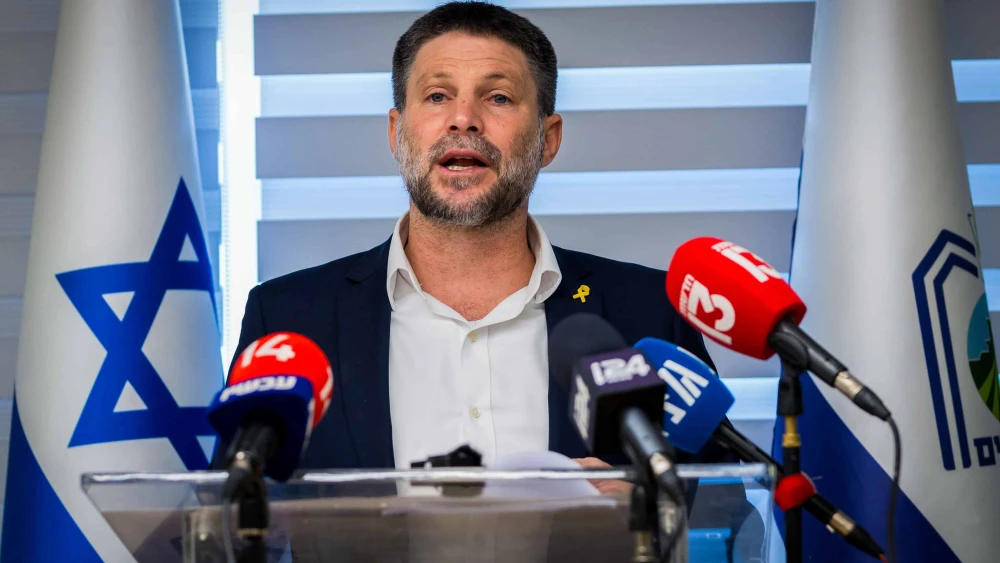
Israeli Finance Minister Bezalel Smotrich will extend a waiver allowing Israeli banks to do business with their Palestinian counterparts in Judea and Samaria for one month, officials in Jerusalem told local media on Thursday, just hours before the agreement was set to expire.
The decision to extend the deal for another 30 days received backing from Israel’s Security Cabinet and comes against the background of the upcoming U.S. presidential vote and the desire to reconsider the issue soon depending on who wins, an Israeli official was cited as saying.
It also allows Israel to use the waiver as leverage since the Biden administration could take steps to advance Palestinian statehood during the transition period after a possible Trump win, the official told Walla.
The waiver, which Smotrich signed for a period of four months in late June, extends the indemnity to Israeli correspondent banks that transfer money to Palestinian Authority banks in Judea and Samaria. The deal shields major Israeli financial institutions with relations to the P.A. from lawsuits stemming from charges of supporting Palestinian terrorism.
The decision to extend the indemnity waiver was reportedly made as a tradeoff for Israeli Prime Minister Benjamin Netanyahu’s approval to retroactively legalize several Jewish outposts in Judea and Samaria.
Earlier this year, Smotrich threatened to topple the P.A.'s economy in response to Ramallah’s push for unilateral statehood and support for the International Criminal Court case against Israeli political leaders.
The Ramallah-based P.A. is “working against Israel with political terrorism and promoting unilateral measures around the world,” he told fellow ministers. “If this causes the P.A. to collapse, let it collapse.”
U.S. Treasury Secretary Janet Yellen has vowed to use “all diplomatic efforts” to thwart Smotrich’s intentions. “I’m particularly concerned by Israel’s threats to take action that would lead to Palestinian banks being cut off from their Israeli correspondent banks,” she stated on May 23.
Last month, U.S. Treasury Deputy Secretary Wally Adeyemo conveyed Washington’s concerns over Smotrich’s “threats,” telling Bank of Israel head Amir Yaron that the waiver “should be extended for at least a year.”
Per accords signed in the 1990s between Israel and P.A. leader Mahmoud Abbas’s Palestine Liberation Organization, the shekel is the primary currency in Judea and Samaria, alongside the Jordanian dinar.
Some 1 billion shekels (nearly $268 million) in yearly tax revenue that Israel collects on behalf of the P.A. goes towards Ramallah’s “pay for slay” policy, under which it pays “salaries” to terrorists and their relatives.