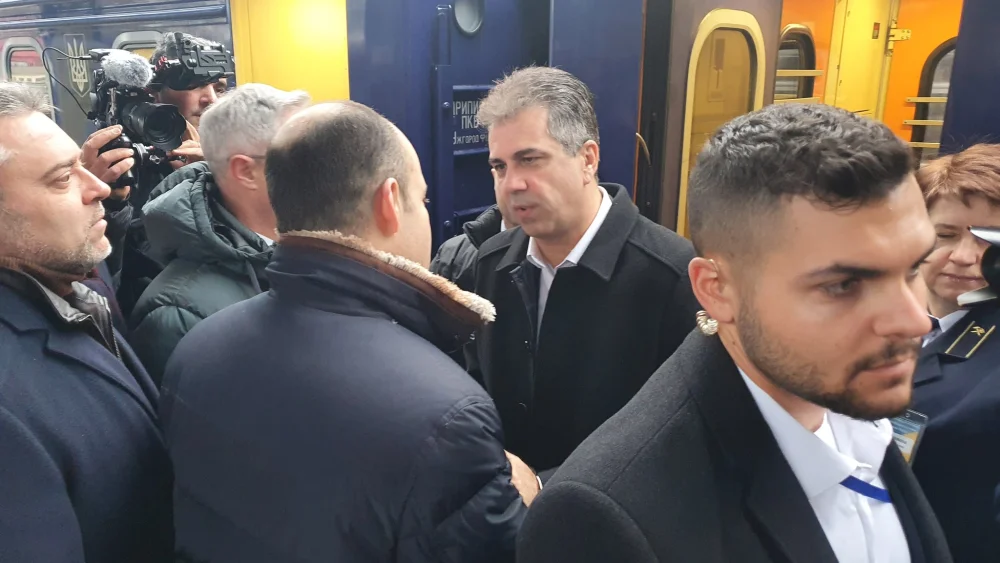
Israeli Foreign Minister Eli Cohen arrived in Ukraine on Thursday for a solidarity visit ahead of the one-year anniversary of Russia’s invasion of the European nation.
Cohen is the first Israeli minister to travel to the war-torn country since the conflict erupted on Feb. 24, 2022.
“I came to say that Israel stands by Ukraine and the Ukrainian people in its difficult hour,” tweeted Cohen upon his arrival.
Cohen met with his Ukrainian counterpart Dmytro Kuleba and was slated to have a sit-down with President Volodymyr Zelenskyy. The top Israeli diplomat is also attending a ceremony for the permanent reopening of the Israeli embassy in the Ukrainian capital.
הגעתי כעת לקייב, לביקור ראשון של שר ישראלי באוקראינה מאז תחילת המלחמה.
— אלי כהן | Eli Cohen (@elicoh1) February 16, 2023
אפגש עם הנשיא זלנסקי ושר החוץ קולבה, אפתח מחדש את שגרירות ישראל בקייב, שתחזור לפעילות רציפה ומלאה, ואבקר בבוצ'ה ובבאבי יאר.
באתי כדי לומר: ישראל עומדת לצד אוקראינה ולצד העם האוקראיני בשעתו הקשה pic.twitter.com/KfD7hqjxun
Cohen arrived in Kyiv by overnight train from neighboring Poland. Due to security concerns, the trip was not announced until Thursday morning when he reached Bucha, the site of alleged Russian atrocities.
“It is impossible to remain indifferent in the face of the terrible sights and horror stories that I have heard and been exposed to here. Israel condemns any intentional harm to innocent people,” said Cohen.
ביקרתי בבוצ׳ה, אחד מפרוורי קייב שנפגעו קשות בתחילת המלחמה. אי אפשר להישאר אדיש נוכח המראות הקשים וסיפורי הזוועה ששמעתי ונחשפתי אליהם כאן, ישראל מגנה כל פגיעה מכוונת בחפים מפשע.
— אלי כהן | Eli Cohen (@elicoh1) February 16, 2023
צילום: שלומי אמסלם, לע"מ pic.twitter.com/4mcYXvqxIy
He also toured Babyn Yar, where the Nazis and their local collaborators massacred 34,000 Jews over two days during the Holocaust.
"קול ברמה נשמע נהי בכי תמרורים רחל מבכה על בניה... ויש תקוה לאחריתך נאם ה' ושבו בנים לגבולם"
— אלי כהן | Eli Cohen (@elicoh1) February 16, 2023
בבאבי יאר, סמל השואה במזרח אירופה. בספטמבר 1941, תוך יומיים בלבד, נרצחו כאן ע״י הנאצים ושותפיהם למעלה מ-30 אלף יהודים. הגענו היום לחלוק להם כבוד ולהבטיח: לעולם לא עוד. pic.twitter.com/sAfVkQlw9O
Ahead of the visit, Kyiv submitted to Jerusalem a set of demands, including that the Israeli government issue a clear statement condemning Russia’s invasion and in support of Ukraine’s territorial integrity.
Kyiv is reportedly also requesting approval for a loan of $500 million, backing for Zelenskyy’s peace plan calling for a total withdrawal of Russian forces from Ukrainian territory, access to medical services and treatment in Israel and the joint development of missile-defense technology.
Russia has warned Israel against arming Ukraine, after Israeli Prime Minister Benjamin Netanyahu indicated he was considering providing military assistance to Kyiv, and was willing to mediate between the sides.
During his visit to Israel last month, U.S. Secretary of State Antony Blinken said that Jerusalem should be doing more to support Ukraine from a security perspective.
Standing alongside Netanyahu, Blinken said that “Russia’s ongoing atrocities” underscore the importance of “providing support for all of Ukraine’s needs—humanitarian, economic and security.”
Israel has refrained from providing weapons directly to Ukraine, as doing so could risk undermining the Jewish state’s security.