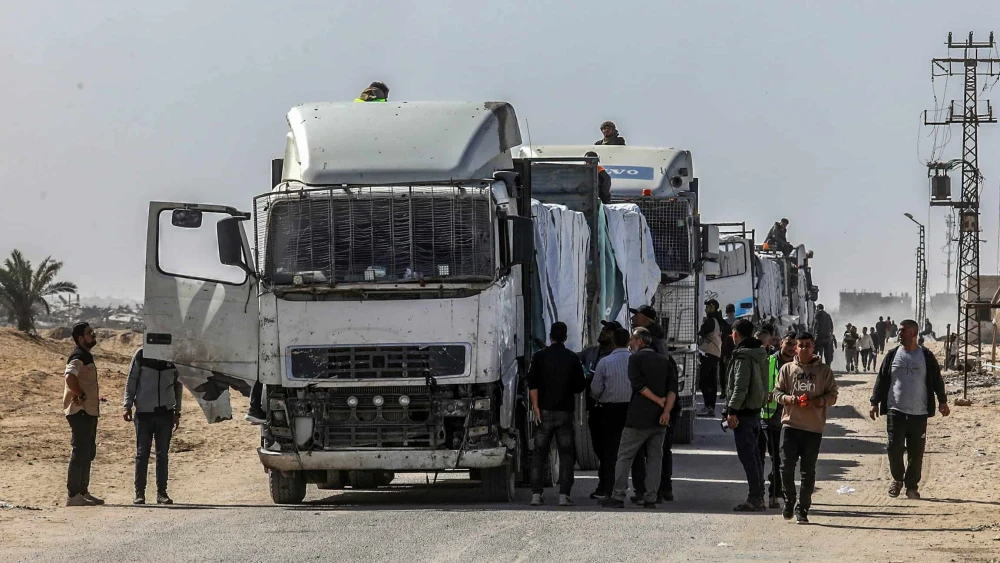
Israeli opposition lawmaker Yulia Malinovsky of the Yisrael Beiteinu Party on Monday joined activists of the Tzav 9 (“Order 9") protest movement in blocking aid trucks heading to the Gaza Strip.
“They told us that there were no terrorists left there—but there are, very much so,” Malinovsky said in a video distributed by the activist group. “Everything that goes in goes to Rafah, goes to the enemy, goes to Hamas, and we are doing this with our own hands. It’s very sad.”
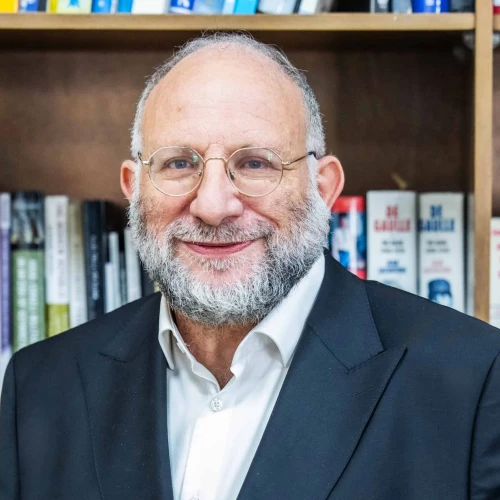
Malinovsky told JNS on Monday that her participation sought to “convey a message to the Knesset members and ministers that if they do not act, civil society organizations, and we in Yisrael Beiteinu, will act.
“When we return to power, we will cut all civil ties with the Gaza Strip,” the opposition lawmaker vowed.
שלמה שריד, צו 9: ״פעם הקונספציה היתה כסף במזוודות והיום זה סיוע במשאיות.״
— תנועת צו 9- בשירות העם (@9_tzav) February 9, 2026
אנחנו קוראים לכלל חברי הכנסת לקרוא להפסקת הסיוע לאויב בשעת מלחמה. זה לא עניין של ימין או שמאל, אופוזיציה או קואליציה, זה עניין של טובת מדינת ישראל. pic.twitter.com/qFPI8FeTLW
Tzav 9 recently resumed its protests under the slogan “Aid to Hamas must not enter,” following the return of the final remaining hostage body, that of Israel Police Master Sgt. Ran Gvili, from the Strip.
Malinovsky was said to have joined the blockade as part of an official party visit to the border aimed at putting pressure on Prime Minister Benjamin Netanyahu’s government to halt aid transfers to Gaza.
As part of the tour, Yisrael Beiteinu leader Avigdor Liberman and lawmaker Sharon Nir visited a border crossing with the Arab enclave.
Tzav 9 leaders Reut Ben-Haim and Shlomo Sarid called on all Knesset members to join their call to action.
“Once the [security] concept was cash in suitcases, and today it is aid in suitcases,” they stated. “We are calling on both coalition and opposition to join us in demanding an end to the failure of aid to the enemy.”
Also participating in Monday’s protest was French-Israeli Tzav 9 activist Rachel Touitou, who was summoned by a French court as part of an investigation into alleged complicity in genocide by protesting aid.
“We are prepared to pay personal prices for speaking the truth,” she said on Monday. “Aid trucks are Hamas’s lifeline. This failure must be stopped.
“In January 2024, Shin Bet assessments indicated that 77% of the aid was stolen by Hamas. Today, even the U.N. acknowledges that 86% of the trucks are being looted by the terror organization,” added Touitou.
“We were the first to identify this, and we refuse to allow the greatest failure of the war to continue,” the activist said.
On Jan. 20, 2025, Tzav 9 pressed U.S. President Donald Trump in a letter to cease aid to Gaza while hostages were still being held there.
“To cement its control, Hamas sells the supplies given to them by the world at high prices to civilians, thereby funding the war, controlling the population, and recruiting more hungry and wounded civilians into its ranks. It is illogical to continue providing aid, which only strengthens our enemy during wartime,” Ben-Haim and Sarid wrote to Trump.
Tzav 9 engaged in nonviolent protests aimed at blocking aid. As many as 75% of the convoys are diverted by Hamas and other criminal organizations in Gaza, says the group, citing government officials.