Newsletter
Newsletter Support JNS

Israel’s coronavirus czar warns that country faces ‘state of emergency’

Coronavirus Project Coordinator Nachman Ash says that his office will convene to discuss “immediate steps” to recommend to the Cabinet.

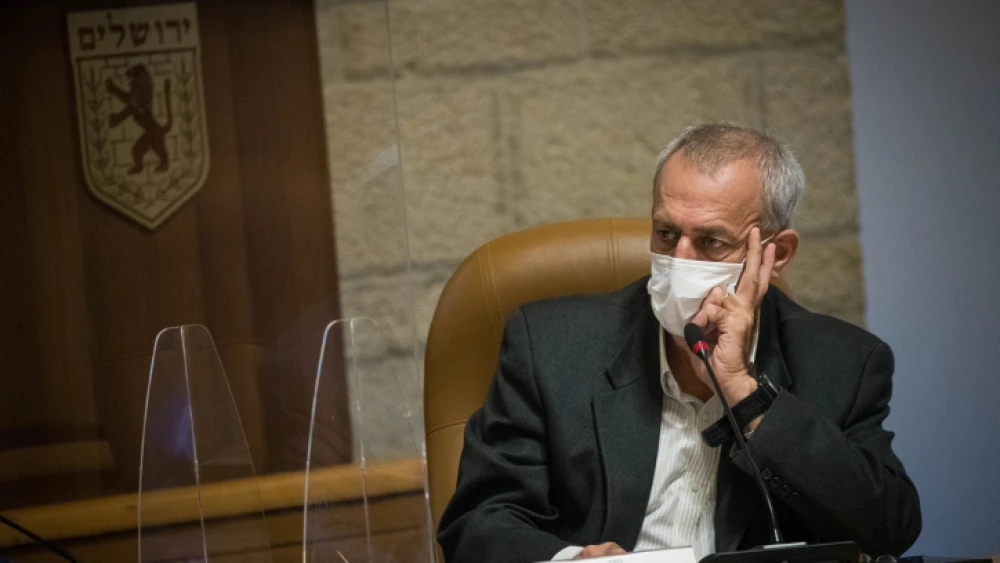
Israel's National Coronavirus Project Coordinator Nachman Ash at the Jerusalem Municipality on Nov. 22, 2020. Photo by Yonatan Sindel/Flash90.
Israel’s National Coronavirus Project Coordinator Nachman Ash at the Jerusalem Municipality on Nov. 22, 2020. Photo by Yonatan Sindel/Flash90.

Israel’s National Coronavirus Project Coordinator Nachman Ash said on Tuesday that the country’s rising COVID-19 morbidity represents a “state of emergency,” adding that his office would meet to discuss “immediate steps” to be recommended to the so-called coronavirus Cabinet.

Ash’s remarks were made during a situation assessment at the Israeli Health Ministry, after morbidity figures broke a two-month record, according to Israeli media reports. He suggested that Israelis had grown lax with regard to the regulations.

“There is a feeling among the public that the corona[virus] has gone,” he said.

Israel’s morbidity rate stood at 2.2 percent on Monday, and between Monday and Tuesday, 1,233 new cases were confirmed, according to Health Ministry data. As of Tuesday, there were 10,558 known active cases—267 of which were classified as serious with a national death toll of 2,867.

Israel entered its second nationwide lockdown in September with among the highest morbidity rates per capita in the world.

At the peak of the “second wave” of the pandemic, nearly 10,000 new cases were being recorded daily. On Oct. 15, the Cabinet approved the Health Ministry’s proposal for a phased lockdown exit, with the criteria for the first stage being a daily average of 2,000 new cases and a basic virus reproduction value of 0.8.

After the second phase of the exit was implemented on Nov. 1, however, morbidity figures once again began to rise, leading to fears that the country may be headed back to a third lockdown.

Rabbi Elliot Cosgrove, of Park Avenue Synagogue, told JNS that he will address “Yizkor, memory and revelation,” rather than politics, during Shavuot morning services.
“The bill will continue to return our intelligence agencies back to their core mission: the collection of clandestine foreign intelligence to protect our homeland,” said Sen. Tom Cotton.
“There’s much that goes into a security-layered approach, and as far as I’m concerned, you can never have too many layers,” the village’s police chief told JNS.
Removing sanctions on the anti-Israel United Nations adviser “will undermine important national security and foreign policy interests of the United States,” the Justice Department said.
“Reconstruction financing will not follow where weapons have not been laid down,” warned Nickolay Mladenov, amid a stalled peace process he largely blamed on the Gazan terror group.
Regardless of the findings of a recent Democratic National Committee “autopsy” report, a “majority of Americans, including Democrats, support the U.S.-Israel relationship,” Brian Romick, of Democratic Majority for Israel, told JNS.

