By Robert Gluck/JNS.org
New York’s Jewish Museum is shining a bright light on the many forms and enduring ritual uses of Hanukkah lamps from around the world in a new exhibit that runs through the winter holiday season.
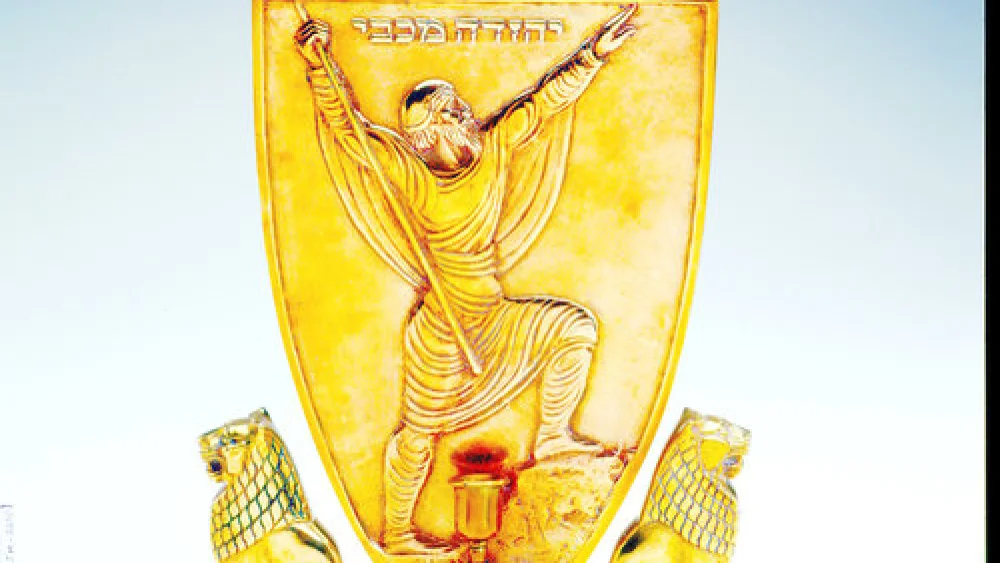
The museum’s vast collection of 1,022 Hanukkah lamps date from the Renaissance period to modern day. They are made from a wide variety of materials and come from virtually every part of the world, including North and South America, Europe, Asia, the Middle East and North Africa. Each lamp holds a unique history.
“They are wonderful objects and the largest part of the museum’s collection. Over time, the lamp became more significant for a variety of reasons,” said Susan Braunstein, Ph.D., the museum’s Henry J. Leir curator, and an expert on Hanukkah lamps. She’s authored several books on menorahs, published a catalogue of the museum’s collection of Hanukkah lamps and is an adjunct instructor of Jewish art at the Jewish Theological Seminary of America.
Braunstein provides museum visitors with an engaging overview of the Hanukkah lamp, sharing its origins in Jewish tradition, innovative forms, enduring ritual uses and its social context.
The Jewish Museum’s current exhibit, “Masterpieces & Curiosities: Memphis Does Hanukkah” (now through Feb. 12, 2017) features Judaica by modern artists including Los Angeles-based designer Peter Shire’s “Menorah #7.” The museum’s permanent collection, “Culture and Continuity: The Jewish Journey,” has Hanukkah lamps on view year-round.
Shire’s menorah, which he said is inspired by his family’s Jewish roots, is a set of oddly shaped and balanced geometries, fabricated with industrial materials, bright colors and “finish-fetish” detailing. Shire’s style is influenced by Russian Constructivism and the Bauhaus, as well as the radical, irreverent, and often humorous history and style of West Coast art.
Each Hanukkah lamp in the show, whether contemporary or from hundreds of years ago, reflects a history of decisions and events that happened over centuries, Braunstein said.
“Different forms developed over time and are taken from different sources,” she said. “A baroque lamp was the modern art of its time. That’s something to think about and remember as we look at things that come out now, like Shire’s work.”
While the shiny gold and silver menorahs on view are eye catching, Braunstein said it’s important to remember that Jews in many parts of the world, living in poor and difficult conditions, have used plain, everyday materials to keep with Judaism’s teaching at Hanukkah to remember the victory of the Maccabees over the Greeks, and the rededication of the Second Temple in Jerusalem on Temple Mount in the second century B.C.
“Some rabbis ranked the materials that could be used and, at the bottom of the list, are walnut and egg shells,” she said. “A visitor from Romania told me he remembers his mother took potatoes and cut them up and carved a little hole in them and put a candle or oil in them for Hanukkah.”
Lasting light
The menorah is only part of what makes Hanukkah, the Jewish Festival of Lights, so enduring.
“Hanukkah is a joyous holiday,” Braunstein said. “It’s a holiday of light, which is always wonderful, and it comes at the time of the year in the Northern Hemisphere where it gets dark early. Religiously, it’s mandated and it has to do with the wish for the restoration of the temple, an important thing in Jewish culture.”
The museum’s Hanukkah lamps serve a function beyond what their creators and previous owners originally intended.
“They help illuminate the multitude of events and people that have contributed to the practice, interpretation, and preservation of Jewish culture over the centuries,” Braunstein has written. “Their survival represents its own kind of miracle--of the link between the Jewish past and its future, effected through courage, intellect, creativity, piety, passion, and generosity of so many actors in their stories.”