A rabbi from Monsey, N.Y., whose synagogue was the site of an anti-Semitic attack last year during Chanukah, is among a number of Jewish leaders who have filed suit against New York Gov. Andrew Cuomo, claiming that he is violating their religious and civil liberties.
The lawsuit filed in the U.S. District Court for Southern District of New York on Wednesday on behalf of Rabbi Chaim Rottenberg and two other rabbis in Rockland County, N.Y., notes that Cuomo’s shutdown of houses of worship in “color-coded” COVID-19 hotspots unfairly targets Chassidic and other Orthodox Jewish communities.
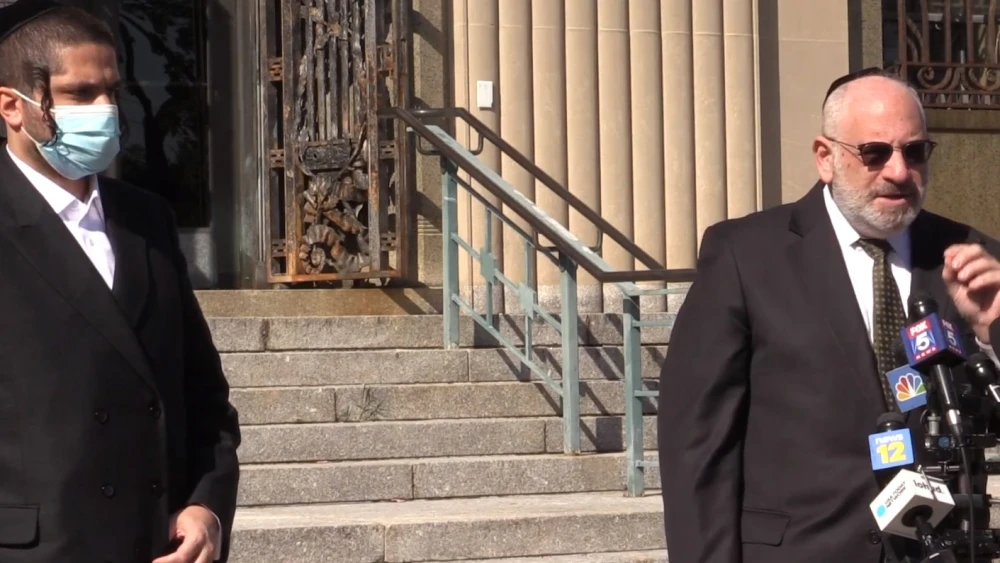
“This paints a target on the backs of Orthodox Jews,” community activist Yossi Gestetner of Spring Valley said during a press conference on Thursday outside of the Rockland County Courthouse, reported Lohud, the Journal News.
The lawsuit further claims that the closures are based on “fear,” pointing to a call Cuomo had with Jewish leaders before announcing the closures.
In the recording, the governor can be heard saying, “ … this is not a highly nuanced sophisticated response. This is a fear-driven response. You know this is not a policy being written by scalpel, this is a policy being cut by a hatchet. … People see the numbers going up, [and say] ‘close everything, close everything.’ It’s not the best way to do it, but it is a fear-driven response. The virus scares people.”
Rockland County is part of several COVID-19 clusters that Cuomo enacted as part of his executive order. Others include Brooklyn and Orange County, N.Y., predominately in Orthodox Jewish neighborhoods.
On Thursday, Cuomo criticized the lawsuit, saying litigants can perceive whatever they want. Of the hotspots, he noted that “if there is a lack of compliance and there is a lack of enforcement, there is an outbreak.”
Meanwhile, a separate lawsuit was filed on Thursday on behalf of Jewish and Catholic individuals and clergy also seeking an injunction to the shutdown. Their lawsuit also addresses the closure of religious schools in coronavirus hotspots.
Many say that part of what has angered religious leaders in lockdown zones is the fact that for months, people who were protesting for police reforms and racial justice following the May 25 death of George Floyd in Minneapolis were not subject to the same scrutiny concerning mask-wearing and social distancing, nor were they subjected to limitations on the size of gatherings.
A previous lawsuit filed on behalf of the Agudath Israel of America last week before the start of Simchat Torah was rejected by a judge who ruled that the congregations would not suffer “irreparable” harm by the closures. That lawsuit, however, came before the release of the audio; advocates for the Orthodox community hope that the new evidence will lead to a different outcome this time around.