Newsletter
Newsletter Support JNS

Knesset rejects bill to allow public transit on Shabbat

The legislation, backed by left-wing lawmaker Gilad Kariv, sought to end a decades-old ban, but faced strong opposition from religious parties.

View of the Jerusalem Light Rail on Jaffa Street in central Jerusalem, Nov. 12, 2025. Photo by Nati Shohat/Flash90.

The Knesset narrowly rejected a bill Wednesday that would have permitted public transportation to operate on the Jewish Sabbath, voting 48-43 against the measure.

Gilad Kariv, a lawmaker for Israel’s left-wing The Democrats Party and an ordained Reform rabbi, sponsored the measure, which sought to end a decades-old restriction that halts most public buses and trains from Friday evening through Saturday evening in observance of Shabbat.
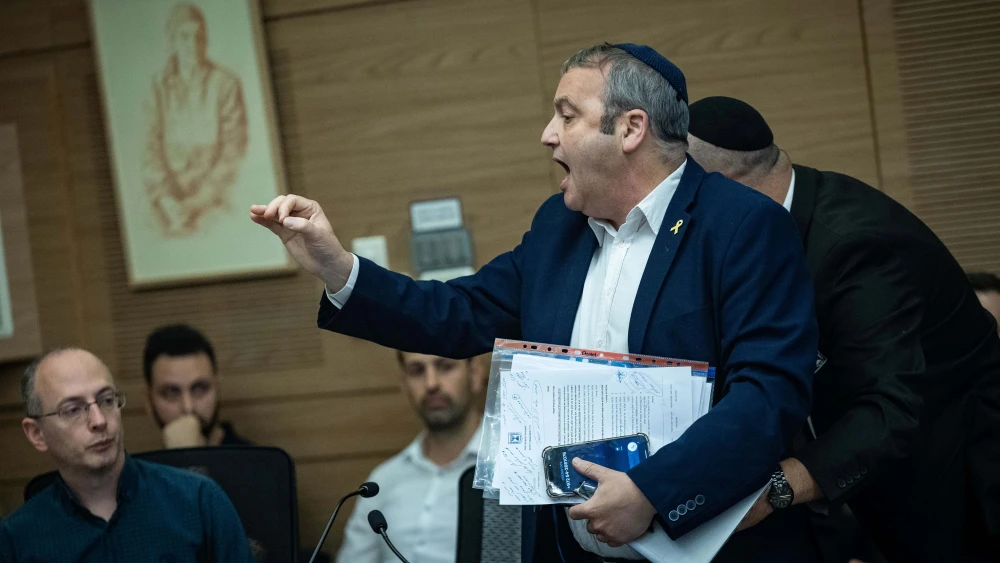
MK Gilad Kariv attends a National Security committee meeting at the Knesset, the Israeli parliament on November 19, 2025. Photo by Yonatan Sindel/Flash90 *** Local Caption *** גלעד קריב ועדת לביטחון לאומי כנסת ביטחון לאומי
MK Gilad Kariv attends a National Security committee meeting at the Knesset, the Israeli parliament on Nov. 19, 2025. Photo by Yonatan Sindel/Flash90.

Religious parties in Prime Minister Benjamin Netanyahu’s coalition strongly opposed the bill, which they view as violating Jewish law and tradition.

Kariv, a longtime advocate for religious pluralism, has argued that the ban disproportionately affects secular Israelis, those who cannot afford cars and workers who need weekend transportation.

Many Arab-majority areas and Tel Aviv operate limited private services during Shabbat. Haifa has consistently maintained partial public transportation service on Shabbat since the founding of Israel.

“There’s so much to do, and world leaders have the authority to move the needle,” Eric Goldstein, who leads the UJA, told JNS. “We need to motivate them.”
The Israeli prime minister plans to meet with the presidents of Argentina, Bolivia, Paraguay, Panama and Ethiopia, as well as the prime ministers of Greece, Slovenia and Papua New Guinea.
António Guterres said there’s an “onslaught” on Gazans “with a scale of killing and destruction unlike anything I have witnessed in all my years as secretary-general.”
King Abdullah II’s father, King Hussein, cracked down on the PLO in 1970 and revoked the citizenship of Palestinians in Judea and Samaria in 1988.