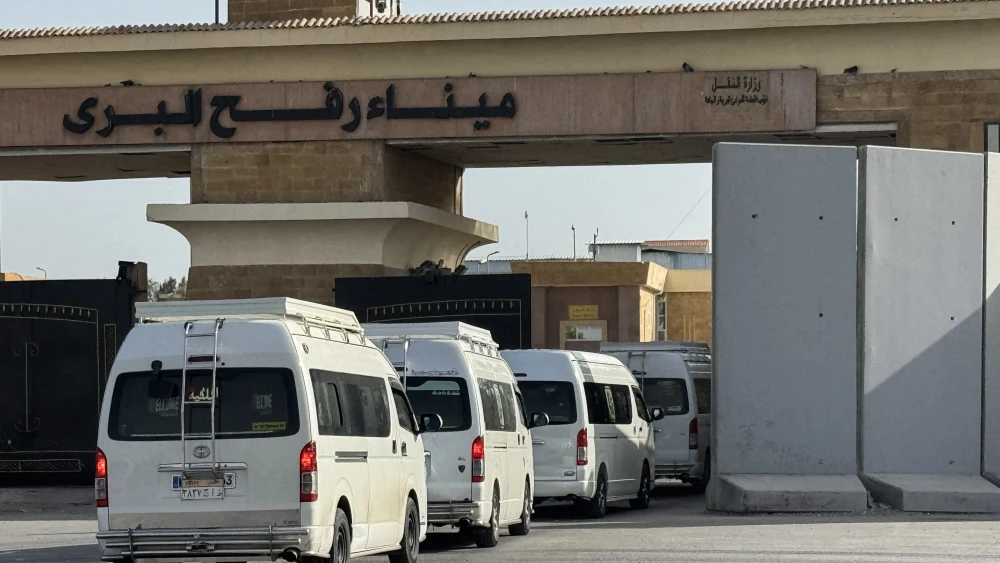
The Rafah Crossing between Gaza and Egypt is open for limited travel but is not used to transfer goods, Israel’s Coordinator of Government Activities in the Territories (COGAT) told JNS on Wednesday.
Israel coordinates departures from and returns to the Gaza Strip, the agency said in a written response, describing travel through the terminal as taking place “under a limited and supervised framework.”
COGAT said more than 52,000 Gaza residents had been evacuated from the Strip since the start of the war on Oct. 7, 2023. Of those, about 7,500 left through Rafah for medical treatment. The agency also said about 7,300 residents had returned to Gaza through the terminal.
In a post on X on Monday, COGAT said both Rafah figures covered the period since the start of the ceasefire on Oct. 10, 2025. Its Wednesday response gave the same figures without specifying whether they covered the same period.
Rafah is the only land crossing between Gaza and Egypt. It initially reopened to a limited number of travelers in both directions on Feb. 2 under the Gaza peace plan, according to the European Union. The EU’s civilian border mission monitors operations and assists Palestinian Authority border officials.
The crossing closed on Feb. 28, when Israel and the United States launched strikes against Iran. COGAT said at the time that restrictions at crossings were imposed because of the missile threat. Rafah reopened in both directions on March 19 in coordination with Egypt, a COGAT spokesperson told JNS at the time. The move followed pressure from the Trump administration, according to Israel’s Ynet.
COGAT said medical evacuations are coordinated with Egypt, the World Health Organization and the European Union Border Assistance Mission.
In a separate evacuation on Monday, about 100 people, including Gazan patients and their escorts, entered Jordan via the Allenby Crossing. Israel coordinated the operation with the United Nations and international partners. The patients were expected to fly from Jordan to a third country for treatment.
COGAT said on Wednesday that a German-donated scanner installed at the Erez Crossing in August had begun screening humanitarian aid trucks bound for Gaza. The agency said Erez is used to screen the trucks, not to admit them into the Strip. After Israel’s Land Crossings Authority screens the trucks at Erez, security forces escort them to the Kerem Shalom Crossing for a second inspection before they enter Gaza.