Israel condemned Iran for its dishonest depiction of events after the Israel Defense Forces pounded Hezbollah targets in Beirut on Sunday in retaliation for the terror group’s drone attack on northern Israel earlier that day.
“The Iranian regime, as always, is lying. Iran’s proxy, Hezbollah, is the one that attacked Israel again this morning, completely unprovoked,” Israel’s Foreign Ministry posted to X, linking to a post by Iran’s top negotiator, Mohammad Baqer Ghalibaf.
“Hezbollah constantly fires at Israeli civilians. Even after the ceasefire, Hezbollah has not stopped targeting Israelis. It was Hezbollah that launched an unprovoked attack on Israel in March, acting under the orders of its Iranian masters,” Israel said.
Ghalibaf, who serves as speaker of parliament, asserted that Israel’s targeted attack had been carried out with the approval of the U.S.
“The Zionist aggression on Dahiyeh once again showed that the United States either has no will or ability to implement its commitments,” he said, referring to Beirut’s southern, predominantly Shi’a neighborhood that serves as a Hezbollah stronghold.
“If you do not have the will and ability to fulfill your commitments, it is not possible to talk about continuing on the path,” he said, asserting that the U.S. had promised to halt Israeli fighting.
Tehran has demanded that a ceasefire in Lebanon be included as part of the broader agreement being negotiated between the U.S. and Iran. But a U.S.-brokered June 3 ceasefire between Israel and Lebanon stressed the two arenas were separate.
“All countries reaffirmed that the future of the relationship between Israel and Lebanon must be decided by the two sovereign governments,” according to a joint statement by Israel, Lebanon and the U.S. announcing the ceasefire.
“The United States reiterated its ongoing support for both governments to exercise their sovereignty. It reaffirmed that any agreement to cease hostilities must be reached directly between the two governments, brokered by the United States, and not through any separate track,” the statement said.
Hezbollah immediately rejected that agreement.
Following the IDF strike in Beirut, IDF Chief of Staff, Lt. Gen. Eyal Zamir conducted situational assessments with all relevant commanders. He expressed great appreciation for the commanders’ many achievements, offensive activity, initiative and determination in recent weeks.
“We are closely monitoring what is happening while maintaining high alertness and readiness in all arenas. The reality is now sensitive and complex. The entire IDF is determined, alert, prepared, and acting with varying intensities in all sectors. Lebanon is our main center of focus, but we are also preparing for developments in other arenas.”
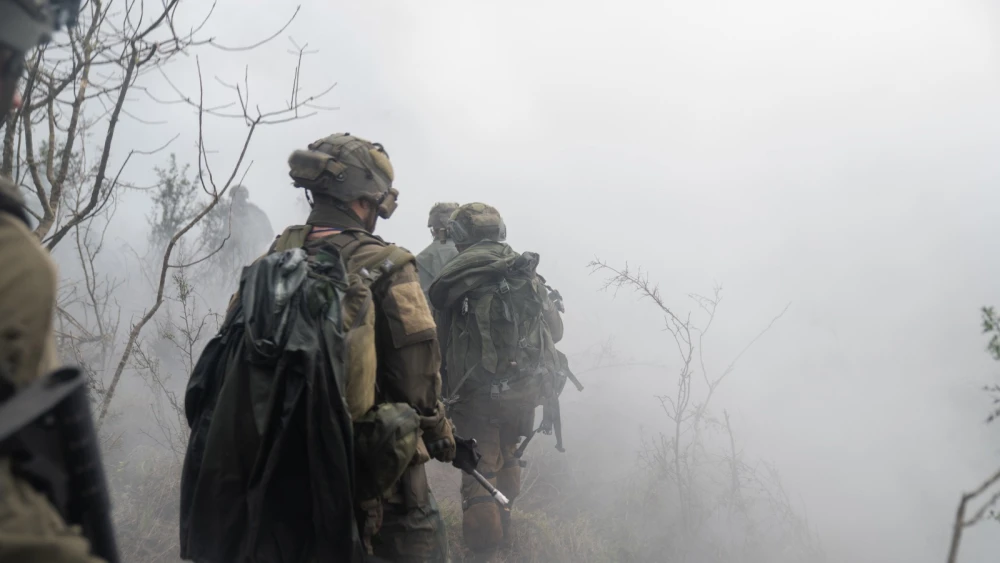
Referring to the discovery of an extensive Hezbollah terror tunnel network beneath the Beaufort Ridge in southeastern Lebanon, site of a 900-year-old Crusader castle, Zamir said, “The findings, both above ground and underground, attest to the importance of the exposed infrastructure and the centrality of the Beaufort area and the Ali Taher Ridge for the [Hezbollah] organization in its attempts to entrench itself and harm the residents of the north.”
He said the terror group had brought disaster upon Lebanon, something Lebanon’s citizens understand very well.
Israeli forces continue to act to strengthen the security of Israel’s northern communities and will continue to erode Hezbollah’s capabilities with future security arrangements to be determined by the U.S.-mediated talks, the general said.