


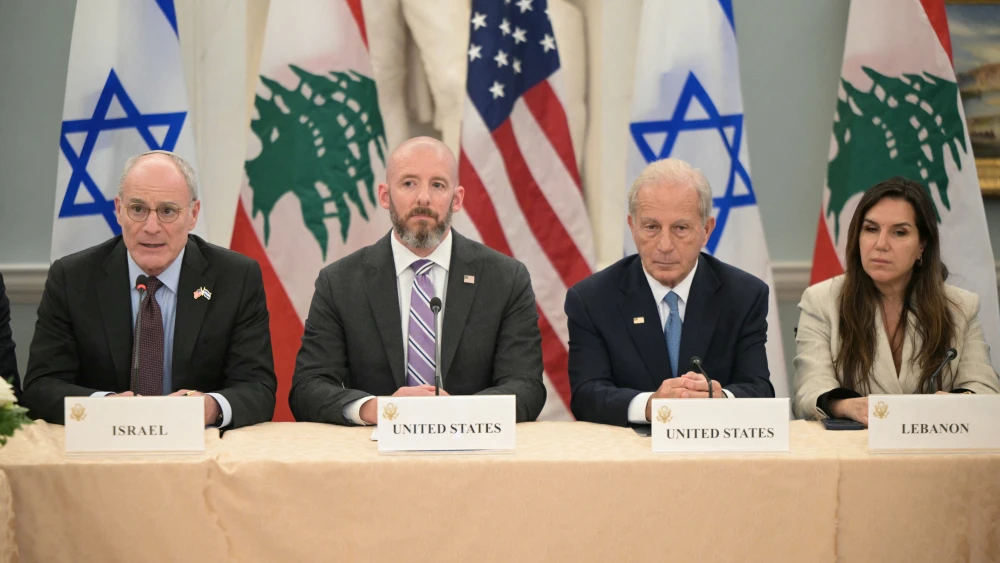
Israeli Ambassador to the United States Yechiel Leiter summarized the weekend news in a video statement on Sunday night, describing how the latest confrontation with the Iranian regime unfolded.
In the clip, posted on X, Leiter said that the Iranian missiles fired at Israel posed a threat to civilian areas and that Israel “retaliated hard,” adding that the country would not tolerate such attacks.
“Iran claims to have control of Lebanon. They do control Hezbollah and we’re in the process of helping Lebanon rid itself of this Hezbollah domination which threatens our security, because they fire repeatedly into our northern communities—killer drones, rockets, missiles,” Leiter said.
A quick recap by Ambassador @yechielleiter of this weekend's news, and why it matters. pic.twitter.com/4D7oSR3Kj6
— Embassy of Israel to the USA (@IsraelinUSA) June 8, 2026
“And while we pursue our efforts to rid Lebanon of Hezbollah to protect our security, we’ve entered into a ceasefire with the Lebanese government, which had promised that the speaker of the [parliament], Nabih Berri, who has connections with Hezbollah, would actually bring Hezbollah to that ceasefire. Well, he didn’t. He failed, and for three days they were firing killer drones into northern Israel and we made it very clear that if they fire into northern Israel, they will not be immune from our attacks in the Dahiyeh neighborhood, their command centers in Beirut,” the envoy continued.
“Iran, while trying to maintain its influence over the entire region, dominating Lebanon and keeping Hezbollah as its main proxy on Israel’s border, fired those missiles into Israel in order to say: ‘If you hit Beirut, if you hit Hezbollah, we will hit you.’ Well, Iran, you have nothing to do with Lebanon. These Lebanese don’t want you there. We will not have you there, and we are going to proceed together with the Lebanese government to defeat Hezbollah and ultimately get into a cycle of peace and security for both countries,” he said.
Leiter also dismissed suggestions of a rift between Israel and the United States, saying that bilateral cooperation remained strong and focused on countering Iran and promoting regional security.


