
Iran has long been committed to Israel’s destruction. It launched a war against Israel on Oct. 7, 2023, by financing Hamas’s attack and supplying the terror group with some of the military equipment it used for the attack.
Iran also supplied its terror proxy Hezbollah with its weaponry and supported its attack on Israel, which began a day later, on Oct. 8. Hezbollah went on to fire thousands of missiles against the Jewish state, mostly at northern communities, before Jerusalem was able to eliminate its leadership and much of its stockpiles. Iran also got the Houthis to attack Israel with ballistic missiles; they are still launching them.
Twice last year, in April and October, Iran directly attacked Israel with ballistic missiles. After the first attack, former President Joe Biden told Israel to “take the win” and not respond because Israel did not have significant casualties. Following the second attack, Israel responded forcefully, knocking out Iran’s missile defense in October.
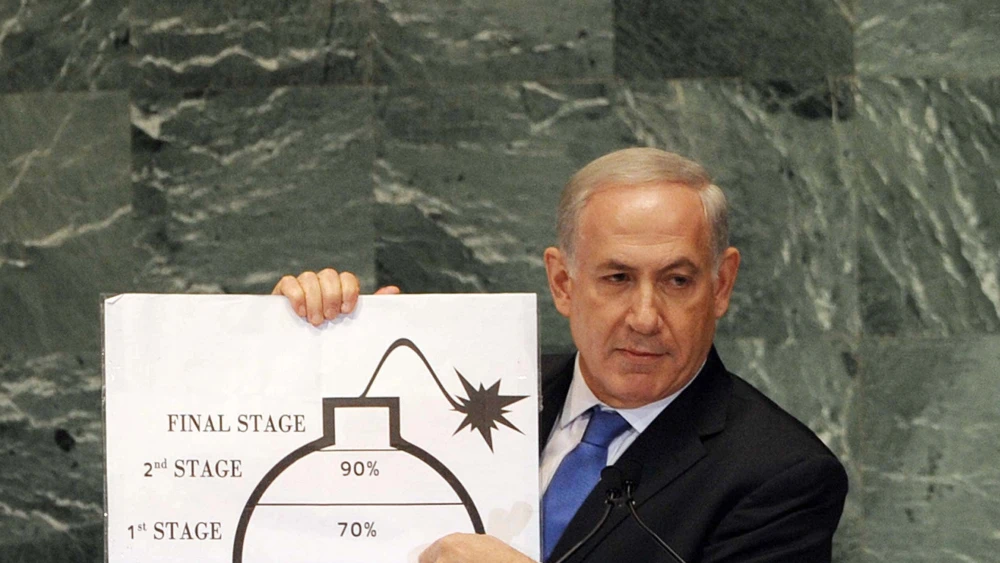
It was obvious that Iran was pursuing nuclear weapons, as it is the only country in the world without one that was consistently enriching uranium instead of purchasing it cheaply from another country for a peaceful nuclear program. Iran would not spend the time and money building its Fordow nuclear enrichment facility, located hundreds of feet below a mountain, if it were not pursuing nuclear weapons.
The question Israeli Prime Minister Benjamin Netanyahu faced was when to militarily destroy Iranian facilities, knowing the regime’s leaders had no intention of diplomatically agreeing to dismantle them.
When Trump was elected president for a second term, plans were reportedly put in place by Israel to militarily strike Iran. Trump renewed his “maximum pressure” campaign of sanctions while, at the same time, opening negotiations to end its nuclear enrichment program. Recently, the president gave Iran’s leaders 60 days to agree to come to the table. They did not.
Netanyahu decided to attack for several important reasons. He knew he would have Trump’s support. He knew Iran would respond to any attack with multiple ballistic-missile barrages, and its best chance to protect its citizens from the missiles was with the help of the Arrow antimissile system and the American Thaad system, which is operated by U.S. soldiers. So far, about 90% of Iranian missiles have been intercepted.
Trump is now calling for Iran to surrender and has rejected a ceasefire. Instead, he supports Israel’s efforts toward a complete victory. The fact that this has happened when Netanyahu has had to testify as a criminal defendant, had faced a potential fall of his governing coalition, and is facing a warrant for his arrest by the International Criminal Court for so-called “war crimes” makes it all the more remarkable.
It has long been forgotten that Israel never received offensive military weapons from the United States until after Israel won the 1967 Six-Day War. The success of Israel this time around will not only lead to the end of Iran’s nuclear program but likely the expansion of the 2020 Abraham Accords, which Iran tried to stop with the Hamas assault on Oct. 7.
Trump has brought the United States back to an even more successful version of former President Ronald Reagan’s “peace through strength” policy. Trump’s support for Israel will help bring calm to the Middle East, and Netanyahu will fulfill his goal to prevent Iran from obtaining a nuclear weapon. The world is on its way to becoming a safer place.