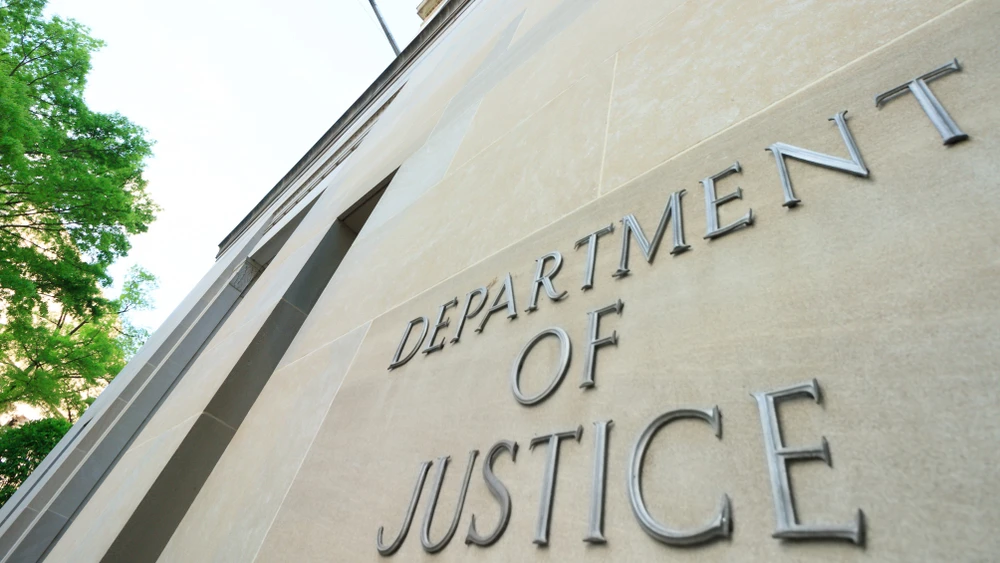

As part of the U.S. Department of Justice’s ongoing and concerted effort to crack down on rising antisemitism, U.S. Attorney Theodore S. Hertzberg announced on July 13 that the U.S. Attorney’s Office, Northern District of Georgia, was prosecuting four individuals who committed antisemitic acts in Georgia. “These men allegedly spewed vile hate and threatened violent attacks against Jews,” he said.
Each defendant faces up to five years in prison for transmitting threatening communications through means of interstate or foreign commerce.
Without necessarily reviewing each case, a quick synopsis is as follows:
• Jordan Hadley cursed at a bunch of Jews and called them derogatory names.
• Aaron Sasser sent threatening messages
• Christopher Roberson was walking around a Jewish facility and claimed that he represented the “white race,” and on a separate occasion, made menacing remarks at a Chabad center.
• Matthew Souza made threatening remarks.
We have several things to consider regarding the U.S. attorney’s decisions. We need to distinguish and recognize that what is happening is the prosecution of antisemitic threats and remarks as opposed to actual acts. Naturally, as Jews, we welcome the government’s recognition of rising antisemitism and its decision to be proactive to start to quell this.
But does it really?
Does someone say to themselves, “Hey, I’d like to shout at this God-damned Jew, curse his existence and threaten to kill him. But maybe I shouldn’t because I’d be prosecuted. And, you know, after all, making these remarks isn’t good, and maybe I should reconsider my sentiments.”
Or does someone say, “Hey, I’m not stupid enough to make antisemitic remarks I can be prosecuted for. Instead, if and when the time is right, I’ll act on my sentiments.”
If someone is careful and shouts anti-Israel epithets, but doesn’t make any specific anti-Jewish remarks, does that alert Hertzberg? What about specifically calling people Zionists with a pejorative suffix? Does that count? This is a very sticky wicket.
Additionally, we must analyze the source of these sentiments. The four examples above seem to demonstrate young, angry, white, perhaps poorly educated men with a bone to pick. A Jewish landlord who is able to evict a tenant for nonpayment of the rent may experience a similar tirade.
However, there is another source of endemic hate that is growing rapidly in this country.
In a Pew research study taken in 2024, one-in-three Muslims in America had a positive view of Hamas; nearly one in two Muslims support Hamas and the PLO or the Palestinian Authority; and far too many publicly glorify the Hamas-ked terrorist attacks in southern Israel on Oct. 7, 2023.
Such visceral hate is religiously catalyzed and motivated, and is also growing rapidly.
So how, exactly, can we address this? What actions must the government take to change that trajectory? Even though we welcome the government’s decision to act proactively against antisemitism, does it really stem the hate? Or does it just bottle it up?
Has the hate been abated? Obviously, not. It is left to stew.
Similarly, if educational institution “X” needs to curb its obvious anti-Jewish student sentiment, lest it lose federal funding, does that help eradicate the hate or just brush it under the rug, where it simmers and stews?
Using a medical analogy, if a person has a tumor that emits an excessive amount of a particular hormone that manifests symptomatically, do we only treat to abate the symptoms, while the tumor grows more menacingly, or do we try to remove the tumor so that the problem is permanently eradicated?
As American Jews experiencing an exponential antisemitic uptick that is seemingly being tolerated (and, perhaps, encouraged by far too many) in this country, which none of us have previously recognized for the past 75 years, encouraging the government to address antisemitic threats against us is merely a Band-Aid.
We need to put our heads together to figure out how to eliminate the tumor of antisemitism—not only its symptoms.