
The targeted killing on Nov. 27 of senior Iranian nuclear scientist Mohsen Fakhrizadeh illustrates that if the powers-that-be in Tehran thought that they were “in the clear” following the U.S. presidential election a few weeks earlier, they were sorely mistaken.
Fakhrizadeh was the architect of Iran’s nuclear-weapons program—or, as Western officials refer to him, the “father” of the program—involved in “Project 111” (packaging the Shihab 3 ballistic missile with a nuclear warhead). He was a brigadier general in the Islamic Revolutionary Guard Corps, the organization whose commander, Qassem Someimani, was killed in January in an American drone strike.
Fakhrizadeh visited North Korea in Feb. 2013 to observe its third nuclear test. He was also believed to have been present at its first two.
None of these activities suggest that Iran was pursuing nuclear energy for peaceful means. Iran was copying North Korea’s development of nuclear weapons, and Fakhrizadeh was smack in the middle.
The assassination of Fakhrizadeh makes a strike on Iran’s nuclear facilities more, not less, likely. Once the nuclear sites are neutralized, Iran will no longer be able to rebuild them.
But who will destroy Iran’s nuclear reactors?
Presumptive President-elect Joe Biden will seek to make a new deal with Iran at any cost. In an interview on Dec. 2 with The New York Times, when asked by Thomas Friedman whether he “stood by his views on the Iran nuclear deal that he articulated in a Sept. 13 essay on CNN.com,” Biden answered, “It’s going to be hard, but yeah.”
In other words, he plans to snap back to the Joint Comprehensive Plan of Action. This would be unacceptable to Israel and its new Arab peace partners, as well as to Saudi Arabia.
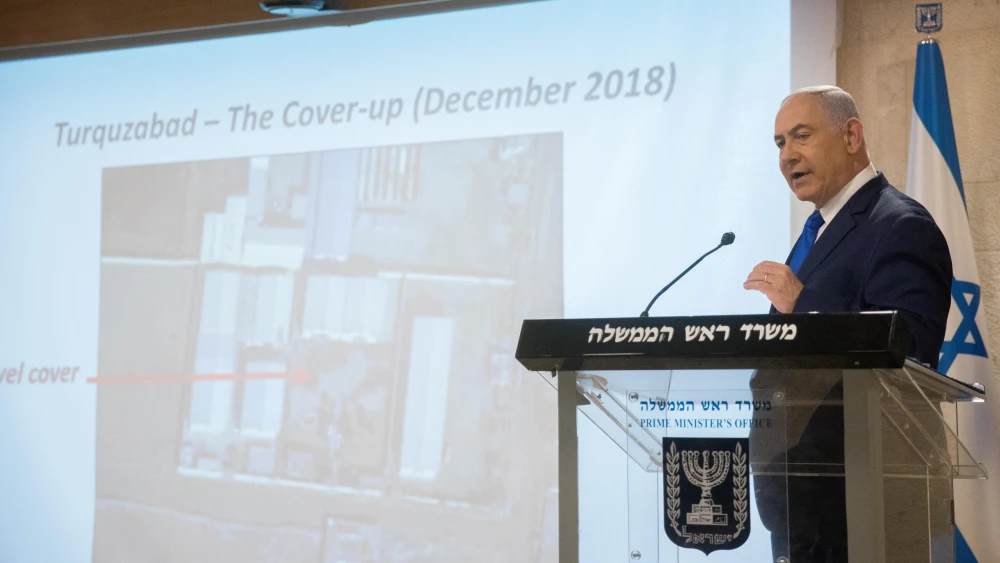
It is for this reason that I believe Israel will take on the responsibility of once and for all ridding the world of Iran’s nuclear ambitions. Israeli Prime Minister Benjamin Netanyahu’s recent visit to Saudi Arabia only reinforces this belief.
Although hailed as a peace initiative, it appears that Netanyahu was guaranteed access to Saudi airspace if needed in a strike against Iran. This is crucial to such an operation. It made the possibility of eradicating Iran’s nuclear reactors much more realistic and imminent.
What might complicate matters is that Israel finds itself in a possible new election cycle. One of the major goals of the current national-unity government was not just to confront the coronavirus pandemic, but to deal with the existential threat emanating from Iran. New elections could get in the way of both. This leaves a very narrow window of opportunity to do the job.
In my discussions with high-level Israeli officials, I have learned that they are quite confident that Israel can take out the nuclear reactors rather quickly. According to them, it will not be a prolonged operation. Let us hope for a final end to the Iranian nuclear-weapons chapter.
Dr. Joseph Frager is first vice president of the National Council of Young Israel.