


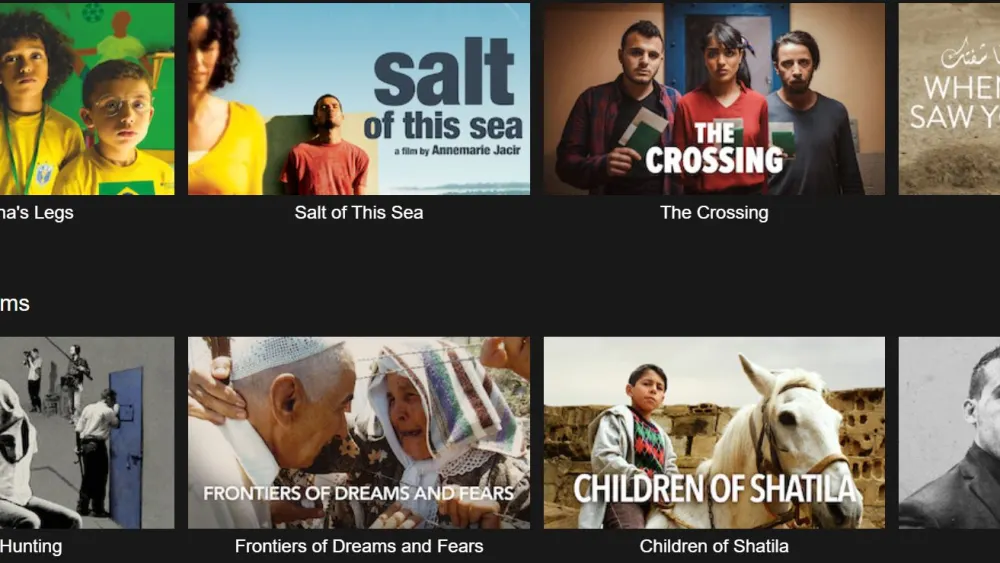
Nearly 90 percent of the Palestinian films in a collection launched last week by Netflix are directed by BDS supporters, Israeli NGO Im Tirtzu reported on Monday.
The collection, titled “Palestinian Stories,” is made of up 32 films, most of which had been uploaded to the streaming service by Monday.
Of the 28 movies by and about Palestinians that are so far available on the Israeli version of Netflix, 25 (89 percent) are directed by BDS supporters, Im Tirtzu research revealed.
According to the NGO’s findings, 12 of the directors in question also signed an open “Letter Against Apartheid” in May, during “Operation Guardian of the Walls,” Israel’s 11-day conflict with terrorist groups in the Gaza Strip.
“Palestinians are being attacked and killed with impunity by Israeli soldiers and armed Israeli civilians who have been roaming the streets of Jerusalem, Lydda, Haifa, Jaffa and other cities, chanting, ‘Death to Arabs,’” the letter began, going on to accuse Israel of committed “lynchings” against and the “ethnic cleansing” of “unprotected Palestinians.”
“To frame this as a war between two equal sides is false and misleading,” the letter said. “Israel is the colonizing power. Palestine is colonized. This is not a conflict: This is apartheid.”
The following 12 directors signed the letter:
- Ameen Nayfeh, director of “The Crossing.”
- Annemarie Jacir, director of “Salt of the Sea,” “When I Saw You” and “Like Twenty Impossibles.”
- Arab Nasser and Tarzan Nasser, directors of “Condom Lead.”
- Elia Suleiman, director of “Divine Intervention” and “Chronicle of a Disappearance.”
- Farah Nabulsi, director of “The Present.”
- Hany Abu-Assad, director of “Omar.”
- Larissa Sansour, director of “In Vitro.”
- Mahdi Fleifel, director of “A Man Returned,” “Xenos,” “A Drowning Man,” “A World Not Ours” and “Logical Exits.”
- Mai Masri, director of “3,000 Nights,” “Frontiers of Dream and Fears” and “Children of Shatila.”
- NaJwa Najjar, director of “Pomegranates & Myrrh” and “Eyes of a Thief.”
- Raed Andoni, director of “Ghost Hunting.”
“It is disgraceful that Netflix is featuring propaganda films directed by BDS supporters whose sole goal is to slander and delegitimize the only democracy in the Middle East,” said Im Tirtzu CEO Matan Peleg.
“If Netflix wants to tell the Palestinian story, it should start by contacting the thousands of bereaved Israeli families who are victims of Palestinian terrorism,” he added.



