


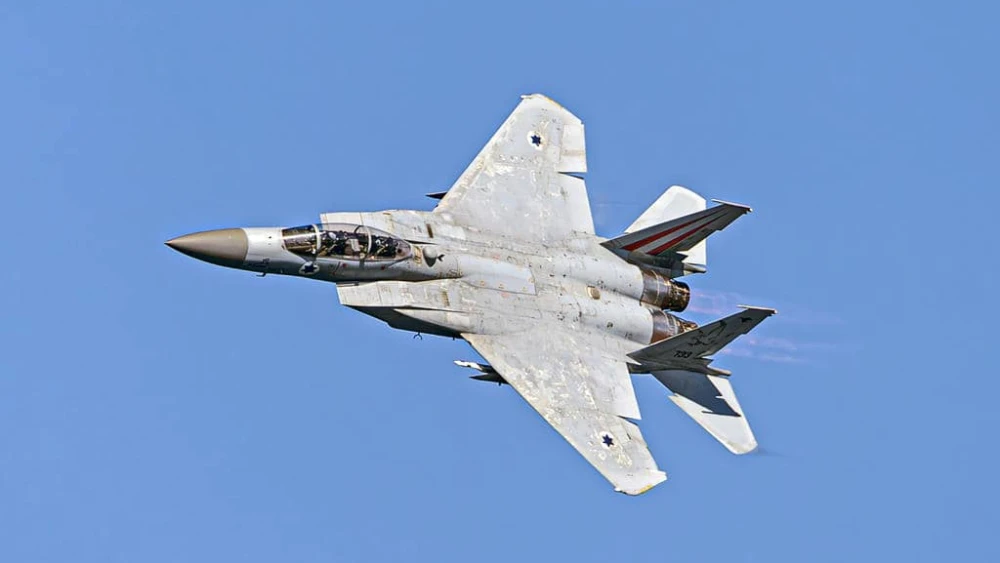
Saudi Arabia and other Gulf states denied the United States and Israel access to their airspace during Iran’s attack on Israel on Saturday.
While Saudi Arabia and United Arab Emirates shared intelligence to help counter the attack, they stopped short of fulfilling all U.S. requests, reported The Wall Street Journal on Tuesday.
The Saudis are reluctant to openly side with the United States and Israel absent a more concrete security arrangement with Washington, the report explained.
Gulf states also worry about appearing to be siding with Israel and the United States as Israel wages war against Hamas in the Gaza Strip.
They also fear retaliation from Iran. The Journal noted that the Saudis and the Emiratis refused to take part publicly in a U.S.-led coalition to confront attacks on Red Sea shipping by the Iranian-backed Houthis. The Houthis threatened to hit countries involved, and the Saudis and Emirates have suffered attacks from them before.
However, if the Iranian confrontation escalates, the Gulf states might need to pick a side, especially if Iran targets American assets in the region, the report said.
Gregory Gause, a Middle East observer at Texas A&M University, told the Journal, “Because then Washington says, ‘If you want a partnership, you have to help us when we’re the target in the same way that you expect us to help you when you’re the target.’”
Arab governments were initially cautious about even sharing information due to fears about directly involving themselves in the conflict and opening themselves up to Iranian reprisal. Riyadh and Abu Dhabi decided to move forward after talks with the Americans.
Jerusalem has told Arab countries their security will not be placed at risk due to any IDF response to Iran’s attack.
According to the Journal, the successful defense by Israel, with the help of the U.S. and others, showed the value of a defense partnership with America.
“This reinforces that when you’re aligned with the United States, you can protect your sovereignty in cooperation with both the United States and your neighbors,” said Jon Alterman, a Mideast expert at the Center for Strategic and International Studies.
However, Abdulkhaleq Abdulla, an Emirati political scientist, told the Journal that for the Emirates, “the most wise course at the moment is to stay away from it all, keep focusing on its own national interest, its own security and try to stay out of it.
“We don’t want to get entangled in this one way or another. That’s priority No. 1 in the UAE and for the rest of the Arab Gulf states,” he said.


