Newsletter
Newsletter Support JNS

Senior Palestinian official Hanan Ashrawi resigns

“The Palestinian political system needs renewal and reinvigoration with the inclusion of youth, women and additional qualified professionals,” says Ashrawi.

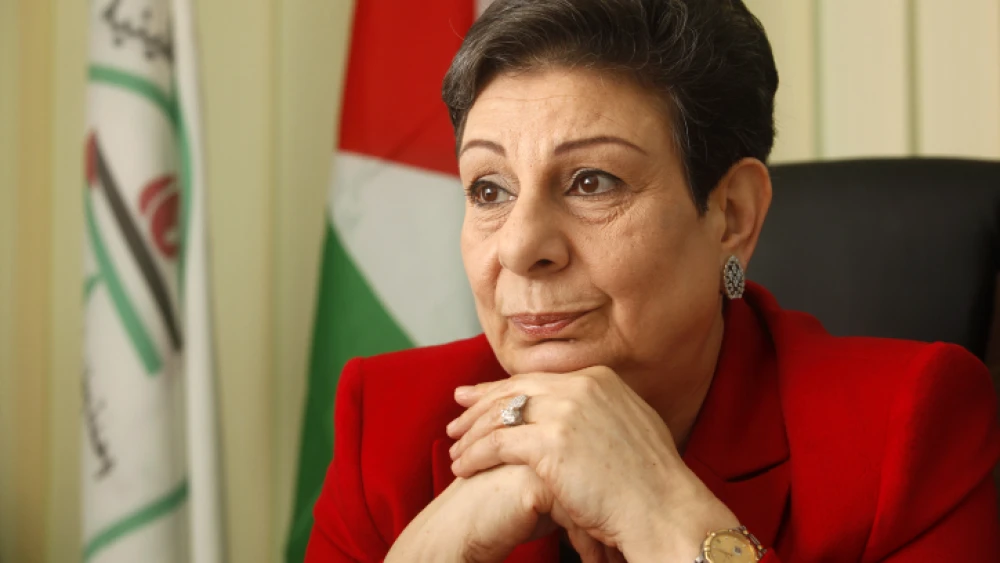
Palestinian politician Hanan Ashrawi in her office in Ramallah, Jan. 31, 2012. Photo by Miriam Alster/Flash90.

Senior Palestine Liberation Organization official Hanan Ashrawi announced her resignation on Wednesday, saying that Palestinian politics needed a “renewal.”

Ashrawi said she had informed Palestinian Authority leader Mahmoud Abbas last month of her decision to leave at the end of the year. When the decision leaked, however, she announced her immediate resignation, according to AP.

“The Palestinian political system needs renewal and reinvigoration with the inclusion of youth, women, and additional qualified professionals,” she said in a statement. “It is incumbent upon us all to assume our individual responsibilities and to carry out our duties with honesty and integrity, including by facilitating this needed change.”

Abbas’s office said it accepted her resignation, according to the report.

Ashrawi was a harsh critic of Israel in the international media and was involved in peace talks with the Jewish state. She has also been critical of the Palestinian leadership.

Fire damaged more than 30 structures, destroyed 15 homes and 10 businesses, and forced the evacuation of some 100 families.
Jerusalem began cracking down on the Health Work Committees group following its involvement in the murder of 17-year-old Israeli teenager Rina Shnerb in 2019.
“I think we need to invest in Israel’s Arab society—in education, employment and infrastructure. If we don’t, we’ll be the ones who suffer,” the lawmaker told JNS.
Bar-Ilan University researchers reported that pregnant women living near more vegetation had lower levels of long-term stress hormones.
With the principal blocs separated by a handful of seats in most polls, the campaign could be decided less by movement between Netanyahu’s Likud and Eisenkot’s Yashar than by which smaller parties survive the 3.25% electoral threshold.