Newsletter
Newsletter Support JNS

Toilet dig reveals the dirty secrets of Jerusalem’s wealthiest ancients

Jerusalem’s elites had the rare luxury of toilets 2,700 years ago, but poor hygiene and sanitary conditions led to chronic stomach troubles.

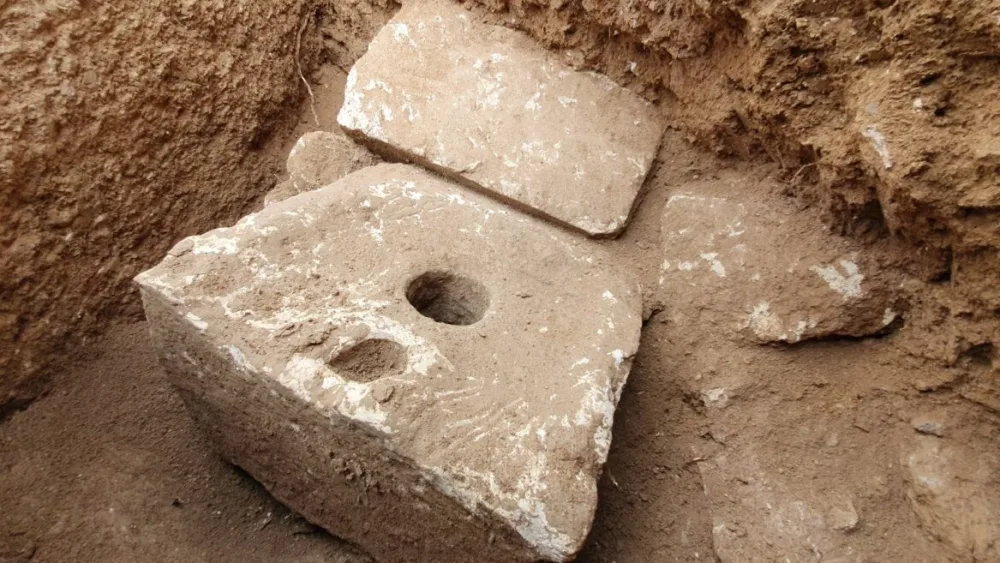
This rare stone toilet is 2,700 years old and was most likely used by one of the dignitaries of ancient Jerusalem. Photo by Yoli Schwartz/Israel Antiquities Authority.

An article in October reported on a rare 2,700-year-old bathroom discovered by archeologists in the garden of a seventh-century BCE royal estate on what is now the Armon Hanatziv promenade in Jerusalem.

At that time, only the rich could afford such a luxury. But a study of the contents of the septic tank underneath the fancy carved limestone toilet has revealed that the privileged people who used it were plagued with roundworm, tapeworm, whipworm and pinworm.

Tel Aviv University and Israel Antiquities Authority researchers report in the International Journal of Paleopathology that eggs from these intestinal parasites were extracted from the soil in the cesspit.
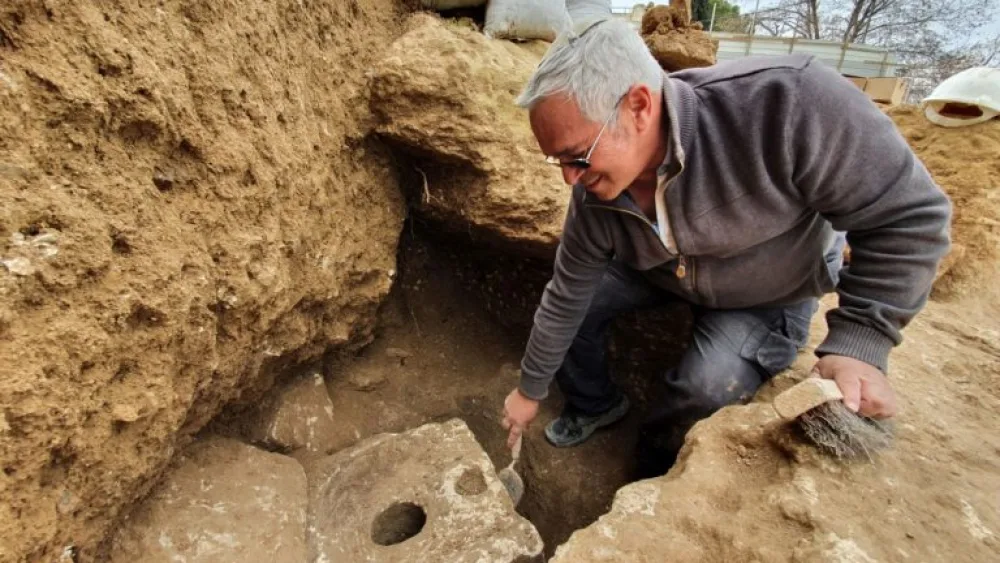
Yaakov Billig Israel Antiquities Authority
Archeologist Yaakov Billig of the Israel Antiquities Authority next to an ancient toilet in Jerusalem. Photo by Yoli Schwartz/IAA.

Dafna Langgut, director of Tel Aviv University’s Laboratory of Archaeobotany and Ancient Environments, said the well-preserved eggs indicate that the residents of the mansion probably suffered from abdominal pain, nausea, diarrhea and itching.

Some of the parasites found, she noted, “are especially dangerous for children and can lead to malnutrition, developmental delays, nervous system damage, and, in extreme cases, even death.”

Intestinal parasite eggs recovered from sediment below the stone toilet seat at Armon Hanatziv. Photo by Eitan Kremer (magnification X 400)
Intestinal parasite eggs recovered from sediment below the stone toilet seat at Armon Hanatziv (magnification x 400). Photo by Eitan Kremer.

Langgut says the intestinal infestation might have been due to fecal contamination of food and drinking water, or poor bathroom hygiene.

Other possible sources of infection were the use of human feces to fertilize field crops and the consumption of improperly cooked meat.

In those days, there were no medical treatments for intestinal worms, so people likely suffered with them for years. Today, these parasites still exist but can be treated effectively.
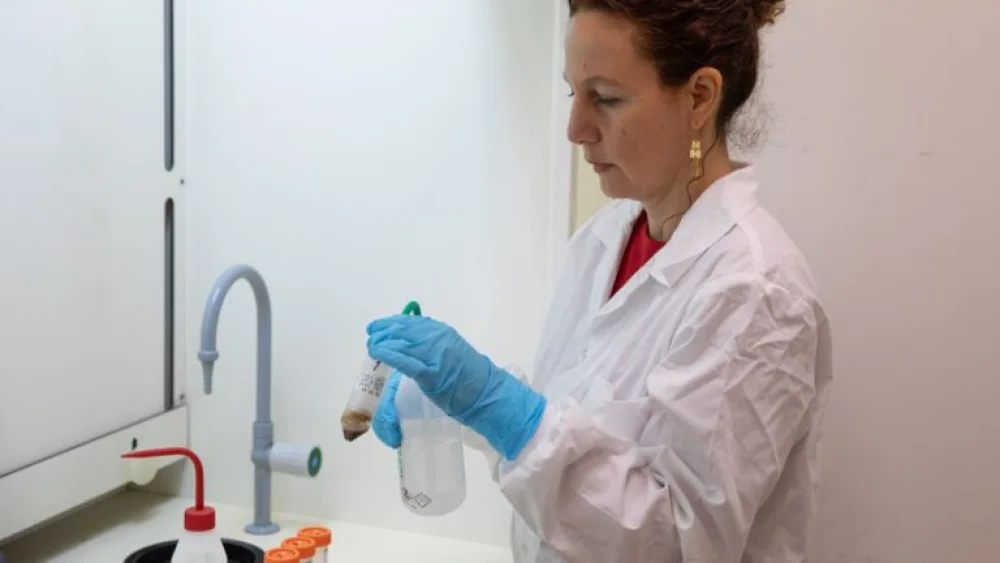
Dr. Dafna Langgut at the Laboratory of Archaeobotany and Ancient Environments. Photo by Sasha Flit/Tel Aviv University
Dr. Dafna Langgut at Tel Aviv University’s Laboratory of Archaeobotany and Ancient Environments. Photo by Sasha Flit/Tel Aviv University.

According to Eli Escozido, director of the Israel Antiquities Authority, “The research conducted by the Israel Antiquities Authority and our partners manages to touch on the finest details of everyday life in antiquity. Thanks to advanced equipment and fruitful collaboration with complementary research institutions, it is now possible to extract fascinating information from materials that we previously didn’t have the tools to handle scientifically. Today, archeological research is leading to a better understanding of past lifestyles.”

Langgut is conducting additional analyses on the sediments collected from the cesspit in order to learn about the diet and medicinal herbs used in Jerusalem in the late Iron Age.

This article was first published by Israel21c.

The Associated Press called the race early for the Jewish Democrat, whom the mayor has backed.
Marc Bloch, who was also a veteran and resistance fighter whom the Nazis tortured and killed in 1944, is now interred alongside Voltaire, Alexandre Dumas, Émile Zola and other national French heroes.
The report is “an embarrassment to the United Nations and a disservice to genuine human rights accountability,” Dina Rovner, of U.N. Watch, told JNS.
Four Republicans joined with nearly every Democrat to direct U.S. President Donald Trump to remove American military forces from the conflict with Iran in a non-binding resolution.
“Despite his statements, it is not Israel, America or the Republican Party that has changed but Carlson himself,” Rabbi Yaakov Menken, executive vice president of the Coalition for Jewish Values, told JNS.
“Antisemitic language does not become acceptable simply because it appears within boycott messaging or political advocacy,” tech nonprofit CyberWell stated.
Benny Gantz, JNS editor-in-chief Jonathan S. Tobin, Gilad Erdan, Mosab Hassan Yousef, Nissim Black and leading voices in security, diplomacy, media, law and Jewish communal affairs headline the summit’s third day in Jerusalem.