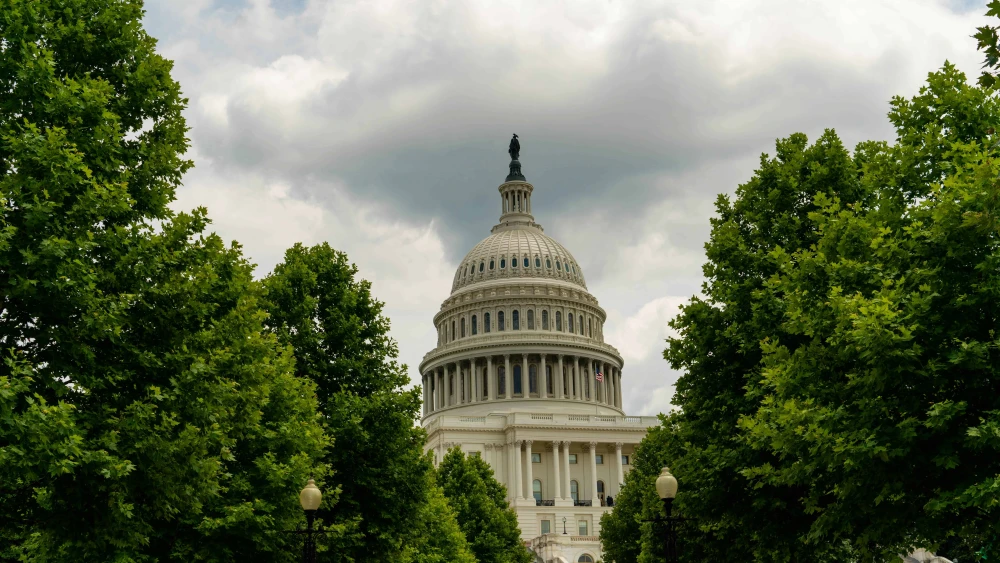
A bipartisan push is underway in the House of Representatives to increase funding for the U.S. State Department’s antisemitism envoy office.
Members of the House Bipartisan Task Force for Combating Antisemitism, including Reps. Grace Meng (D-N.Y.), Chris Smith (R-N.J.), Kathy Manning (D-N.C.), Maria Elvira Salazar (R-Fla.), Susan Wild (D-Pa.), David Kustoff (R-Tenn.) and Debbie Wasserman Schultz (D-Fla.), announced a request on Monday for an increase of $1.25 million for the Office of the Special Envoy to Monitor and Combat Antisemitism.
A total of 76 Congress members backed the effort. Funding for the office is currently set at $1.75 million.
“The spike in antisemitic incidents around the world is deeply troubling,” said Meng, who represents the 6th Congressional District in Queens, N.Y., and has seen an increase in such activity. “These hateful and disgusting acts have no place anywhere in our society and providing additional resources to the Special Envoy would greatly boost our efforts to combat this evil whenever and wherever it rears its ugly head.”
The request was sent in a letter to the chair and ranking member of the House Appropriations Subcommittee on State, Foreign Operations and Related Programs.
The additional funds would “help the special envoy better fulfill its mission of developing and implementing policies and projects to fight antisemitism across the globe, which was already on the rise, but has surged since Hamas’s 10/7 attacks,” according to a statement released by the effort’s leaders.
The special envoy to monitor and combat antisemitism was created in 2004 and is led at the ambassadorial level by Deborah Lipstadt. The office significantly increased staffing in the wake of an antisemitic backlash that followed the massacre of 1,200 people by Hamas terrorists in southern Israel and their taking of some 250 hostages on Oct. 7, followed weeks later by Israel’s counteroffensive into the Gaza Strip.
“Now more than ever, it is imperative Congress does all it can to combat the alarming rise in antisemitism across our nation and the world,” said Kustoff, one of two Jewish House Republicans. “I am pleased to join my colleagues in this effort to ensure the special envoy has the funding and resources it needs to address this alarming spike in global antisemitism. This vile hatred has no place in our society, and I will continue to do all I can to support the Jewish community during this dark time.”