


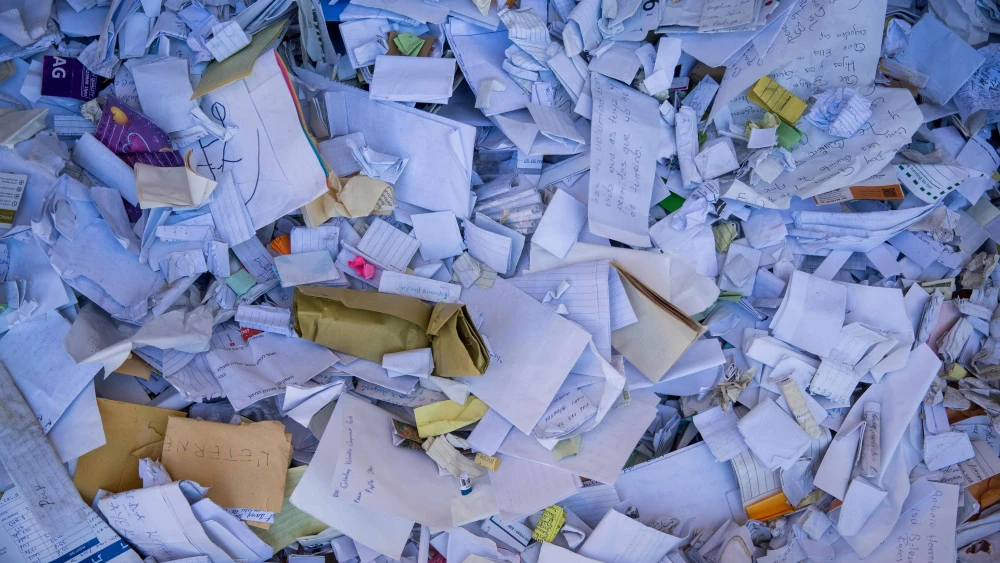
Ahead of the Passover holiday, which starts at sundown on April 22, cleaning staff at Jerusalem’s Western Wall on Tuesday removed thousands of prayer notes from between the stones of the holy site.
The Western Wall Heritage Foundation, which administers Judaism’s second-holiest site, removes the notes twice a year—before Passover and the High Holidays—in accordance with Jewish religious laws.
The cleanup is done under the supervision of Chief Rabbi of the Western Wall and the Holy Places Shmuel Rabinowitz, who this year offered a prayer for unity amid Israel’s war with Hamas.
Since the High Holidays in September of last year, an average of 3,000 notes were submitted each month through the website of the Western Wall Heritage Foundation, the organization said. This is in addition to the countless notes that visitors personally placed between the stones.
Over the past year, foreigners sent some 100,000 notes through the foundation’s website from all over the world, including the United States, Canada, Germany, India, Mexico, Ukraine and other countries.
In the months following the Oct. 7 Hamas massacre and the ensuing war against the terror group in the Gaza Strip, the organization also received numerous prayer notes from Israel Defense Forces soldiers, terror victims, bereaved families and relatives of hostages held in the Strip.
The Western Wall Heritage Foundation said that while tourism to the Jewish state had plummeted due to the war, the number of notes sent through its website had significantly increased.
The Western Wall, once known as the Wailing Wall, is a remnant of a retaining wall encircling the Temple Mount built by Herod the Great and is the holiest site where Jews can freely pray. The Temple Mount, where the First and Second Temples stood, is the most sacred site in Judaism.
The traditional Birkat Kohanim (Priestly Blessing) ceremony at the Western Wall will this year take place on the morning of April 25. It will this year be followed by special prayers for peace, the return of the hostages, the well-being of IDF soldiers and the healing of the wounded.



