Newsletter
Newsletter Support JNS

Report: US, Israel tell Russia any Syrian deal must include Iran quitting Lebanon, Iraq

“Israel and the Trump administration are concerned that a future deal in Syria could export the Iranian problem to Iraq and Lebanon,” according to an “Axios” report.

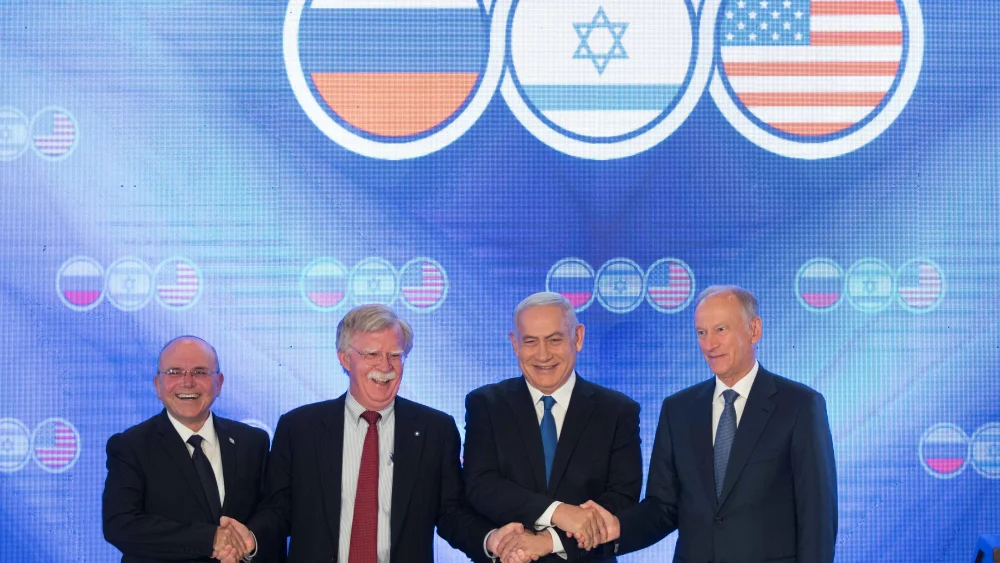
From left: Israeli National Security Adviser Meir Ben-Shabbat; U.S National Security Advisor John Bolton; Israeli Prime Minister Benjamin Netanyahu; and Nikolai Patrushev, secretary of the Russian Security Council during opening statements of a trilateral meeting between at the Orient in Jerusalem on June 25, 2019. Photo By Noam Revkin Fenton/Flash90.

The United States and Israel told Russia at a trilateral summit in Jerusalem last month that any agreement on Syria’s future would require Iran being expelled from the country, from Lebanon and from Iraq, reported Axios on Tuesday, citing “U.S. officials who were involved in the discussions.”

“Israel and the Trump administration are concerned that a future deal in Syria could export the Iranian problem to Iraq and Lebanon,” according to the report.

Russia is aligned with Iran and Syrian President Bashar Assad and has shown no interest in expelling Tehran’s forces from Syria.

The summit included U.S. National Security Advisor John Bolton, Israeli National Security Council director Meir Ben-Shabbat and Nikolai Patrushev, secretary of the Russian Security Council.

“Bolton made it clear to Patrushev that, in any case, Russia is the one that needs to take the first step regarding the Iranian presence in Syria—and only then the U.S. could give them things they want,” the U.S. officials told Axios.

However, the Russians, during and after the summit, expressed support for the Iranians.

“I don’t see what serious leverage Moscow has over Iran, nor do I see Moscow as genuinely willing to push back against Iran. This report does suggest that both American and Israeli leaders have reservations and so far no deal has been struck,” the Washington Institute for Near East Policy’s Anna Borshchevskaya told JNS. “Unfortunately, years of Western inaction in Syria had made it easy for Putin to step in and assert a key powerbroker position in the Syria tragedy, but this doesn’t mean Putin can deliver genuine peace.”

Jared Sclar, a Democratic political consultant, told JNS that the rematch between Aisha Wahab, an anti-Israel state senator, and Melissa Hernandez, a former mayor of Dublin, Calif., in November will be “genuinely competitive.”
The faction is “an extension” of the Islamic Revolutionary Guard Corps Quds Force and is “not a Lebanese resistance movement,” a State Department official said.
Esther Panitch, the only Jewish member of the Georgia state legislature, told JNS that she asked the local Democratic Party to reschedule the event, which is currently slated to occur on Rosh Hashanah.
“These maniacs are on the ropes, and these historic measures will cripple them and their ability to project terror worldwide,” said the U.S. president.