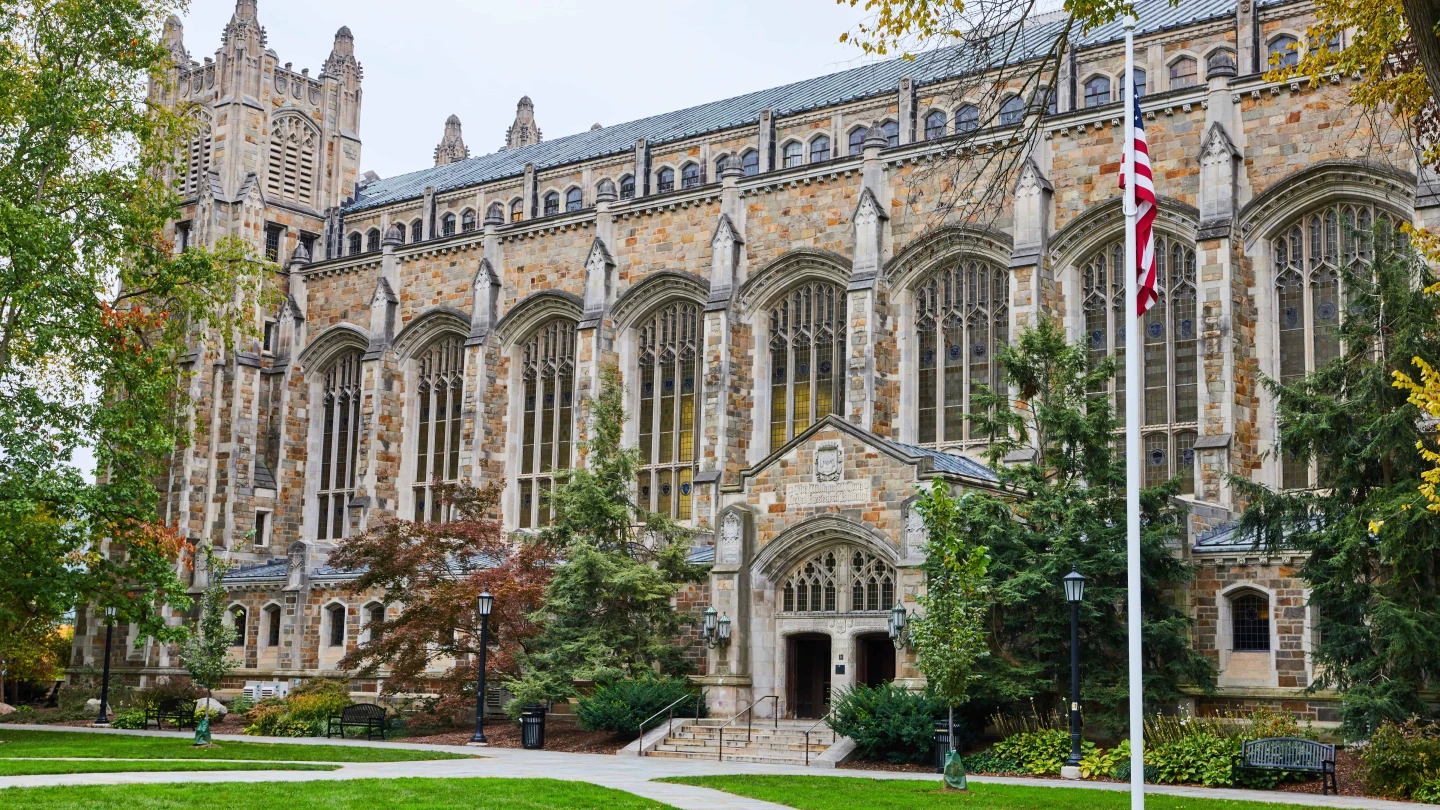
Yale Law School in New Haven, Conn., is investigating swastika graffiti discovered on steps of the school’s side entrance on Saturday night, days before Yom Kippur, the Yale Daily News reported.
“Yale Law School has zero tolerance for discrimination or harassment of any kind, and symbols of hate have no place on our campus or in our society,” Yale Law School dean Heather Gerken said in a statement on Monday. “We take an incident like this extremely seriously and are currently investigating.”
The graffiti was of a white, spray-painted swastika above the word “Trump” and has since been removed. This is the first reported incident of a swastika appearing on the Yale campus since 2014.
Gerken said no evidence indicates that a member of the Yale community painted it.
She added that the anti-Semitic act is “utterly antithetical” to the school’s values and encouraged anyone with information to reach out to her office.
Rabbi Jason Rubenstein, Jewish chaplain at Yale, revealed on Monday night that investigators are examining video footage from late Saturday night and early Sunday morning.
He said that the Yale Police Department told the Joseph Slifka Center for Jewish Life on Sunday that they visited “all other likely targets of anti-Semitic activity” and found “no evidence that this incident is part of a larger campaign.”
Rubenstein said university administrators “see this as an attack not just on Yale’s Jewish community, but on Yale itself and its values, which is some of the most powerful consolation we can receive as we figure out what this mean[s] for our community.”