Newsletter
Newsletter Support JNS
David Isaac

David Isaac

Explore Senior Israel Correspondent David Isaac’s expert analysis on Jewish history, politics, and current events at JNS.
“Establishing dilapidated schools are in reality P.A. land-grab tactics,” said Shlomo Ne’eman, chairman of the Yesha Council.
The previous cemetery was destroyed in 1497 in the wake of an edict of King Manuel I.
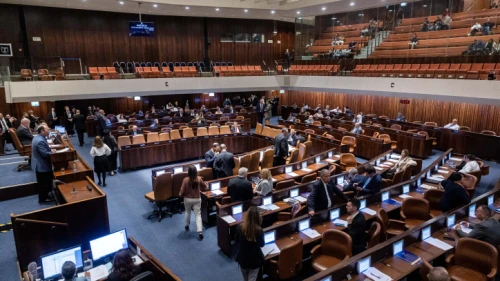
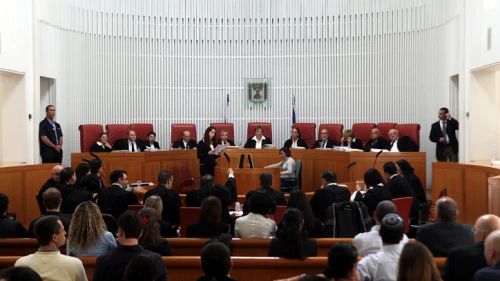
The most pressing issue—the state budget; the most consequential—judicial reform.
“We are told that if the reform passes there will be a dictatorship. There is no bigger lie than that,” Israeli Justice Minister Yariv Levin told the crowd.
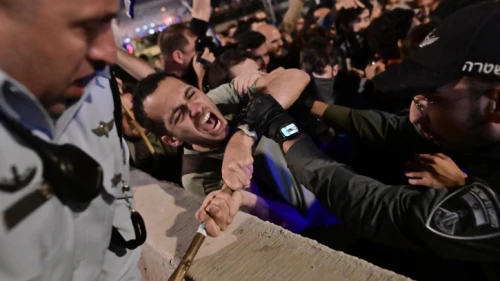
The message is reflected in protest placards that read: “They won’t steal the election! March of the Million. Reform Now!”
The General Assembly, featured only one session on judicial reform, with exclusively anti-reform panelists. Queried by JNS, JFNA president and CEO Eric Fingerhut explained that the panel—titled, “75 Years of Israeli Democracy: Understanding What’s Motivating the Largest Protest Movement in Israel’s History”—was about the protesters, not the reforms themselves.
“It’s time to stop inserting divisive politics into the Congress,” said Rabbi Pesach Lerner, chairman of the Eretz Hakodesh faction.
The march from Auschwitz to Birkenau will be led by 42 Holocaust survivors, a stark improvement over last year when only seven survivors participated.
HaMoked could be considered the Israeli branch of the P.A.’s Ministry of Detainees’ office, says the CEO of Ad Kan, a group whose members went undercover to gather details about the far-left NGO.
It “invests in organizations bent on destroying Zionism,” Gadi Taub, a senior lecturer at the Hebrew University, tells JNS.
The protesters broke the social compact, rendering their victory Pyrrhic, according to Professors for a Strong Israel.
Opposition leader Yair Lapid has repeatedly said he will roll back everything on the day he returns to power.