Newsletter
Newsletter Support JNS

Biden to Gershkovich after year in Russian prison: ‘We are with you’

The president said he went “to do his job as a reporter—risking his safety to shine the light of truth on Russia’s brutal aggression against Ukraine.”

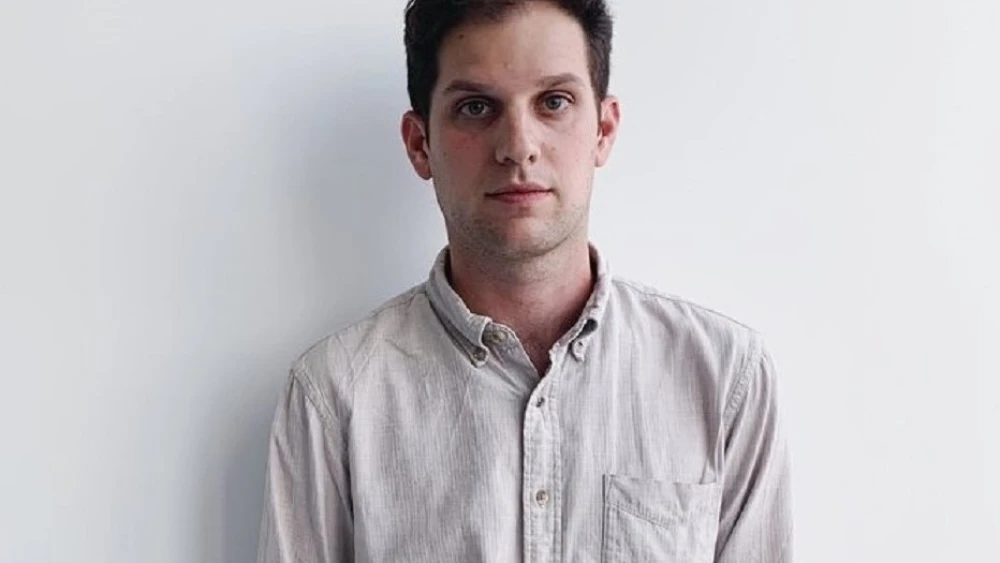
Evan Gershkovich
Evan Gershkovich. Source: Twitter.

In what the White House has described as “wrongful detention,” Evan Gershkovich, a reporter for The Wall Street Journal, has been imprisoned in Russia for one year.

On Friday, U.S. President Joe Biden released a statement describing the date as “a painful anniversary.”

Biden said the 32-year-old went “to do his job as a reporter—risking his safety to shine the light of truth on Russia’s brutal aggression against Ukraine.”

He noted that in one of Gershkovich’s letters to his parents from prison, the journalist wrote: “I am not losing hope.”

Biden stated, “As I have told Evan’s parents, I will never give up hope either. We will continue working every day to secure his release.”

The president also addressed Paul Whelan, another imprisoned American who was arrested in Russia in 2018 and sentenced to 16 years on espionage charges, saying: “To Evan, to Paul Whelan and to all Americans held hostage or wrongfully detained abroad: We are with you. And we will never stop working to bring you home.”

Israeli forces detained the suspects, including two Hamas operatives, and seized weapons and bomb-making materials in coordinated overnight operations in the Samaria city.
The operation in the Majdal Zoun area was carried out after Jerusalem informed the United States.
“We don’t have an ambassador from Israel in Brazil, but we have an ambassador from Iran,” Senator Flávio Bolsonaro told JNS. “That shows you the priorities of this government.”
The newly introduced procedure allows medication to penetrate the malformation’s cells at concentrations up to 10,000 times greater than in conventional treatment.
At the JNS Summit, three soldiers who suffered life-changing injuries in combat shared lessons of resilience, recovery and service.
“My sense is that John wanted to retire with the confidence that, in the absence of the first generation of Catholic and Jewish leaders who lay the foundation of friendship, these relations would grow and thrive,” the scholar Malka Simkovich told JNS.