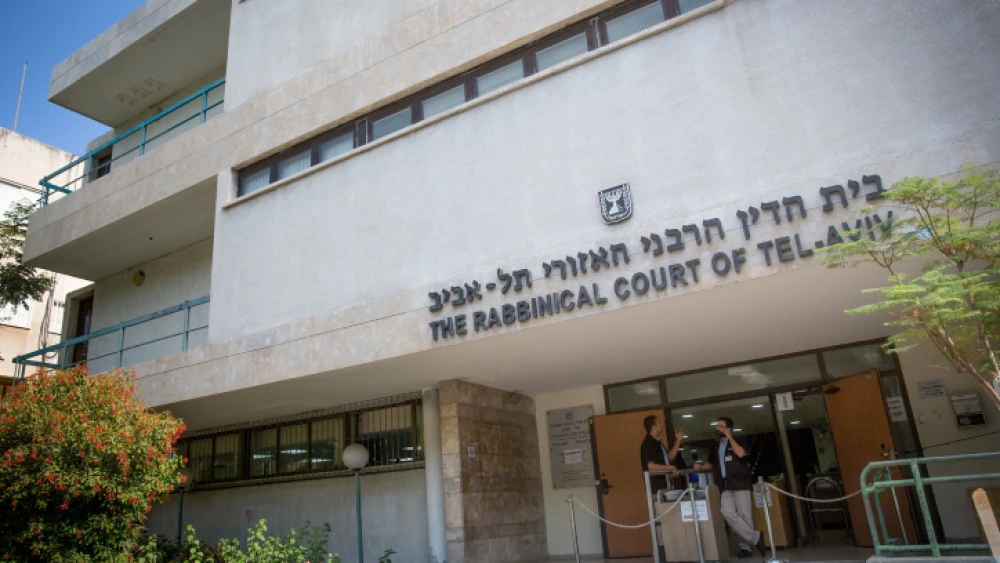
An analysis of Israeli rabbinical court activity in 2020 finds that despite increased tensions due to coronavirus-spurred nationwide lockdowns and other restrictions, the Jewish state saw a slight decrease in divorces and family disputes last year.
With the outbreak of the pandemic, many commentators and family counselors predicted Israel’s first lockdown—and the stress of being holed up in cramped quarters for weeks—would lead to a dramatic increase in family crises and raise the divorce rate.
But data collected from the rabbinical courts show that the number of couples who sought a divorce in 2020 was in fact 3 percent lower than those who did so the previous year. In 2020, 11,076 couples were divorced through rabbinical courts, compared to 11,451 in 2019.
In 2020, 3,852 couples began divorce proceedings, compared to 4,158 couples who did so in 2019, for a decrease of 7 percent.
The number of couples that filed for an uncontested divorce also decreased, by 1 percent, from 5,701 in 2019 to 5,660 in 2020. There was also a decrease in the number of joint petitions filed for a divorce in 2020, according to the data.
Although on its face, the figures appear to bode well for the state of Israel’s married couples, the decrease in the divorce rate may be partially due to the rabbinical courts operating according to COVID-19 guidelines, which means that their availability and office hours have been reduced.
In addition, many people have avoided government buildings during the pandemic, for fear of infection.
Furthermore, the findings cannot measure the potential for the divorce rate to increase once the pandemic is over. Many couples separated during the outbreak, foregoing technical divorce proceedings.
This article first appeared in Israel Hayom.