NETANYA, Israel—Avi’s first surf therapy session did not begin with a wave. It began with a question: How does the sea make you feel?
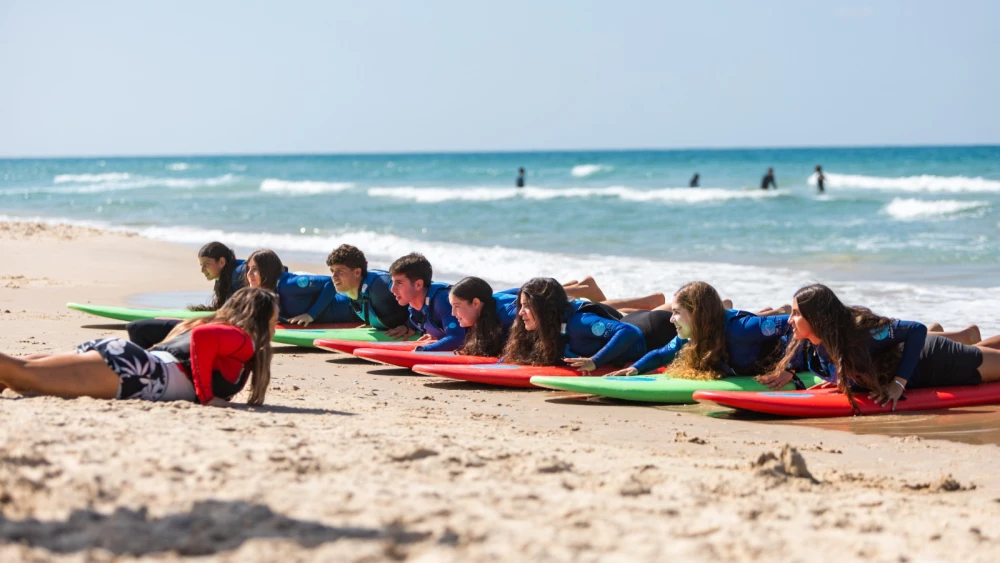
Then the 22-year-old and the others went into the water, climbed onto their boards and tried to stand. They fell, went back out and tried again.
“From the very first session, I felt that I really, really wanted to succeed at this,” Avi told JNS. “I knew that I probably wouldn’t do very well the first few times, but I didn’t care.”
He remembers falling “countless times” and enjoying even that.
“They never discouraged me from surfing or coming back because I kept telling myself that it didn’t matter whether I succeeded or not; what mattered was that I kept trying,” he said.
Avi, identified only by his first name, is one of the first participants at HaGal Sheli’s (“My Wave”) new surf therapy center at Onot Beach in Netanya, which opened on July 8, 2026.
It is the Israeli organization’s 12th center, expanding its work with at-risk populations, trauma survivors and people coping with difficult circumstances.
Among the first groups taking part are soldiers carrying the weight of service, survivors of the Oct. 7, 2023, Hamas-led massacre at the Nova music festival carrying the weight of that day, and at-risk youth from Netanya carrying whatever brought them to the water.
‘A world I knew nothing about’
Avi grew up in Jerusalem’s Ramat Shlomo neighborhood in an ultra-Orthodox family, studying in religious schools and yeshivahs. At 18, he left the yeshivah world and began trying to build a life outside the framework he had always known.
“It was an extremely difficult decision because I was stepping into a world I knew nothing about, with no idea what my life would look like,” he said.
He took whatever jobs he could find, from waiting tables to carpentry, while trying to complete his high school education and figure out how to build a future.
“There was so much uncertainty, and I had to rediscover where I belonged and find people I could feel connected to,” he said.
You cannot always control what happens around you. But you can learn how to cope.
When he arrived at HaGal Sheli’s Netanya center, he thought he was coming to learn a sport.
“I thought I was simply going to learn how to surf and take up a new sport,” he said. “But I quickly realized that it was about something much more meaningful.”
The sessions at sea, he said, gave him “a place to slow down for a moment, face my fears, build my self-confidence and meet people going through similar experiences and challenges.”
“No one gave up after the first try,” he said of that first session. “In fact, none of us ever gave up. We just kept going out into the water, and coming back to shore, over and over.”
‘Effort and release’
The Netanya center was officially inaugurated on Wednesday in the presence of Netanya Mayor Avi Slama; Yaron Waksman, co-founder and CEO of HaGal Sheli; and Omer Tulchinsky, the organization’s co-founder and curriculum director.
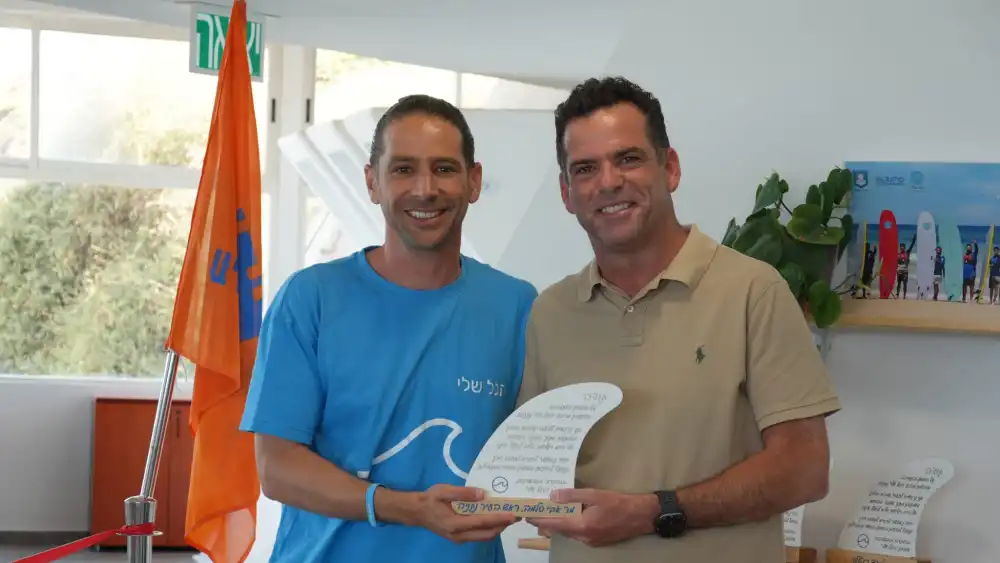
Established in partnership with the Netanya Municipality and additional supporters, the center works with the city’s Welfare and Social Services Departments, as well as educational and therapeutic frameworks, schools, boarding schools, communities and organizations throughout Netanya.
For more than a decade, HaGal Sheli has used surfing as a therapeutic, educational and rehabilitative tool. The organization operates centers along Israel’s coastline, from north to south, as well as in San Diego, Calif.
Tulchinsky, a cognitive-behavioral therapist who formed HaGal Sheli’s educational framework, said surfing can help people coping with trauma, grief or instability because it engages “the body, mind and emotions simultaneously.”
Trauma, he said, does not live only in a person’s thoughts—it lives in the body, through hypervigilance, difficulty relaxing, altered breathing patterns and a persistent sense of threat.
“The sea creates a unique environment that constantly requires people to move between effort and release, tension and relaxation, and to find stability within uncertainty,” Tulchinsky said. “Through surfing, participants can experience and practice emotional regulation in a physical and immediate way.”
Unlike a traditional therapeutic setting, which may rely primarily on conversation, surfing gives participants a tangible experience through which to confront challenges, adapt to uncertainty and rebuild a sense of confidence and capability, he said.
The physical experience is combined with psychoeducation and therapeutic group work, allowing participants to understand what they are experiencing and recognize that they are not alone.
“This combination of physical experience, emotional understanding and a supportive community can reach people on multiple levels and provide an alternative pathway toward recovery and rehabilitation,” Tulchinsky said.
‘An additional avenue of support’
The opening of the Netanya center reflects a growing need in Israel for accessible, trauma-informed support.
“The Netanya Municipality is continually working to expand the support services available to the city’s residents, including in the areas of welfare, mental health and community resilience, from the understanding that every person deserves to receive support and the tools to cope with life’s challenges,” Slama said.
“The opening of the HaGal Sheli Surf Therapy Center provides an additional avenue of support through the sea and surfing for people facing a variety of challenges,” he added. “I welcome this partnership.”
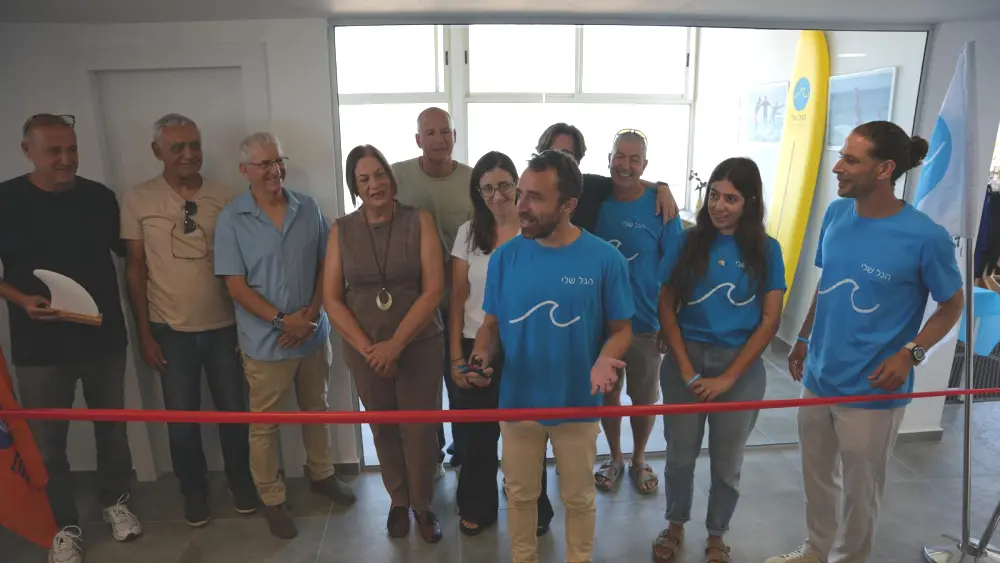
Waksman said the Netanya center was opened out of “our belief in the power of surf therapy to transform lives.”
“Every day, we witness how the sea and surfing enable our participants to overcome challenges, rebuild their confidence and discover the strengths they already possess,” he said.
He thanked the Netanya Municipality, including its Welfare and Education Departments, for supporting the effort to expand therapeutic services for residents of Netanya and the surrounding area.
HaGal Sheli’s programs are built around its SEAstem model, which the organization says serves as the professional foundation for its work and has been validated through research and evaluation showing improvements in participants’ quality of life and overall life satisfaction.
For Avi, the lesson from the water was direct.
“Through surfing, I learned that you cannot always control what happens around you, but you can learn how to cope, get back up when you fall and try again,” he said.
“The most meaningful thing I gained was the realization that I have strengths within me that I never knew existed,” he added, “and that even when everything feels turbulent, uncertain and complicated, I am capable of facing challenges, moving forward and building my own path.”
He is still, by his own telling, learning how to fall.