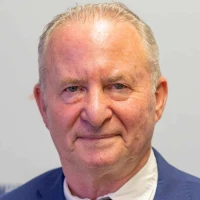
Former Likud Knesset member and Temple Mount activist Rabbi Yehudah Glick believes his life’s mission is to transform Jerusalem’s Temple Mount—what he prefers to call “Zion"—into “a house of prayer for all nations.”
Interviewed in the JNS Jerusalem Studio on July 6, the American-born Israeli Orthodox rabbi reflected on four decades of activism, surviving an assassination attempt in 2014 and his belief that greater Jewish and international access to the site can advance religious freedom and ultimately peace.
“Our mission as the Jewish people,” Glick said, “is the mountain.”
He added, “I don’t call it Temple Mount. I call it ‘Zion’ because that’s the name it’s called in the Bible.”
He said that while Jerusalem is mentioned hundreds of times in the Hebrew Bible, “Zion” represents God’s chosen mountain and humanity’s spiritual destination. “Jerusalem is the city and its inhabitants; Zion is the mountain of His Holiness,” he said.
Quoting the late IDF Chief of Staff Motta Gur’s famous declaration during the Six-Day War that “Har Habayit [the Temple Mount] is in our hands,” Glick said the site’s future now depends on Israel’s choices.
“We shall decide: Will the Temple Mount be a source of war and hatred and friction and incitement and harassment? Or will it be a place of joy, of cooperation, of collaboration, of prayer, of holiness, of shalom?” he asked.
“Our mission is to fill it with the essence of announcing His kingdom over the world. It’s in our hands.”
Glick said he has devoted the past two decades almost exclusively to that cause, arguing that the return of the Jewish people to Zion should ultimately benefit all humanity.
“The return of the Jewish people,” he said, “should be a return of the world to one God ... a house of prayer for all nations.”
Glick today serves as president of the Shalom Jerusalem Foundation, which promotes interfaith engagement and advocates greater access to the Temple Mount as a house of prayer for all faiths.
The former Likud lawmaker, who served in the Knesset from 2016 to 2019, has long campaigned for full access to the site, revered by Jews as the location of the First and Second Temples.
From government official to activist
Glick said a turning point for him came in 2005, when he resigned as the highest-ranking civil servant to leave the Israeli government in protest over then-Prime Minister Ariel Sharon’s Gaza disengagement plan.
At the time, he was director of the Southern District of the Ministry of Immigrant Absorption.
“I came up to the government and I said, ‘I cannot continue in this government,’” he recalled.
Soon afterward, he became executive director of the Temple Institute in Jerusalem’s Old City, bringing him into daily contact with the Mount.
He described the atmosphere at the time as hostile to Jewish visitors.
“Any Jew who ascended there was attacked,” he said. “They were kicking us, pushing us. I had things thrown at me—shoes, chairs, tomatoes.”
Determined to change the situation, Glick established the Temple Mount Heritage Foundation in 2009 and began encouraging Jews to visit the site.
He said Israeli police initially opposed his campaign.
“In 2010, I was announced by the Israeli police as the most dangerous man in the Middle East,” he said. “Not because I did anything illegal, but because I was convincing people to come to the mountain.”
Surviving an assassination attempt
On Oct. 29, 2014, after speaking at a conference at Jerusalem’s Menachem Begin Heritage Center, advocating increased Jewish access to the Temple Mount, Glick was approached outside the venue by a gunman riding a motorcycle.
“He said, ‘You are an enemy of Al-Aqsa,’” Glick recalled. “He pulled out a pistol and point-blank shot four bullets to the center of my body.”
Critically wounded, Glick underwent 10 surgeries. He credited Israel’s medical system, along with prayers from around the world, for saving his life.
“Thank God, here I am alive,” he said.
Rather than abandoning his campaign, he returned to the Temple Mount after months of recovery.
“We couldn’t allow terror to gain a victory,” he told JNS.

A changing reality
According to Glick, Jewish access to the holy site has changed dramatically over the past four decades.
“When I started ascending the mountain in the 1980s, we had 100 Jews who ascended in a year,” he said. “Today we have 70,000.”
He also pointed to changes in Israeli policy, including the outlawing of the Murabitat and Murabitun groups that opposed Jewish visitors to the Temple Mount, a move he credited to former Public Security Minister Gilad Erdan and former Israel Police Jerusalem District Commander Yoram Halevy. Glick said restrictions on Jewish worship at the site have gradually eased since then.
“Today there’s daily prayer on the Temple Mount, singing on the Temple Mount, prostrating on the Temple Mount,” he said, while noting that some religious items, including Torah scrolls and prayer shawls, are still prohibited.
Glick argued that increased Jewish visitation has not fueled violence but “suprisingly,” instead normalized the site’s shared use.
“The more Jews ascend the mountain, the place becomes quieter,” he said.
‘Flood of light’
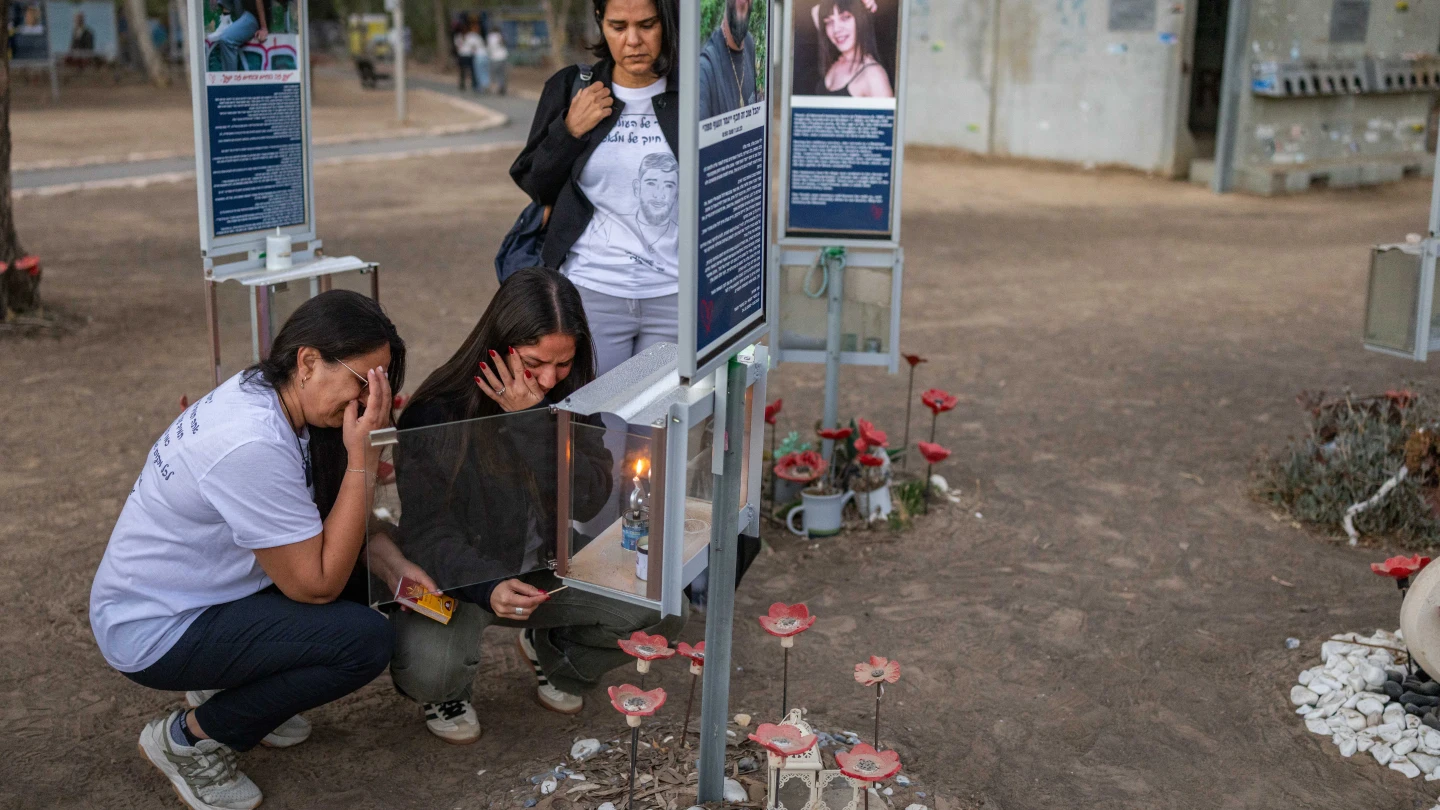
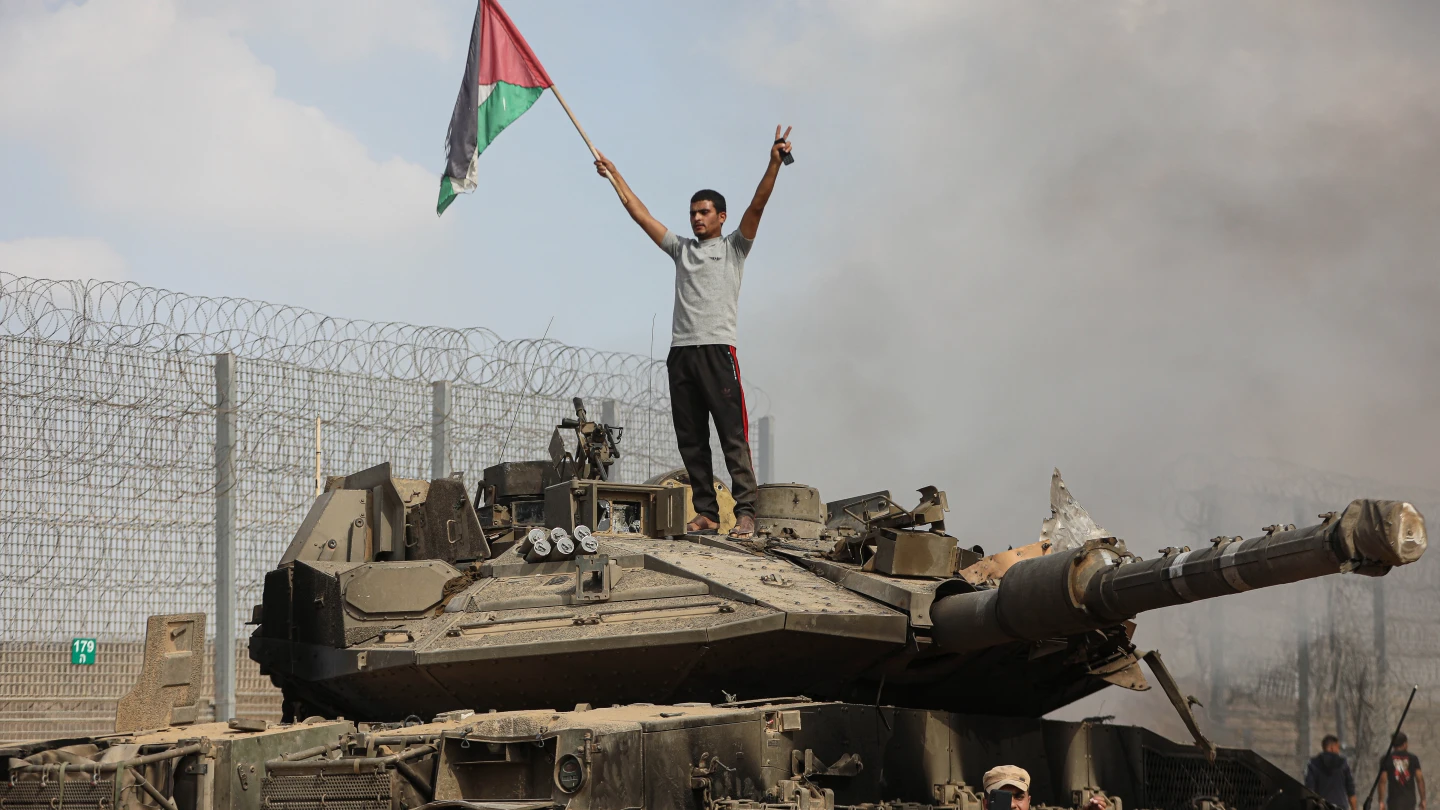
Asked whether he remains optimistic after the Hamas massacre on Oct. 7, 2023, Glick said he believes Israel has demonstrated extraordinary resilience.
“Our enemies called it the Al-Aqsa Flood,” he said. “They wanted a flood of blood.”
Instead, he said, Israel should respond with “a flood of prayer and a flood of light upon the world.”
Looking out over Jerusalem, where construction cranes dot the skyline, Glick said he sees biblical prophecy unfolding before his eyes.
“Jerusalem is being built today like never before in history,” he said.
He concluded with an appeal not only to Jews but to Christians and other believers worldwide to visit the site of Zion.
“Bring your church to the mountain. Bring your synagogue to the mountain. Bring your schools to the mountain,” he urged. “We can be part of this historical era of turning the mountain into a house of prayer for all nations and bringing true shalom to the world.”