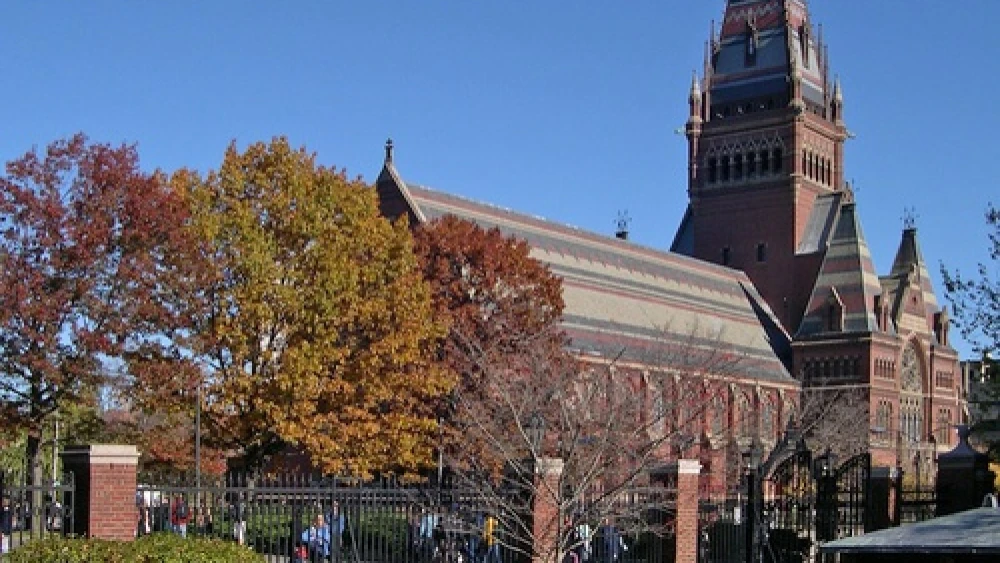
There’s a new anti-Semitic student group at Harvard, ironically named the Harvard Jewish Coalition for Peace. Their inaugural event last week, titled “The Jewish case for BDS,” taught undergraduate students how to single out and punish Israelis on and off-campus.
The group was formed following debates over “humans rights” during Israeli Apartheid Week, an effort to push anti-Semitism on students organized by the Harvard Palestine Solidarity Committee.
According to a statement posted on the group’s Facebook page, it believes “combating anti-Semitism requires [the] serious work of building solidarity with other communities and fighting the root causes of anti-Semitic hatred.” If solidarity is so important to this group, why was their first order of business dividing the Jewish community at Harvard by separating themselves from Harvard Hillel, the university’s umbrella Jewish student group?
Harvard Hillel rightfully slammed Israeli Apartheid Week last spring and, to no one’s surprise, expressed its disappointment with the new “Coalition for Peace.” Within only a few days of existing, the Harvard Jewish Coalition for Peace has been accused of “aligning themselves with groups that have historically sought out the oppression of Jews.” One student, Caleb Esrig, told the Harvard Crimson, “BDS is not about human rights or social justice. It is not about ending the occupation. It’s not about Israeli human rights abuses. It is about ending the Jewish state.”
Not only is this group bigoted, it’s counterproductive, for many reasons.
For one, BDS is not an “anti-Zionist” movement. The BDS National Committee is led by the Council of National and Islamic Forces in Palestine. You can’t form a group with the goal of promoting BDS, a movement with terrorist ties, and simultaneously claim to oppose anti-Semitism. And nothing quite screams “coalition for peace” like an organization committed to the destruction of Israel through economic warfare targeting Jewish people and businesses.
Promoting BDS policies, which are inherently rooted in anti-Semitism, is far from peaceful and incredibly unproductive in the pursuit of “unity.” The global rise of anti-Semitism is happening in part because of groups like this, and extends far beyond the outside groups they try to place blame on. We cannot stand by and allow this group to spread these repugnant policies on campus.
Harvard has a responsibility to enforce a zero-tolerance policy with regards to discrimination on campus. How can one of the nation’s top universities continue to support an organization that is using its platform to segregate its Jewish student population and the greater Jewish community off-campus? University administration should reject Harvard Jewish Coalition for Peace’s efforts to spread anti-Jewish propaganda and make it clear that promoting groups with terrorist ties on campus will not be tolerated.
Ryan Fournier is the founder and co-chair of Students for Trump.