Iran

Professor Eytan Gilboa, an expert on American-Israeli relations, says the White House remains fixated on a poor Iran deal, though good ties between the Israeli and U.S. defense ministers have facilitated some coordination.

Mohammad Pakpour, a senior commander of the Islamic Revolutionary Guard Corps, insists that Iran “should avenge him.”

Israeli observers say certain Sunni Gulf states are seeking to drive a wedge between Iran and Syria.

“If there is no return to the JCPOA, I assume there will be efforts to somehow delay progress in activity,” says Raz Zimmt, an expert on Iran at the Institute for National Security Studies.
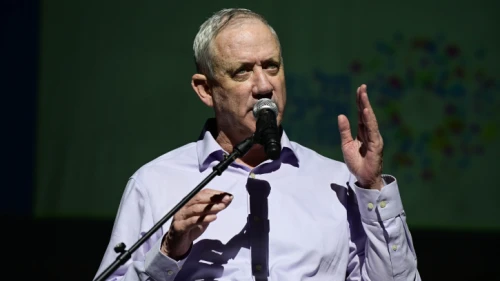
Some Palestinian officials are inciting terrorism, Israeli Defense Minister Benny Gantz tells Washington Institute forum.
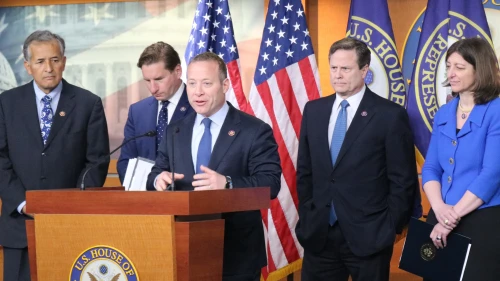
They were concerned about the extent to which the United States appears willing to capitulate to Iran on lifting sanctions, providing the regime with funds to further enhance its ability to sponsor terrorist activity in the Middle East.

“I believe [it] to be a terrorist organization and do not support them being delisted,“ said Army Gen. Mark Milley, Chairman of the Joint Chiefs of Staff.
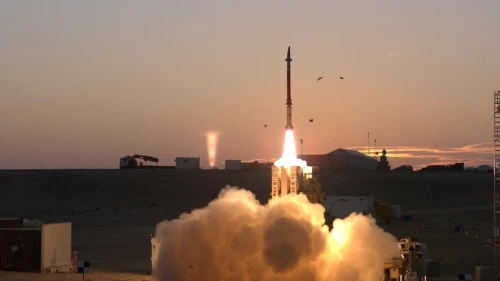
Iranian axis is using the Houthis to draw dangerous lessons about the use of long-range firepower.

Rep. Ritchie Torres (D-N.Y.) had some questions about re-entering the Iran nuclear deal—namely, about the IRGC. For those inquiries, he said he received an unwarranted backlash.
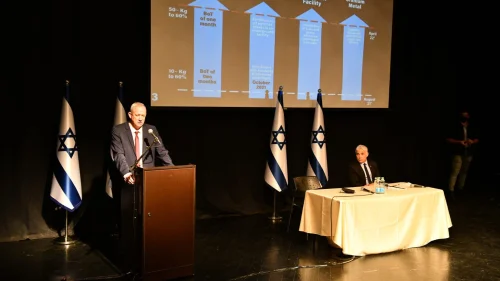
Tehran has amassed 50 kilograms of 60% enriched uranium, Israeli Defense Minister Benny Gantz tells foreign ambassadors.

Iranian Foreign Ministry spokesman Saeed Khatibzadeh: “America is responsible for the halt of talks ... a deal is very much within reach.”
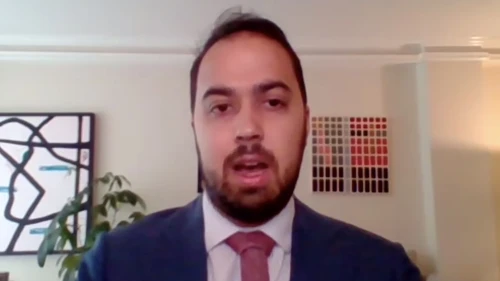
Gabriel Noronha, who served as special advisor for Iran in the U.S. State Department and as a Republican staffer on the Senate Armed Services Committee, said he was compelled to come forward with details of the negotiations by his former colleagues within the U.S. government.