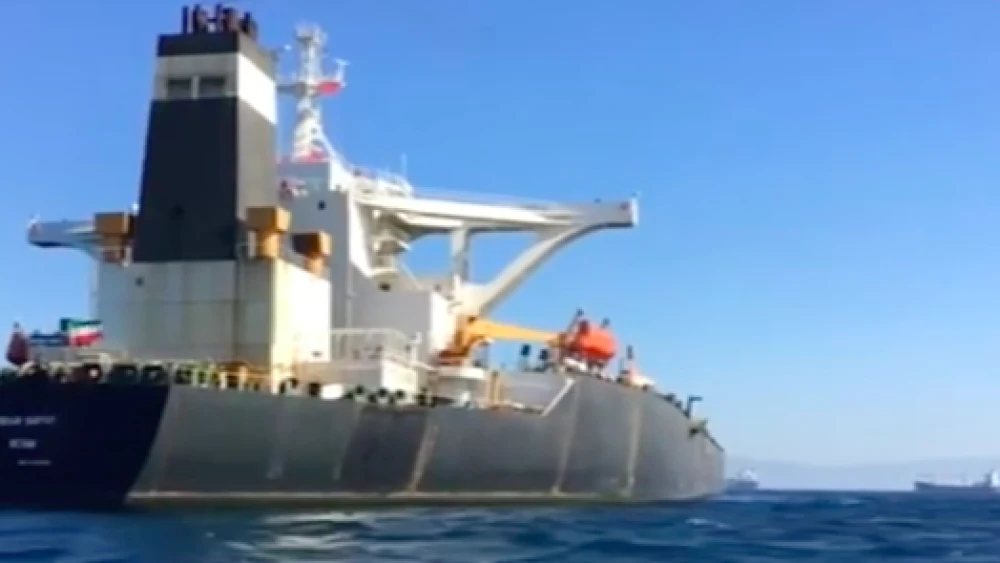
An Iranian supertanker accused of violating U.S. sanctions against the regime’s Islamic Revolutionary Guard Corps has turned off its tracking beacon off the coast of Cyprus.
The Adrian Darya 1, allegedly owned by the IRGC, carrying around 2.1 million barrels of crude oil worth $130 million, switched off its Automatic Identification System, fueling speculation that it is heading towards Syria, which would violate U.S. sanctions against Iran’s energy sector.
“The fact that Adrian Darya 1, as it is now renamed, is currently skirting the Syrian coast with its AIS offline, awaiting what the U.S. intelligence services expect to be an imminent ship-to-ship transfer, which will ultimately see its cargo end up in Syria, is politically embarrassing for almost everyone except Iran,” wrote Richard Meade, the managing editor of the U.K. journal Lloyd’s List.
The ship was originally named Grace 1.
It was captured by the United Kingdom in July and released last month despite last-minute efforts by the United States to halt its release.
Gibraltar stated that it received guarantees from Tehran that the owners of the oil tanker would not take it to Syria. The United Kingdom made such on offer with that contingency nine days after the seizure.
The ship was renamed the Adrian Darya 1 before it left Gibraltar. The United States has warned countries not to aid it.