Anti-tank missiles in garages and artillery stashed in children’s bedrooms. Weapons stockpiled in nearly every house. This was what one of us encountered, in village after village in Southern Lebanon, during the October 2024 ground operation of the Israel Defense Forces against Hezbollah.
The IDF found Hezbollah’s battle plans for a massive invasion of Israel, on par with Hamas’s Oct. 7, 2023 attack, with dozens of cross-border infiltration routes through which to carry it out. All this occurred under the eyes of the United Nations Interim Force in Lebanon (UNIFIL) and the Lebanese Armed Forces (LAF).
The days of Israel reluctantly accepting Hezbollah’s presence on its border are over. Sixty thousand Israelis—the rough equivalent of 2.1 million Americans—remain evacuated from their homes in the north. Securing the 81-mile border with Lebanon, which includes Israeli villages just yards from one-time Hezbollah outposts, is a major challenge for Israel even under the best of conditions.
Let’s start with what’s been proven not to work.
Under international pressure, Israel halted its 2006 offensive against Hezbollah and agreed to entrust UNIFIL and the LAF with enforcing U.N. Security Council Resolution 1701 and keeping the terror organization north of the Litani River, some 18 miles north of Israel’s border. But UNIFIL and the LAF refused to enforce 1701. Hezbollah turned villages into military arsenals, and basements and garages into weapons depots—all while UNIFIL blithely insisted it could not act on “private property.”
Equipped with a steady weapons flow and billions of dollars from Iran, Hezbollah gradually became more emboldened after 2006, shifting to an offensive posture, charting a course to attack Israel. Hezbollah restructured its forces and doctrine, creating a special operations force capable of a military-grade invasion. When Hamas staged its attack on Israel on Oct. 7, Hezbollah had over a dozen elite battalions, comprising nearly 5,000 terrorists, many battle-tested in Syria, poised to launch an even more devastating cross-border assault.
Two developments—the American-led ceasefire oversight mechanism and Israel’s decision to maintain five strategic outposts inside southern Lebanon—provide a basis for a new strategy.
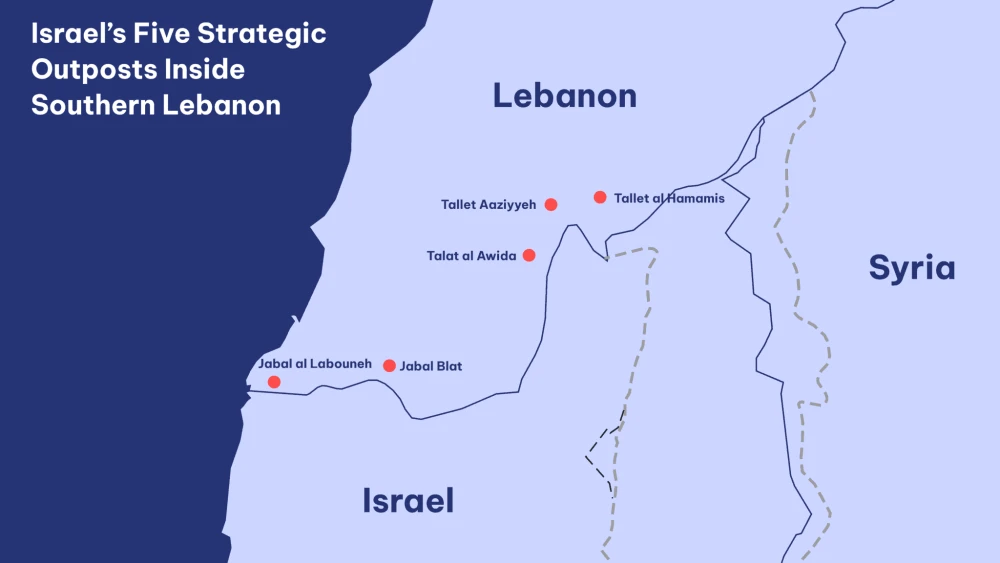
Establishing a security zone in southern Lebanon—as part of a diplomatic agreement with Lebanon and an American-led oversight mechanism—holds promise. The security zone avoids Israel having to again rely on UNIFIL and the LAF. It enables Israel to install cameras, radars and sensors to help prevent Hezbollah from returning to its former strongholds.
More broadly, Washington and Jerusalem should work together to develop a short- and long-term strategy, including a U.S. carrots-and-sticks policy to ensure Beirut’s acquiescence and prevent Hezbollah’s reconstitution. A central pillar of this strategy should involve Washington strengthening the U.S.-led ceasefire oversight mechanism and appointing a permanent senior U.S. military officer to coordinate its activities.
Additionally, the United States should put measurable performance criteria on funding of the Lebanese Armed Forces—over $3 billion since 2006. If the LAF’s performance against Hezbollah continues to improve, the United States should keep supporting it.
Finally, the United States must use its influence to remove UNIFIL. It overlooked Hezbollah fortifications near its facilities for years and ignored Israeli requests to act. The United States, which accounts for almost a third of UNIFIL’s budget, could withhold funding, veto its mandate renewal at the United Nations Security Council, or both.
Israel’s successful decapitation strategy against Hezbollah has brought the terror group to its knees. The United States and Israel should take proactive measures to guarantee it will not rise and threaten Israel again.
Originally published by the Jerusalem Strategic Tribune.