


Only one in five right-wing Israeli Jews backs a two-state solution in exchange for American war support, according to a survey the Israel Democracy Institute released on Tuesday.
In contrast, seventy-five percent of left-wing Israeli Jews support pursuing a two-state solution in return for U.S. assistance, with 45% of Israeli Jews in the center agreeing with this policy.
IDI’s most recent Israeli Voice Index shows that while only a minority of all Israelis currently support a two-state solution, the public is divided across both ethnic and political lines.
— Israel Democracy Institute (@IDIisrael) December 5, 2023
55% of Arab-Israeli respondents such a resolution for the conflict alongside a large… pic.twitter.com/LIhgz63dz5
Overall, a slight majority (52%) of Israeli Jews oppose pursuing a two-state solution after the war in exchange for U.S. financial aid, while a majority (55%) of Israeli Arabs are in favor of it.
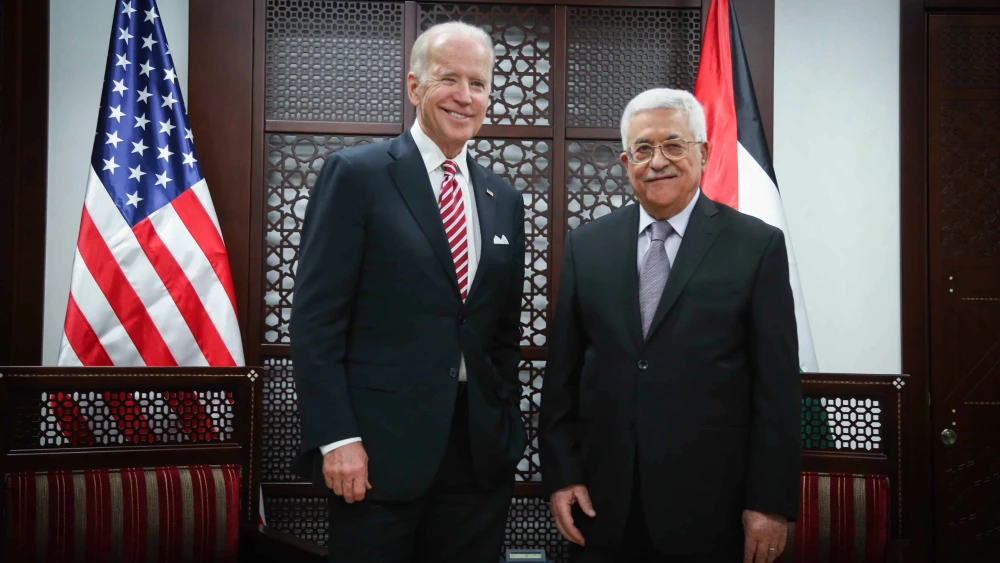
The participants were asked the following question: “President Biden has repeatedly stated that the large-scale assistance Israel is receiving from the United States is dependent on progress toward a fundamental solution of the Israeli-Palestinian conflict, on the basis of the two-states-for-two-peoples formula. In your opinion, after the war, should Israel agree or not agree to pursue this direction?”
It is unclear why the two-state solution question was connected to the Biden administration and American assistance and not asked as a standalone or follow-up question, which might have yielded different results.
The November 2023 Israeli Voice Index, conducted by the Viterbi Family Center for Public Opinion and Policy Research, used a representative sample of 600 Jewish Israelis and 151 Arab Israelis. The maximum sampling error for the entire sample was 3.55%± at a confidence level of 95%.
A strong 87% majority of Israeli Jews support the resumption of fighting against Hamas in the same manner as before the ceasefire. This support is seen across the political spectrum (left, 74%; center, 84%; right, 93%). Only 20.5% of Israeli Arabs support fighting as it was before the temporary pause.
Across the political spectrum, a majority of Israelis supported the recent hostage-release deal—around two-thirds said yes compared with a quarter who said no.
Israelis are also increasingly optimistic about the future of security and democracy, according to the survey. Most Israeli Jews also think that the country will be more united after the war, while a significant majority of both Jews and Arabs expect mass civil protests after the war demanding accountability for the failures of Oct. 7.



