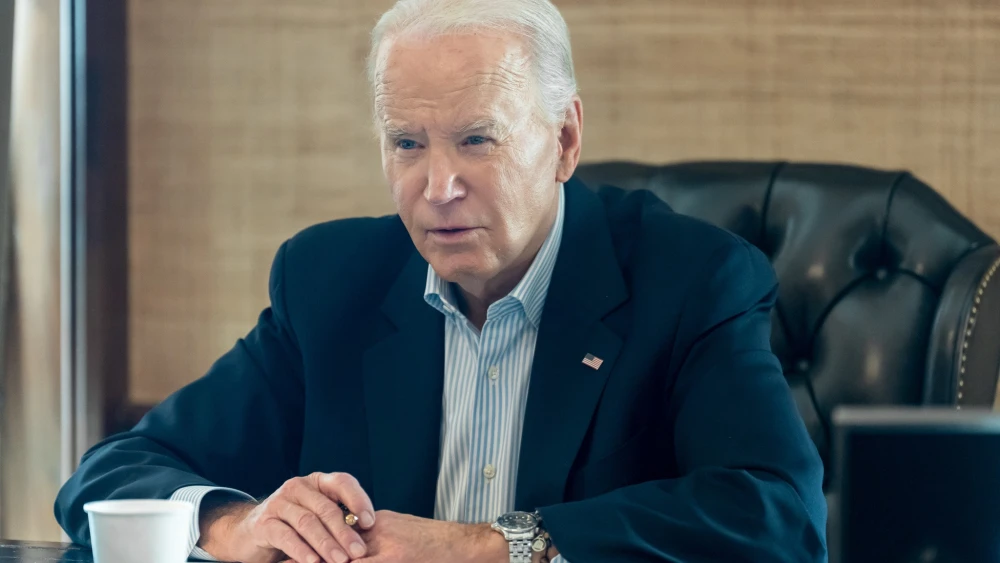
Egyptian President Abdel Fattah el-Sisi agreed to restore the flow of aid to Palestinians in the Gaza Strip during a telephone call with U.S. President Joe Biden on Friday.
Egypt halted U.N. aid deliveries into the southern city of Rafah after the Israeli military took control of the Gazan side of the Egypt-Gaza border. In Friday’s call, el-Sisi agreed to let the aid flow through Israel’s Kerem Shalom crossing near the Egyptian border.
“President Biden welcomed the commitment from President el-Sisi to permit the flow of U.N.-provided humanitarian assistance from Egypt through the Kerem Shalom crossing on a provisional basis for onward distribution throughout Gaza,” the White House stated in its readout of the call. “This will help save lives.”
The Egyptian readout of the call said that the deliveries would consist of “humanitarian aid and fuel” and would continue “temporarily until a legal mechanism is reached to reoperate the Rafah crossing from the Palestinian side.”
The White House said the Biden administration will send a “senior team” to Cairo next week to try and negotiate a reopening of the Rafah crossing under terms acceptable to both Israel and Egypt.
The announcement comes as the International Court of Justice ordered Israel to halt its military operations in Rafah and to keep the Rafah crossing open “for unhindered provision at scale of urgently needed basic services and humanitarian assistance.”
In response to the ICJ ruling, Israel issued a statement saying it “will continue to enable the Rafah crossing to remain open for the entry of humanitarian assistance from the Egyptian side of the border, and will prevent terror groups from controlling the passage.”
“Israel will continue its efforts to enable humanitarian assistance and will act, in full compliance with the law, to reduce as much as possible harm caused to the civilian population in Gaza,” the head of the Israeli National Security Council and the spokesperson of the Israeli Ministry of Foreign Affairs wrote.
Biden and el-Sisi also discussed “new initiatives” to secure a ceasefire-for-hostages deal, per the White House. The Egyptian readout of the call added that the two leaders agreed on the need to implement a two-state solution to the Israeli-Palestinian conflict and rejected “all attempts to displace the Palestinians from their land.”