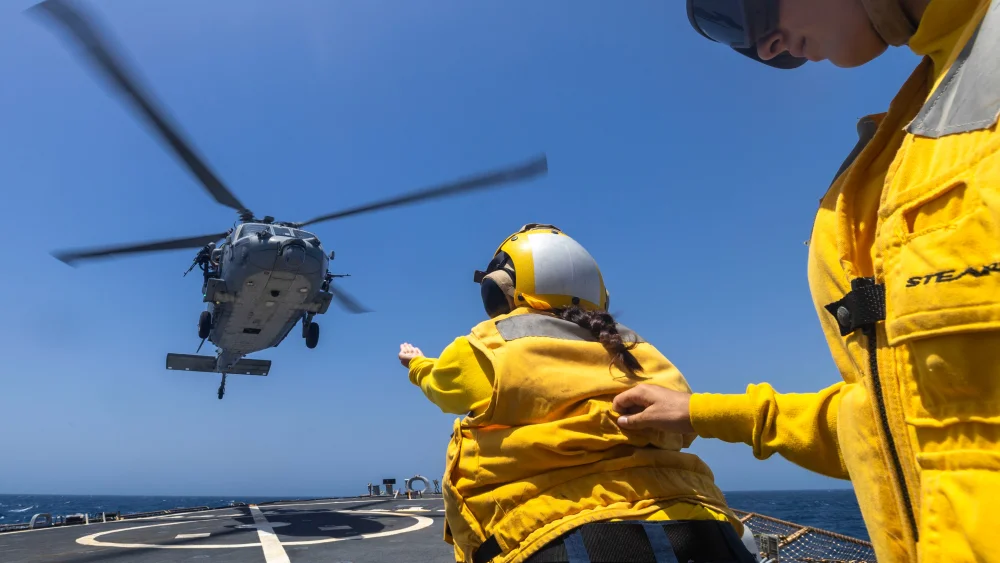
United States Central Command on Sunday reiterated that Iran does not control the Strait of Hormuz, saying the strategic shipping lane remained open “to all vessels seeking to lawfully transit.”
“U.S. forces are positioned and prepared to ensure that freedom of navigation remains available despite unwarranted Iranian aggression, harassment, threats, and arbitrary declarations,” CENTCOM wrote on X.
“Iran does not control the strait. Traffic is flowing,” according to the post.
On Saturday, the Iranian regime had declared the Strait of Hormuz to be closed amid ongoing U.S. airstrikes targeting the regime.
“The Strait of Hormuz is closed until further notice and until the end of America’s interventions in the region, and no vessel will be permitted to pass through,” said the IRGC.
The IRGC warned that any “new act of aggression” against Iran would be met with a “severe response” and that additional “enemy bases” in the region would be targeted.
The U.S. military struck 140 military targets in Iran—the third round of strikes in a week—after the Islamic Republic “blatantly” attacked the Cyprus-flagged container ship GFS Galaxy as it went through the Strait of Hormuz, U.S. Central Command said on Saturday night.
The military used “land- and sea-based fighter aircraft, drones and naval vessels,” and it targeted “Iranian missile and drone sites, naval capabilities, ammunition storage facilities, communication networks and coastal surveillance locations,” said CENTCOM.