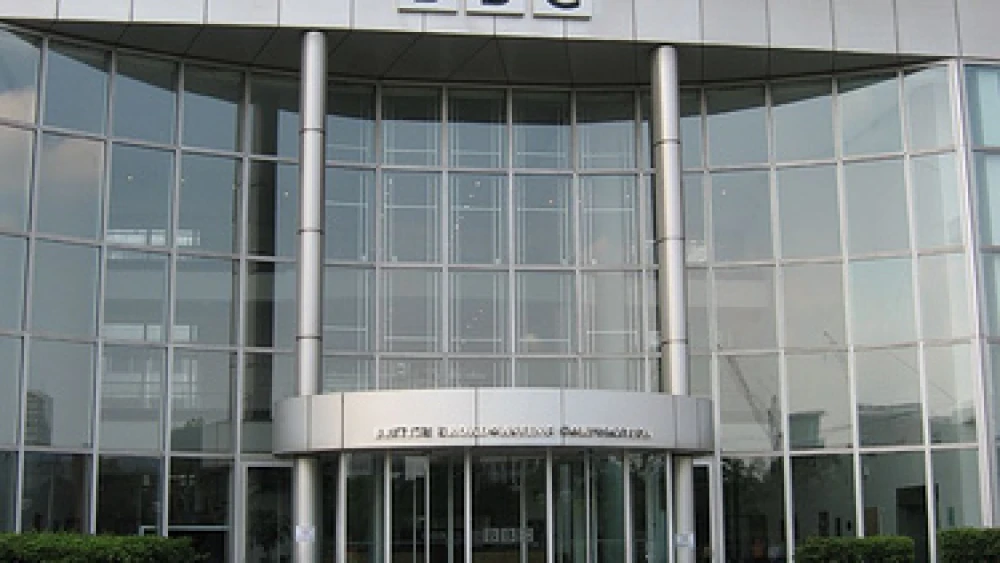
The BBC is maintaining apparent neutrality on a call by a journalists’ union to its members, including BBC employees, to show up at work Thursday wearing items that express solidarity with the Palestinian national cause.
The initiative is being pushed by the Trades Union Congress (TUC), the United Kingdom’s largest umbrella group representing more than 5.5 million workers in 48 trade unions, including the National Union of Journalists, or NUJ. Many of that union’s members are employed by the BBC.
Several Jewish employees have resigned from the union over the controversy, according to the London-based Jewish News.
“Wear something red, green, black or a Palestinian keffiyeh to visibly show solidarity,” the TUC wrote on its website in advertising “a day of action calling for an immediate ceasefire in Gaza.”
On its website, the NUJ stopped short of repeating this instruction, but it did not advise against it. The NUJ reminded its readers that “Journalists working across the BBC and wider public service broadcasting have particular and important duties in relation to impartiality and working within specific workplace social media policies.” It recommended they donate to the International Federation of Journalists’ Safety Fund.
The BBC did not immediately react to a query from JNS on whether it opposes its staff wearing items that signify solidarity with Palestinians or participating in other “day of action” activities.
“By saying nothing, the BBC is effectively abandoning its pretense of impartiality, allowing its Jewish employees to feel intimidated, and continuing its descent into becoming a battleground for political ideologies,” HonestReporting, a media watchdog, wrote in an overview of the controversy published on Wednesday.
Charlotte Henry, a freelance journalist who quit the NUJ over its call to action, wrote in her newsletter, The Addition, that the NUJ had become “a hostile environment for Jews, and I can no longer be part of that.”